EXHIBITIOns
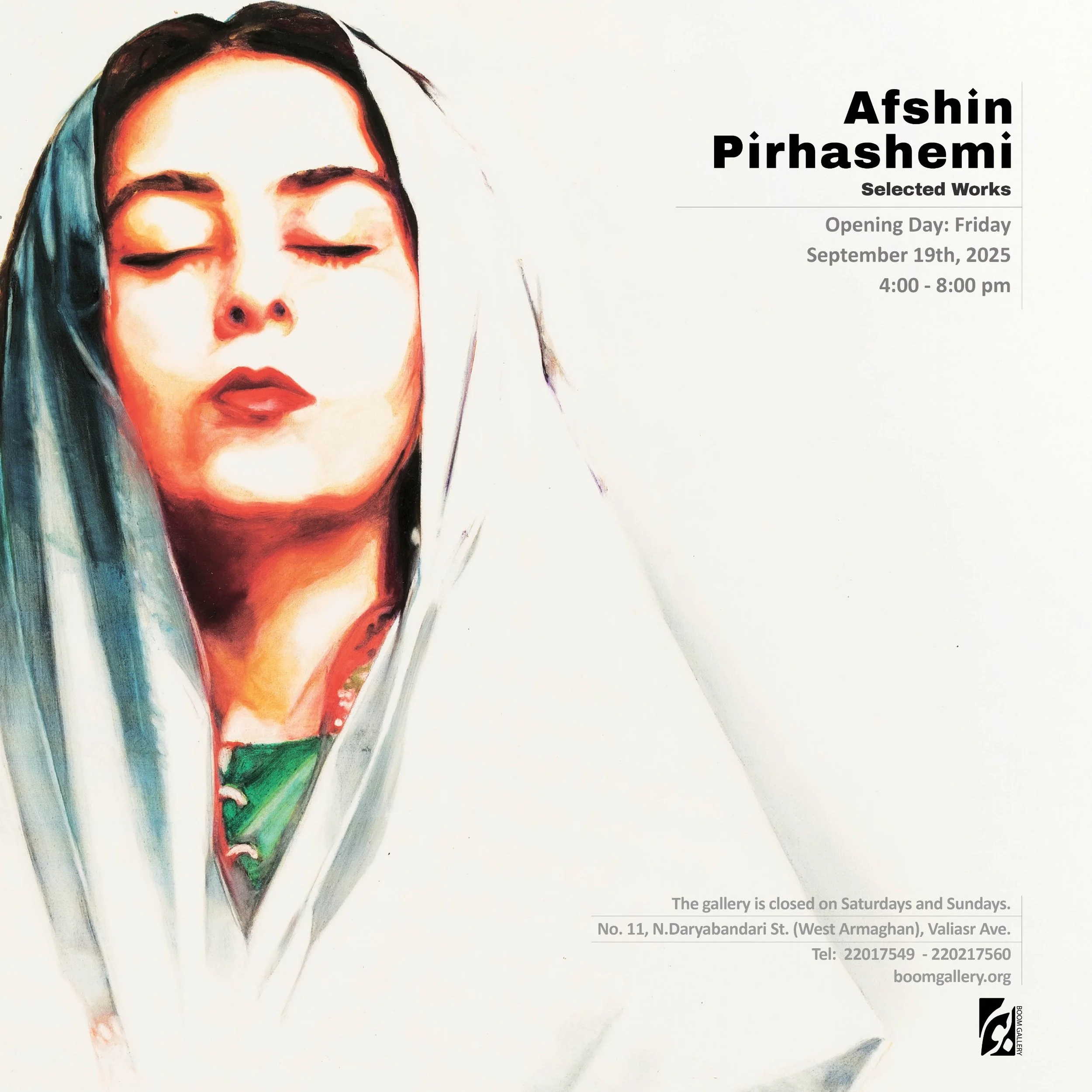
afshin pirhashemi Selected works
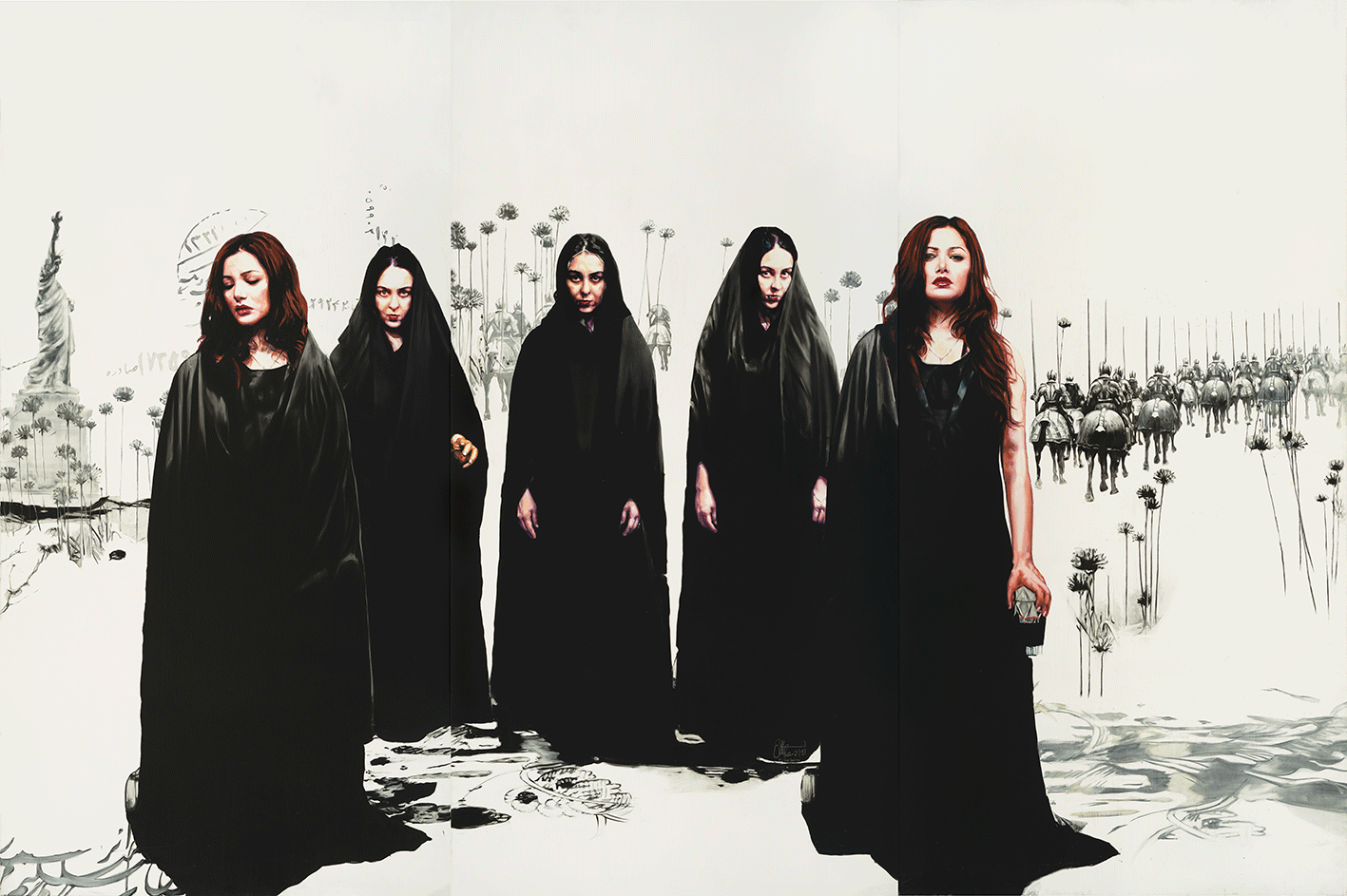
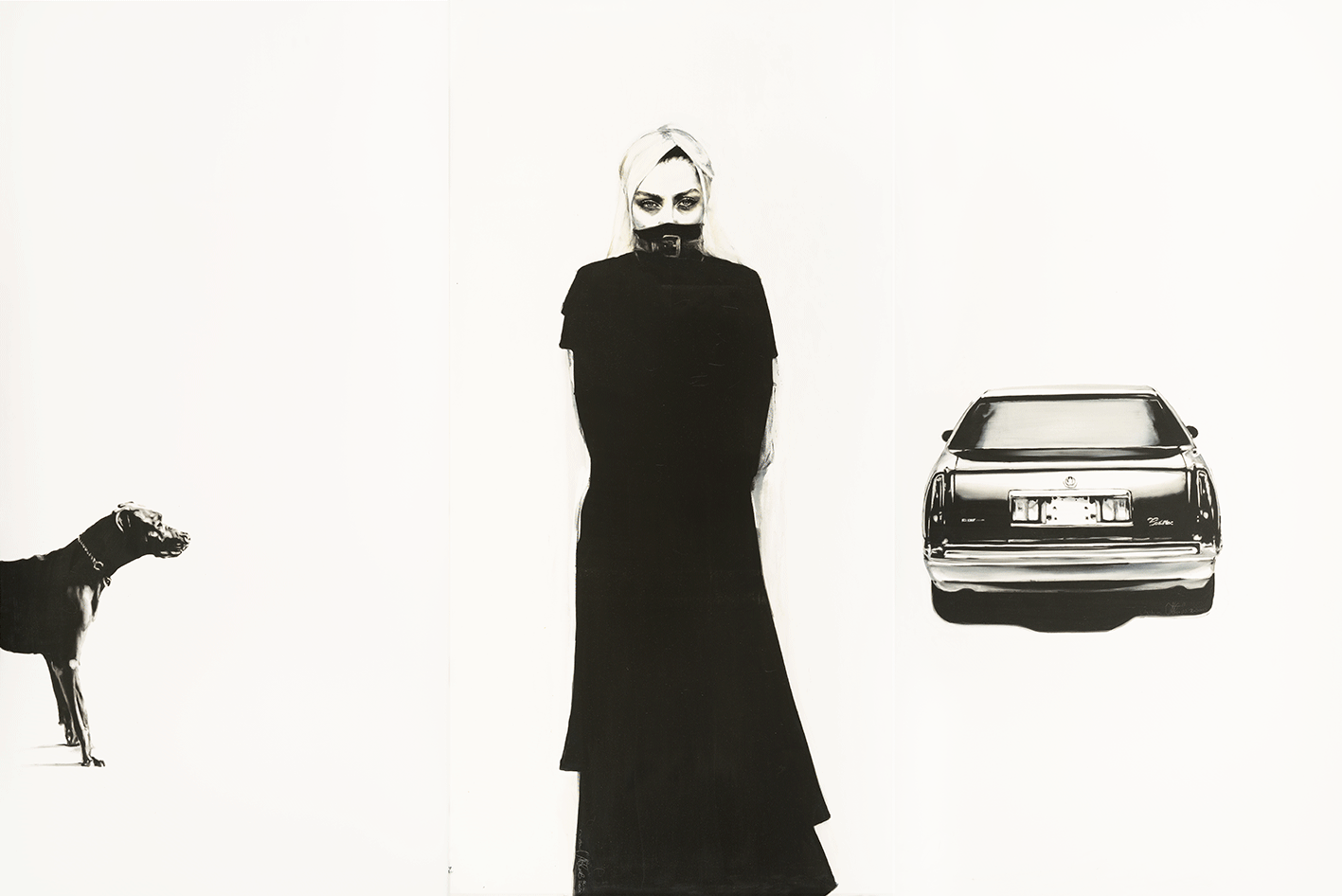
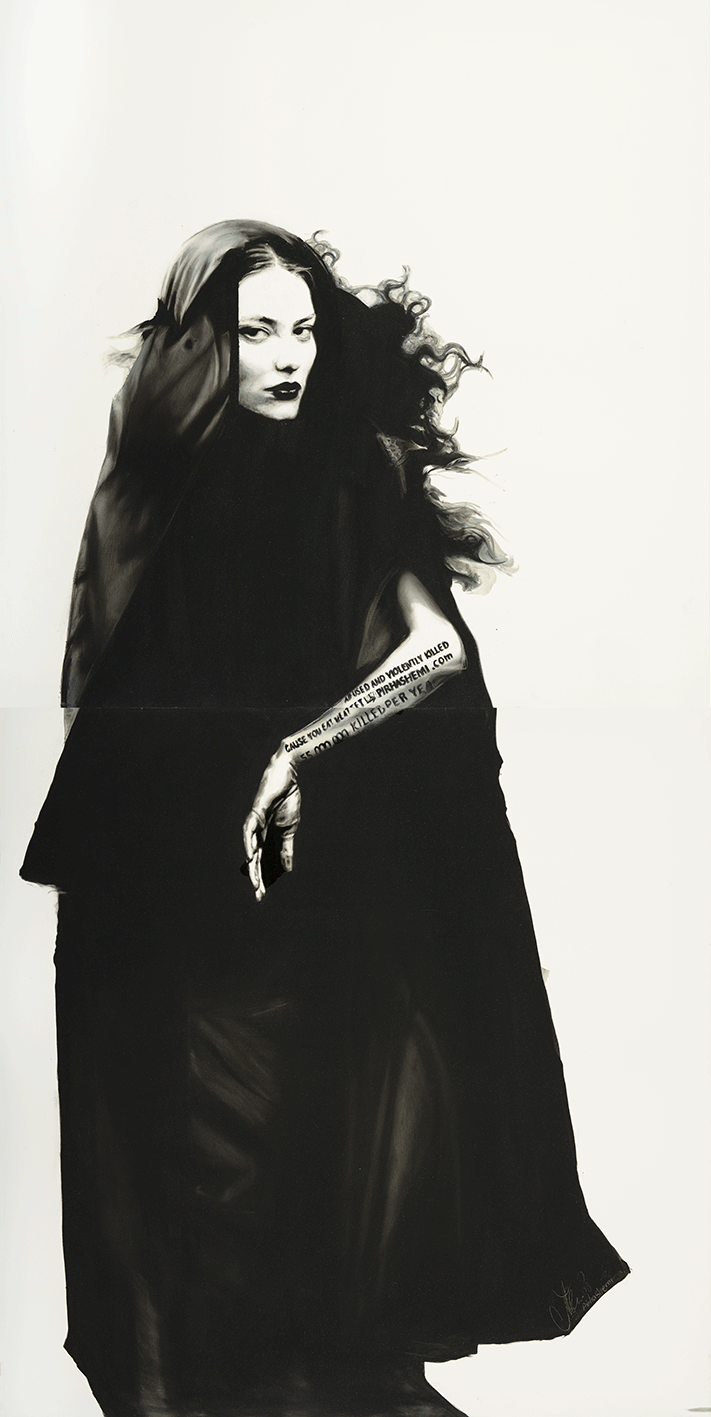
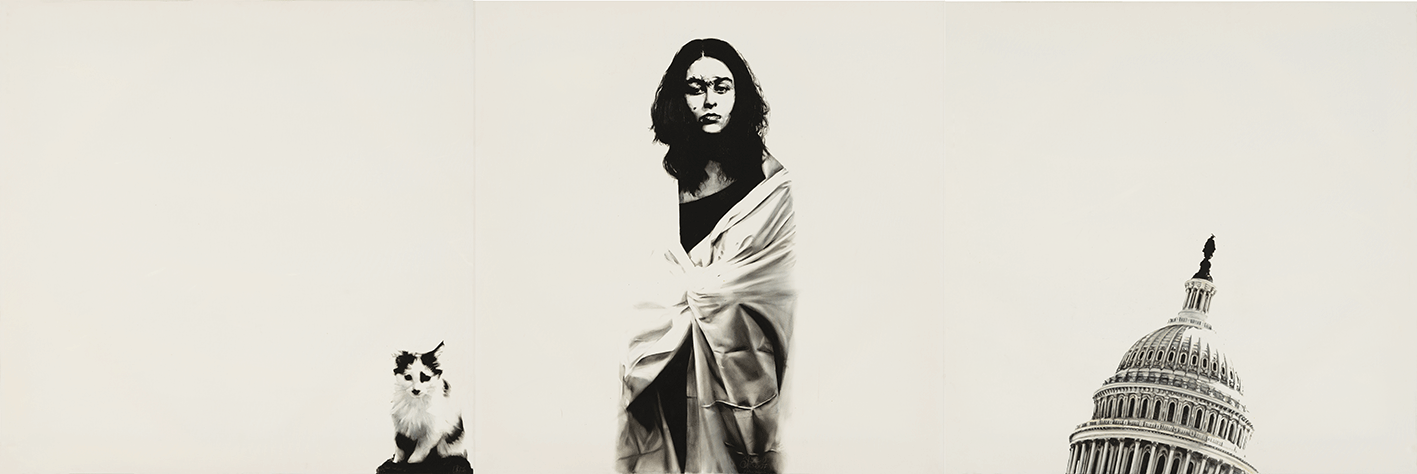
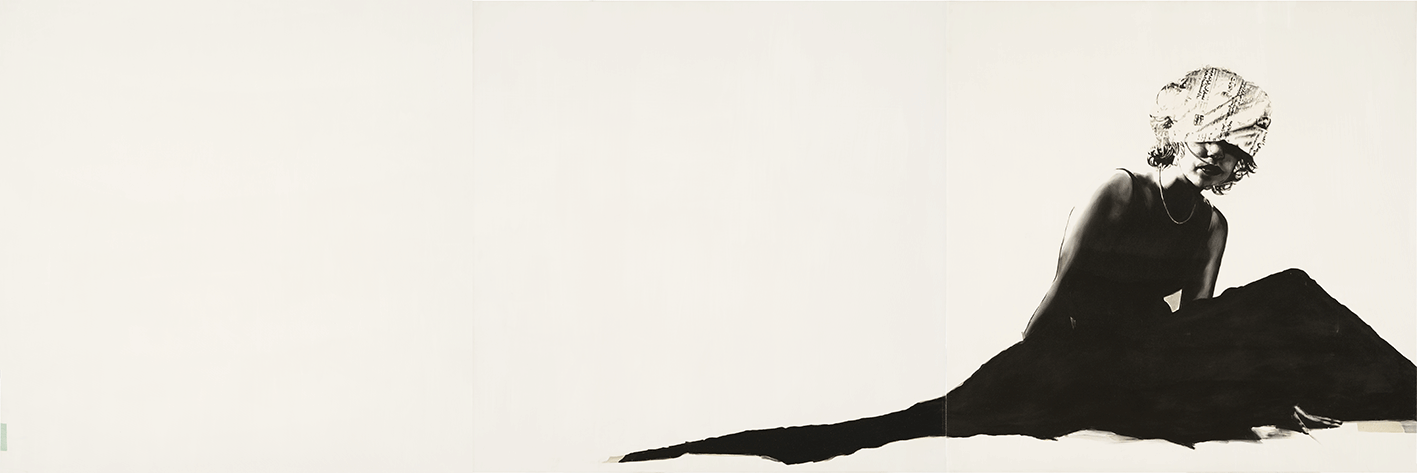
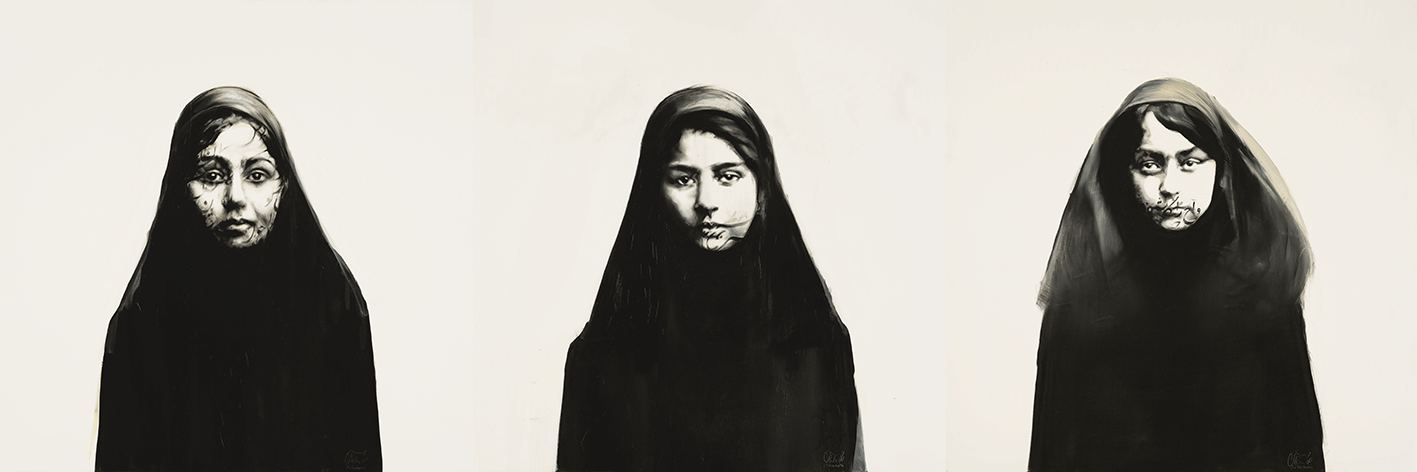
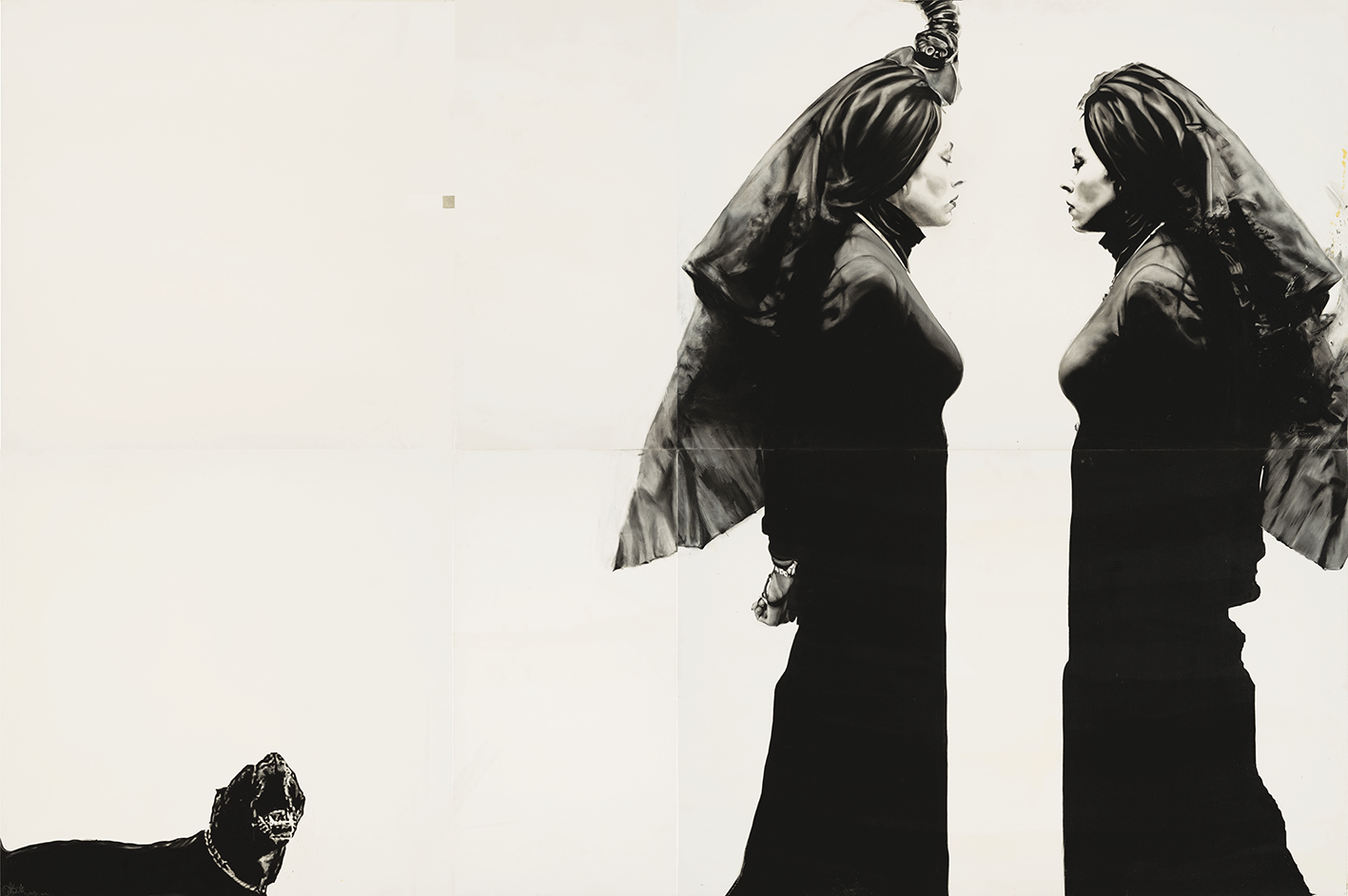
Afshin Pirhashemi is one of the most influential contemporary Iranian artists. Over the two decades of artistic activity, he earned widespread recognition through his exhibitions, awards, auction records, and, above all, his distinct artistic persona. He rose to prominence in the early 2000s with his black-and-white portraits of young female figures that appeared silent yet melancholic and confrontational. In terms of representations of women, these paintings differed from other Iranian painters’ works and are now considered as pioneering examples of a contemporary neo-expressionist movement. The female figures often emerge against empty backgrounds, critical in tone and indifferent to the modernist conventions of color, composition, and form. Alongside the works of some of his contemporaries, Pirhashemi’s paintings signaled the emergence of a new trend in Iranian conceptual painting. In his work, women do not appear in clearly defined temporal or spatial contexts. They often gaze directly at the viewer with a questioning look, challenging prevailing stereotypes and judgments. These portraits marked the first broad representation of the female figure in Iranian painting that lacked poetic or romantic undertones. In some cases, they even offered a cynical and sarcastic critique of contemporary ideals of femininity.
The idea of painting female figures has been persistently pursued across various periods and styles by great Western artists such as Auguste Renoir, Pablo Picasso, and Willem de Kooning. However, the most prominent artist to focus almost exclusively on women’s portraits throughout a significant part of his artistic career was Amedeo Modigliani. Using soft, elongated lines, he created countless images of women imbued with beauty and deep emotion. In all these cases, the female models were emotionally present in the artist’s personal life. Similarly, the idea of women in Pirhashemi’s paintings likely stems from his lived experiences, particularly in relation to the opposite sex. Yet from another perspective, this concept may be interpreted as the artist’s broader vision of life’s temptations, desires and doubts through the lens of womanhood—a concentration of dreams, nightmares, triumphs, and failures embodied in the female form. His women are not allusions to Freudian sexual instincts, but rather carry a symbolic quality aligned with a Jungian view. These fairy-faced women are not representations of the mother or lover, nor icons of affection or sexual allure. Instead, they reflect the anima—the feminine aspect of a man’s unconscious. In other words, they should be seen as mirrors in which the male self is reflected and hence, a deeper understanding of himself can be explored. In this way, Pirhashemi’s portrayal of the female figure becomes a reconstruction of hidden aspects of his own being; things that allude to pleasure and disgust, as well as his deepest anxieties and fears.
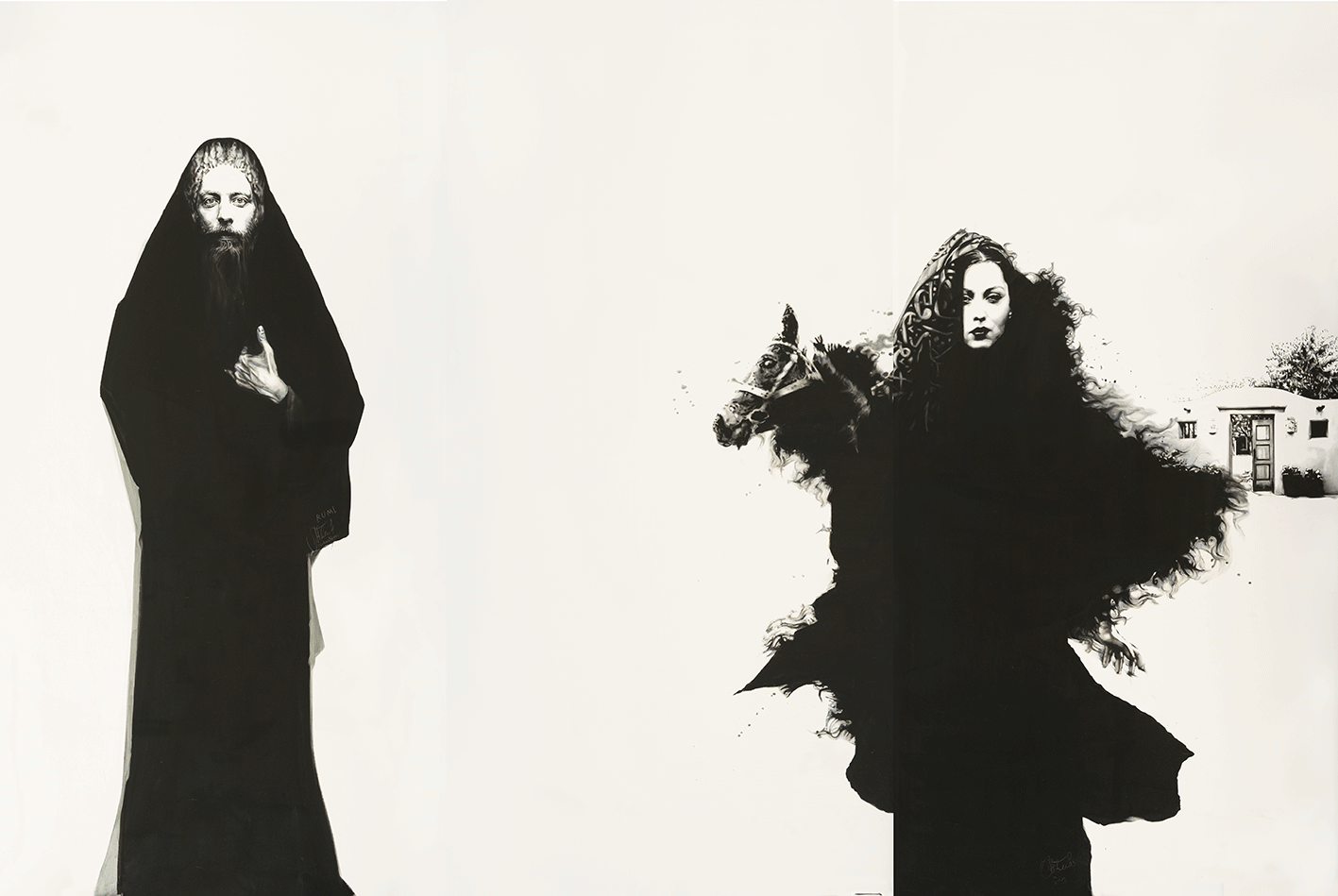
Regardless any interpretation, Pirhashemi’s artistic vision quickly inspired other artists of his generation, sparking a widespread movement in contemporary Iranian painting. His works demonstrated several distinctive features that placed them at the forefront of this wave of female portraiture. First, his completely black figures appeared on nearly empty canvases, in an imaginary and allegorical setting devoid of any specific implication of space and time. Second, a symbolic object or graphic motif was often included to underscore the allegorical dimension of the painting. These elements range from guns and knives to luxury car logos, reinforcing the semiotic language of the work. Third, he boldly incorporated written text—ranging from advertising slogans to verses from Rumi—creating a form of intertextuality that deepens the conceptual layers of his art.
In early experimentations, Pirhashemi worked on medium-sized canvases, usually featuring a single figure. Over time, the number of female figures increased, and the canvases became larger—sometimes triptychs—adopting more complex compositions. In certain cases, a single model was used for repeated figures in three separate panels, showcasing various aspects of personality. A notable example is the large triptych entitled Storm (2011), which depicts three sword-wielding women charging forward, leading a legion of armed female warriors. The turbulent background includes mountains and a raging river, with the Statue of Liberty bent over, seemingly on the verge of collapse. This cinematic scene emphasizes a blindfolded woman in the foreground—exhausted and desperate—supported by two other women. The blindfolded woman, a recurring motif in the artist’s later works, alludes to uncertainty and ambiguity regarding the future of social movements—a symbol largely absent from his earlier pieces. In Pirhashemi’s early works, compositions were often unbalanced with large empty spaces, highlighting the dynamic energy of the image and the instability of the figures’ condition. However, his later compositions—mostly exhibited outside Iran—are more balanced, drawing their vitality from the movement and posture of the figures. Unlike his earlier works, the later paintings are visually deeper, relatively more crowded, and rarely empty.
While his early works were mostly in black and white, color was gradually appeared, albeit cautiously, in his paintings. Nevertheless, Pirhashemi’s style never fully transitioned into realistic figuration with naturalistic colors. Although he always painted his figures based on photographic references, he never aimed for photo-realistic depiction. Instead, he emphasized painterly qualities by blurring backgrounds, exposing brushstrokes, limiting the color palette, and using texts and graphic elements. In almost all his works, Pirhashemi portrayed young women, usually with makeup and dressed in alluring black clothing. He often used attractive models, including well-known Iranian actresses, to present allure as an integral part of female power. However, in his works, these faces do not appear familiar; he effectively defamiliarizes his celebrity models.
Pirhashemi shows a distinct preference for full-length images of standing figures. Only in a few pictures are the women shown seated on couches or chairs. This choice to depict women in long-shot suggests a broader approach: he embodies womanhood in general, rather than individual woman. Even when using familiar women—such as his wife or movie stars—their personal traits are not the focus. These women are devoid of any dramatic emotion; their expressions are vague and rarely display laughter, tears, anger, or happiness. Only in portraits related to the protest movement of Iranian women do we see them shouting. In contrast to these silent figures, the artist uses objects to add conceptual meaning to the portraits and figures. Within his visual semiotics, these metaphorical objects help evoke meaning. Clothing often transcends social class, signaling the individuality and confrontational stance of these women. In some cases, full-body black leather outfits allude to a fetishized view of the female body. Other recurring objects include microphones, swords, guns, cars, and iconic Western buildings. Alongside these, animals such as horses, dogs, and cats appear close to the figures—not as literal companions, but merely as symbolic presences. These animals are never fully rendered; only parts of their bodies are shown, reinforcing their metaphorical function.
In addition to objects, logos and advertising slogans appear in some works to emphasize the artist’s ironic tone and sarcastic language. Among them, the BMW logo and its accompanying promotional text recur frequently. The juxtaposition of a car brand with the adorned face of a modern woman evokes the increasing commodification of women in consumerist societies. In such instances, Pirhashemi’s paintings approach the language of Pop Art—perhaps possessing a commercial motive as well. Having managed an art gallery in Tehran for a while, Pirhashemi clearly considered his audience’s tastes and the art market as a whole in both his early and later choices—from painting small, sparse, black portraits of women for Tehran’s art scene, to creating large, colorful, and crowded canvases to be exhibited in Dubai and London. In this regard, too, he has served as a source of inspiration for young Iranian artists.
mohammad ehsaei selected works
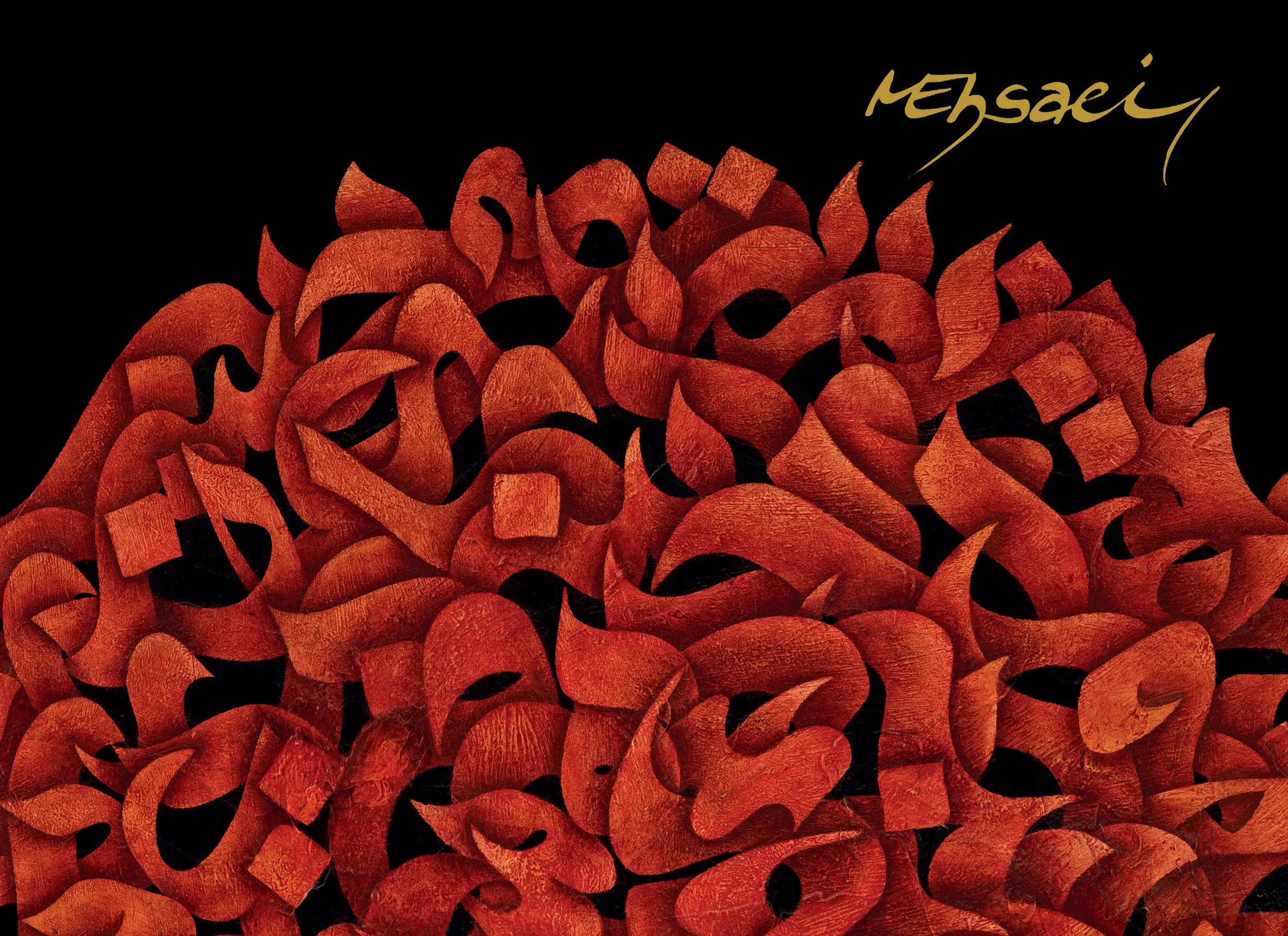
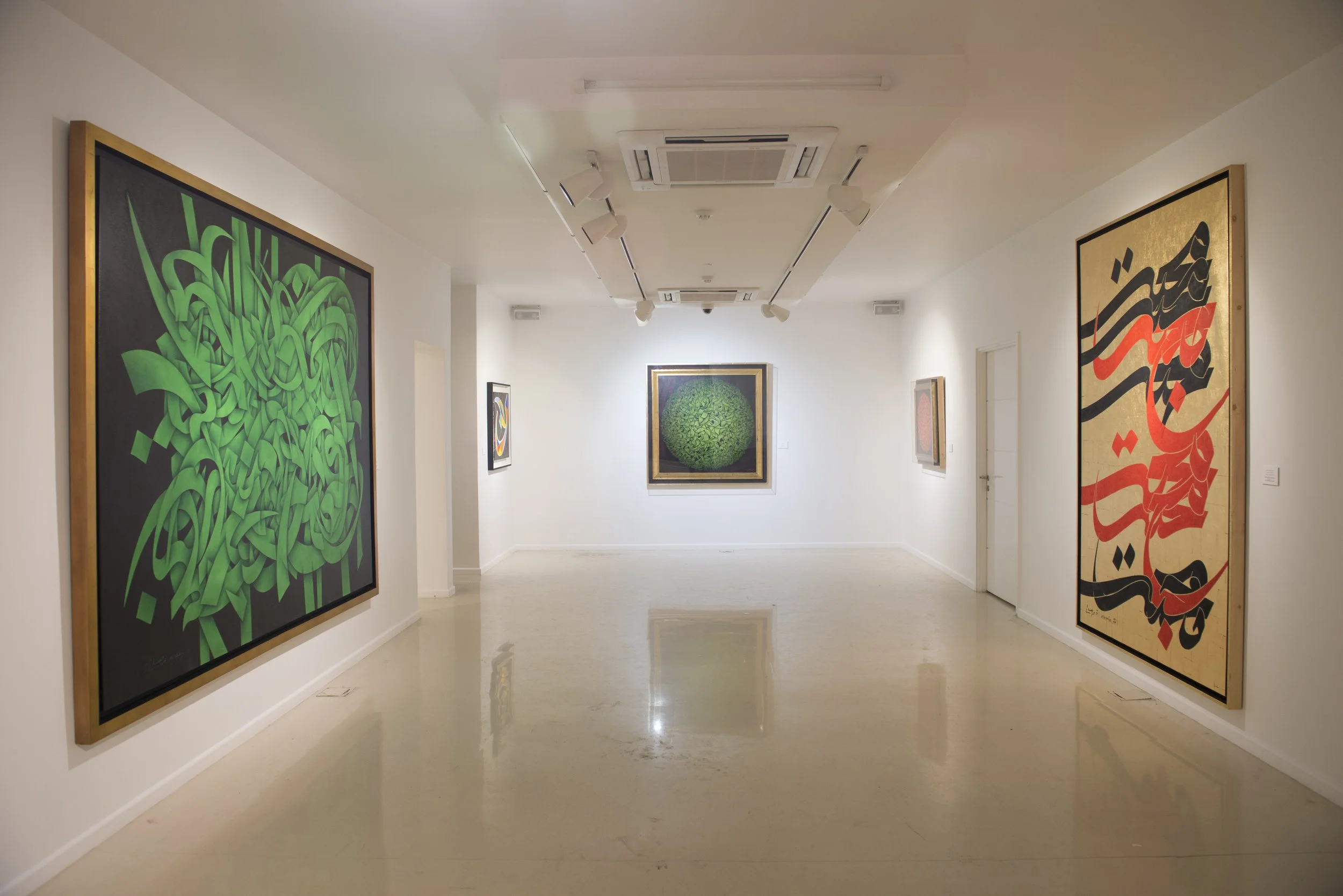
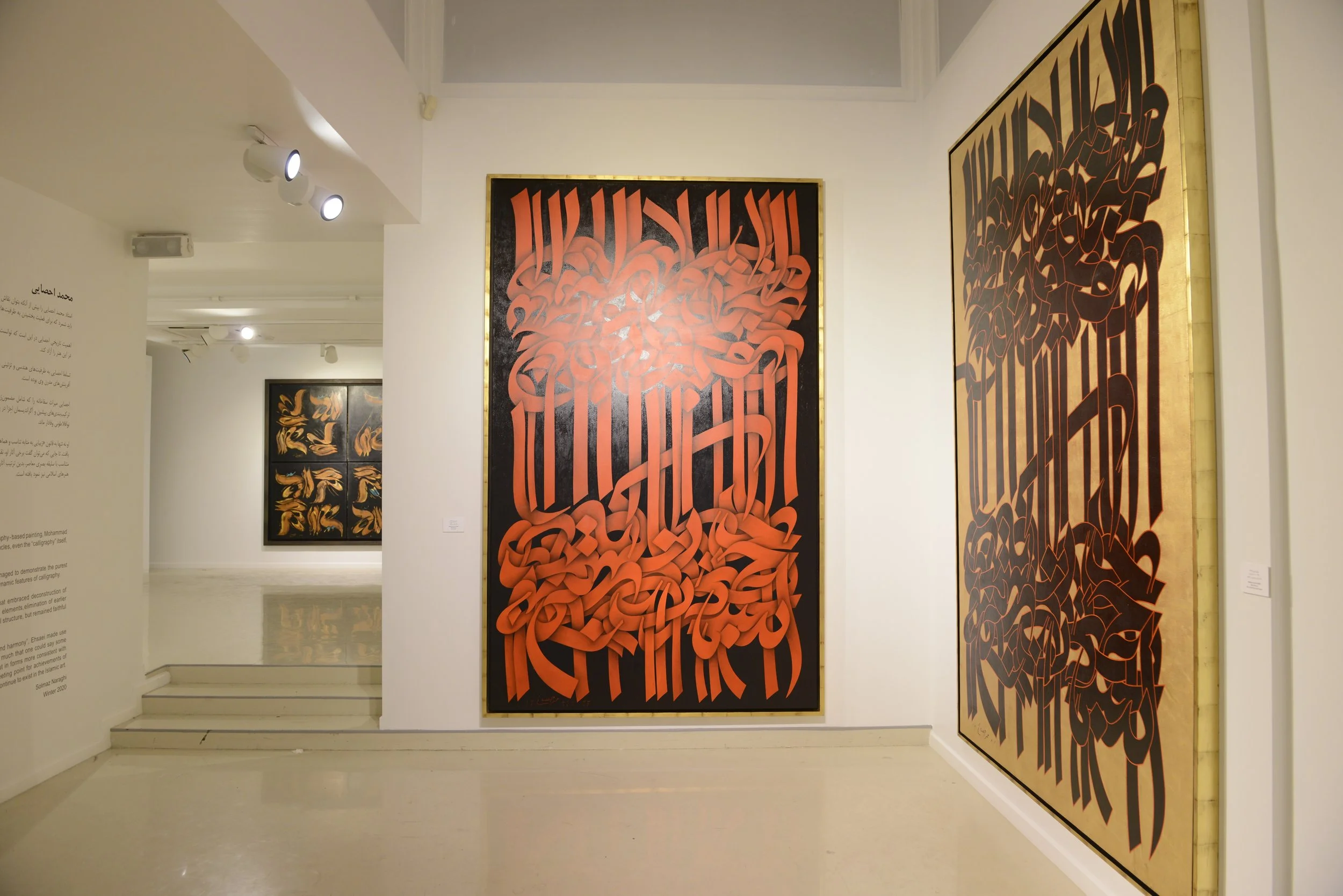
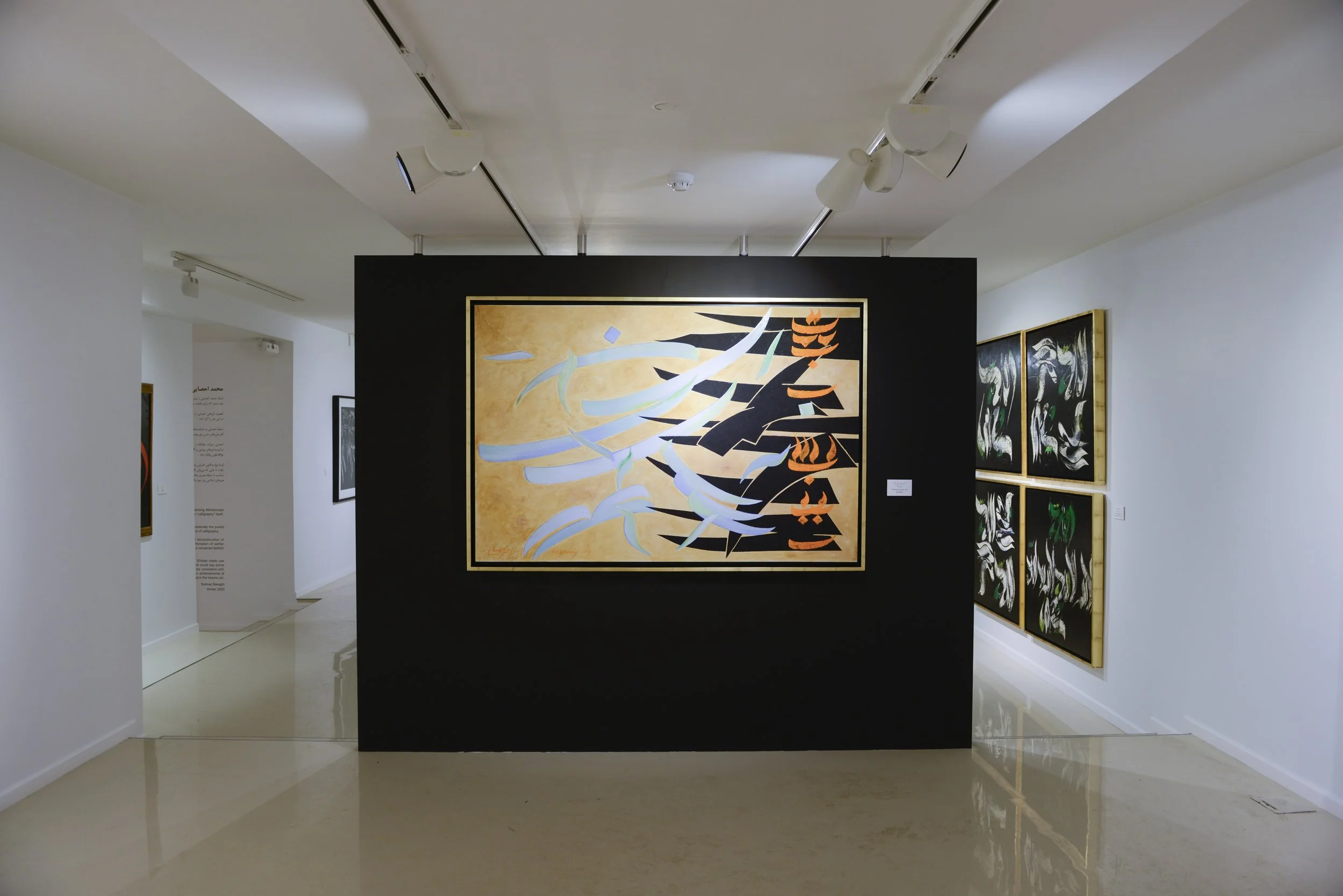
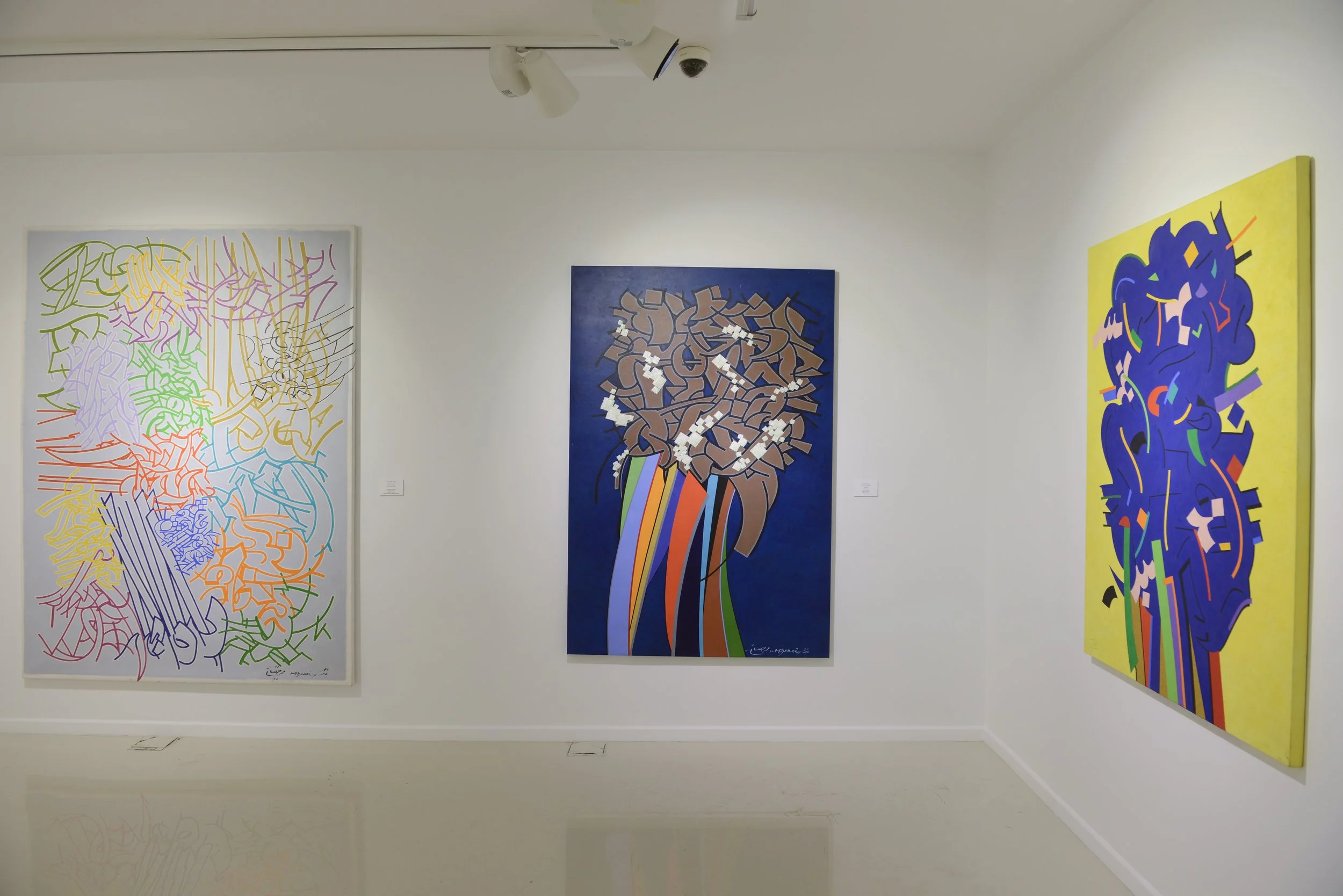
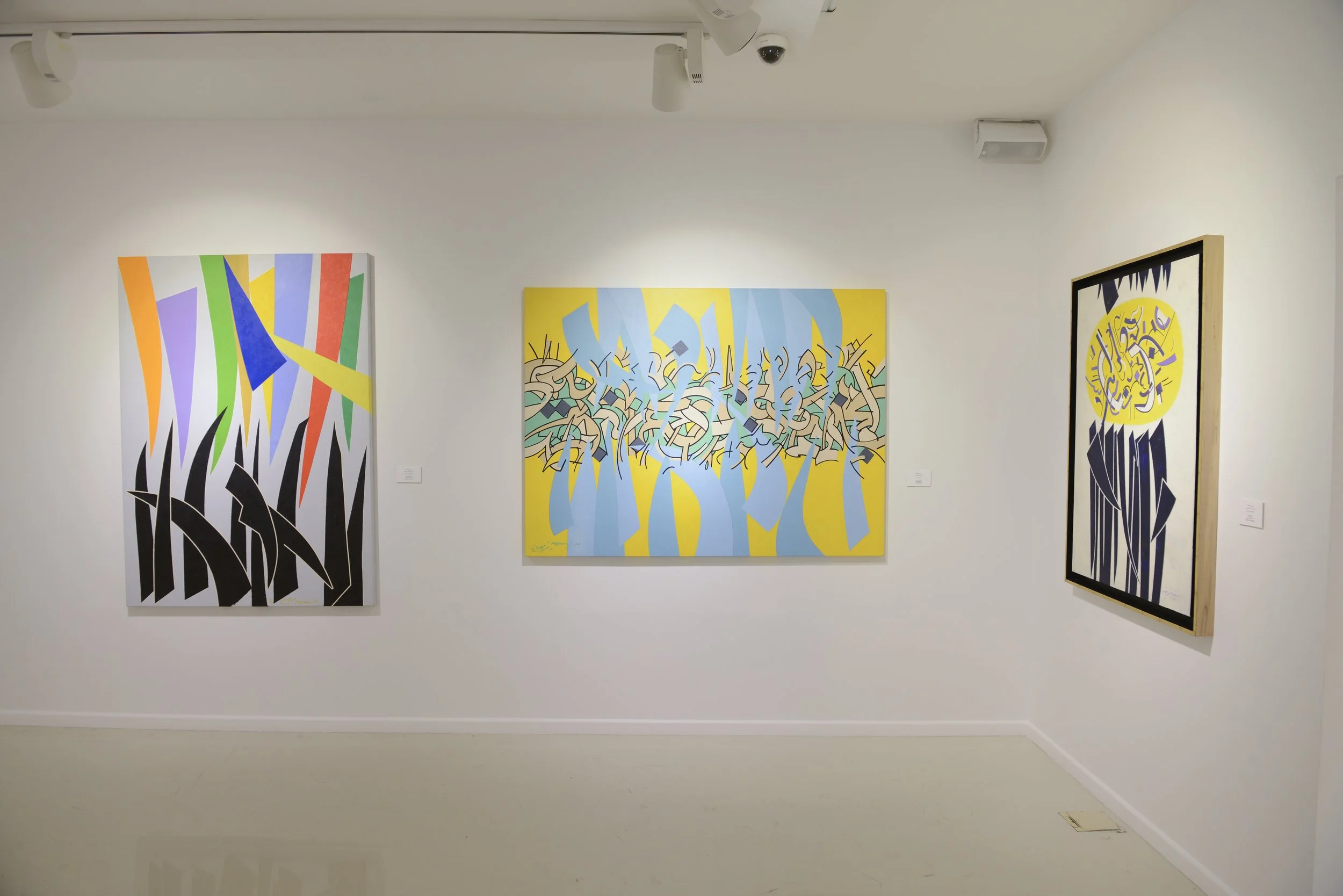
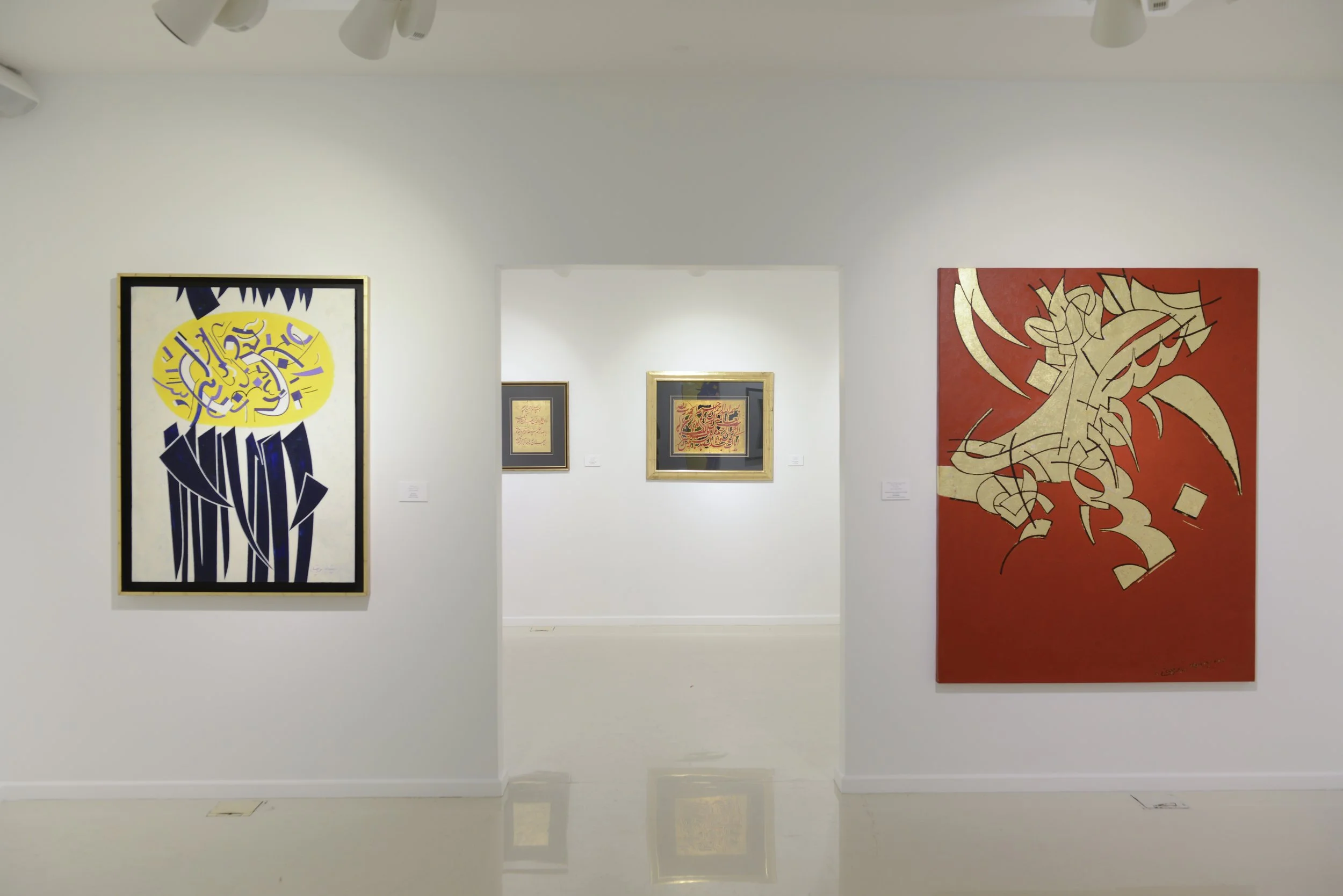
More than a painter, calligrapher or inventor of a trend in calligraphy - based painting, Mohammad Ehsaei is the creator of a style of calligraphy, removing all obstacles, even the “calligraphy” itself,to actualize all the visual potentials of this art form. The historic significance of Ehsaei lies in the fact that he managed to demonstrate the purest visual qualities of scripts in a modern form, hence releasing dynamic features of calligraphy.
Ehsaei exploited the legacy of the Saqqakhaneh School that embraced deconstruction of line, exposure of visual potentials of letters as independent elements, elimination of earlier compositions and aggrandizing of details in a different spatial structure, but remained faithful to the visual conventions prevailing Neo-Platonic aesthetics.
Embracing the convention of “beauty on par with balance and harmony”, Ehsaei made use of those eternal motifs to create freely and magnificently so much that one could say some of his works embarked on refining geometry in divine art, but in forms more consistent with contemporary visual taste. Ehsaei’s work, therefore, is a meeting point for achievements of Modernism and legacy of age-old aesthetics that prevail and continue to exist in the Islamic art.
a retrospective
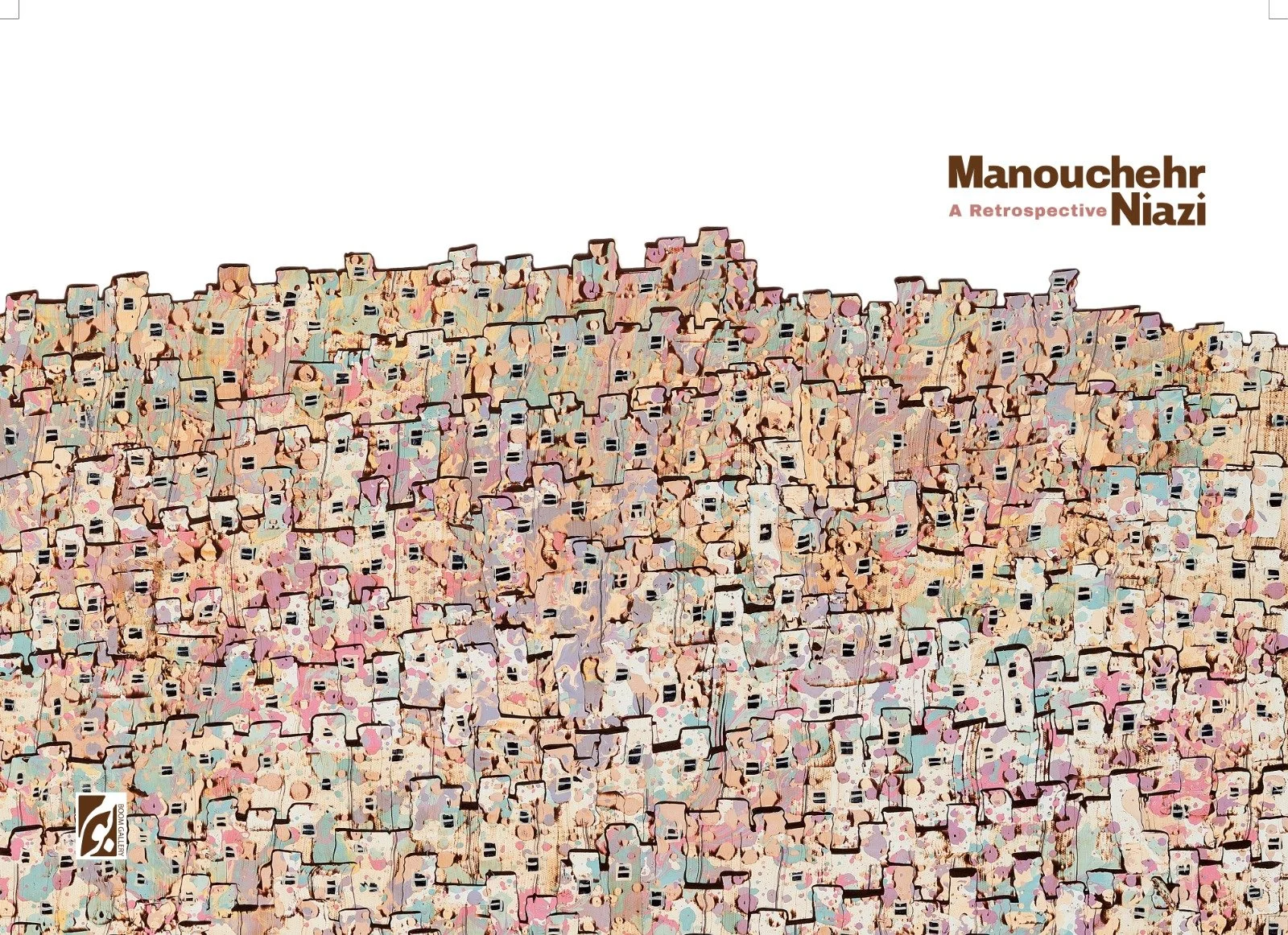
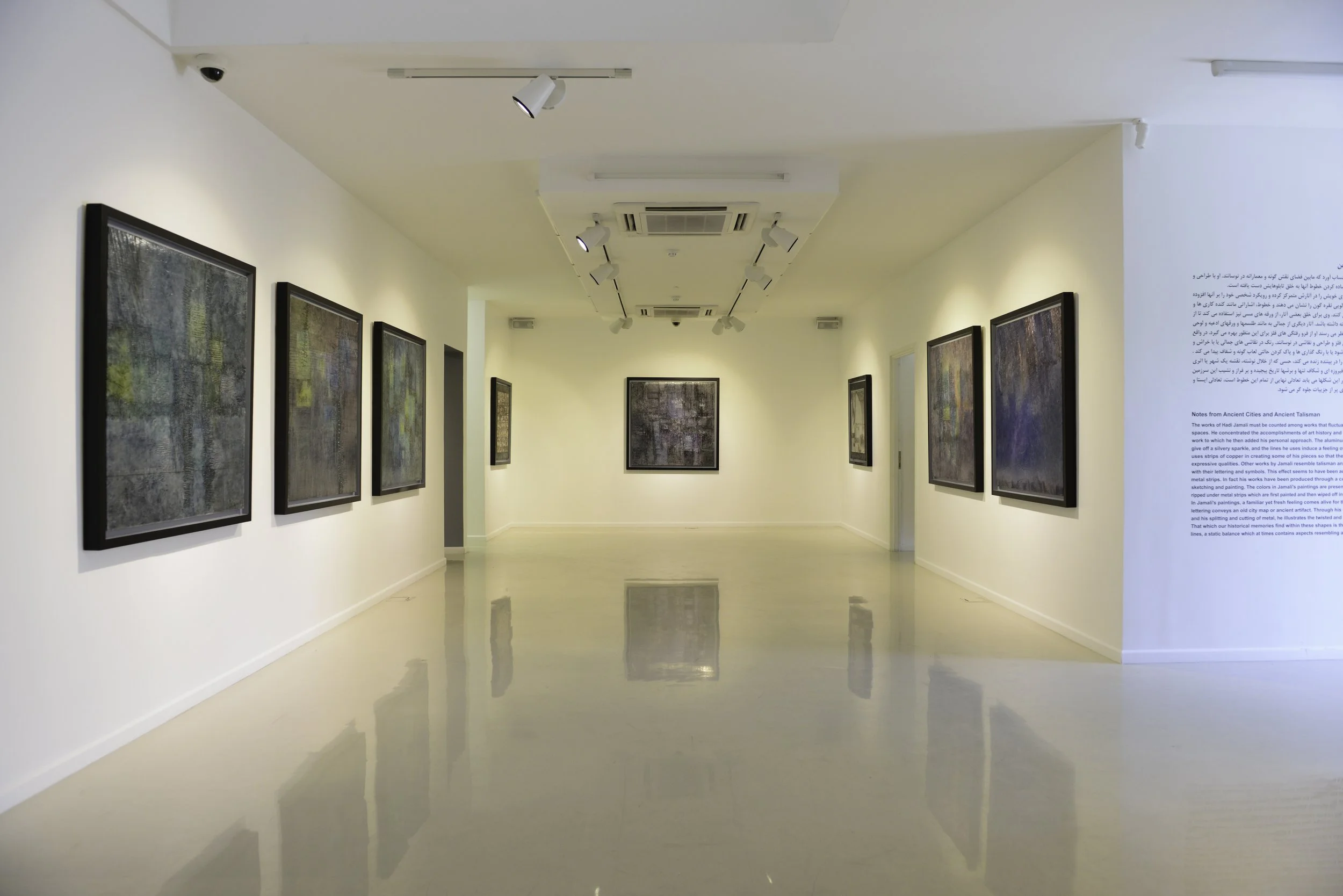
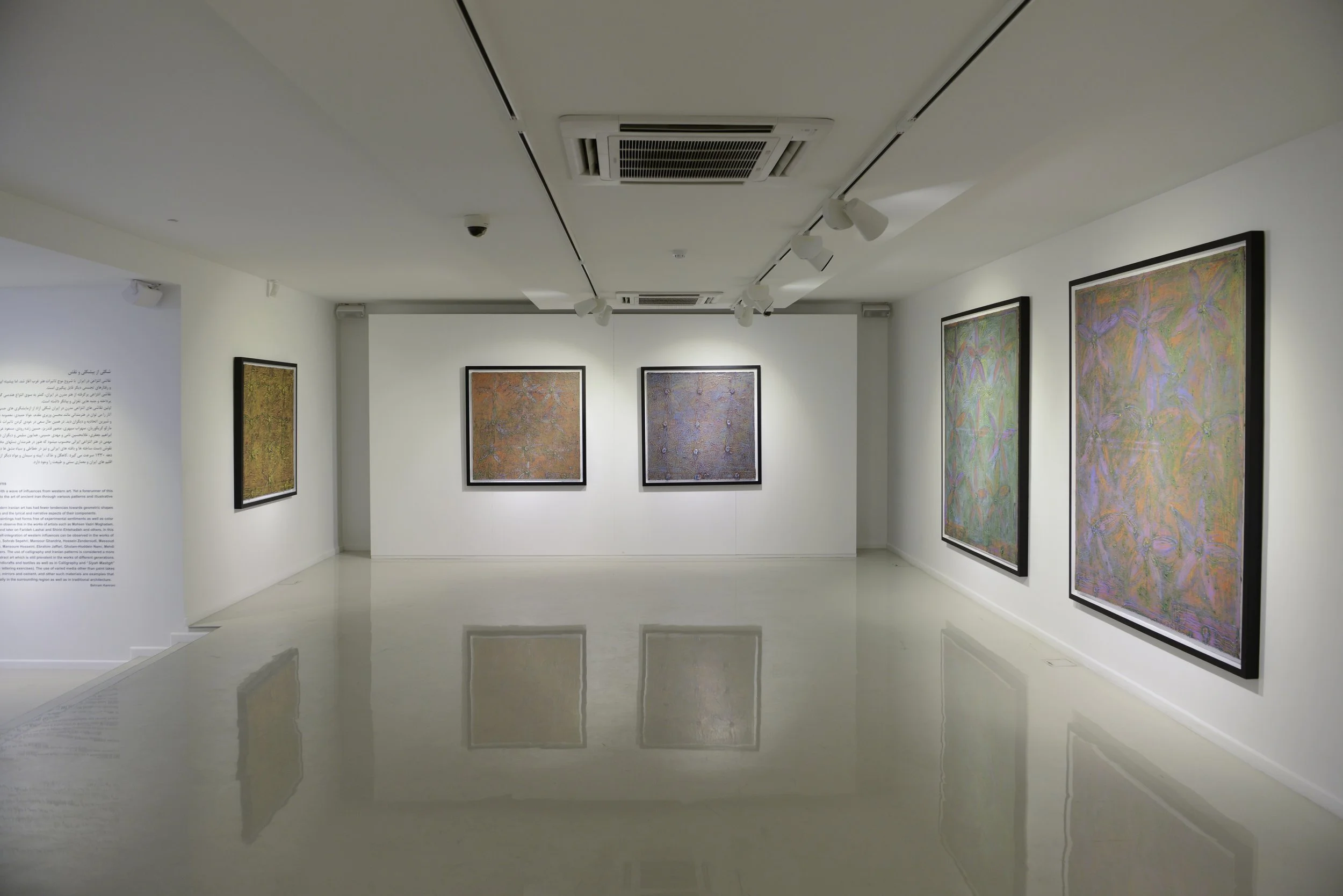
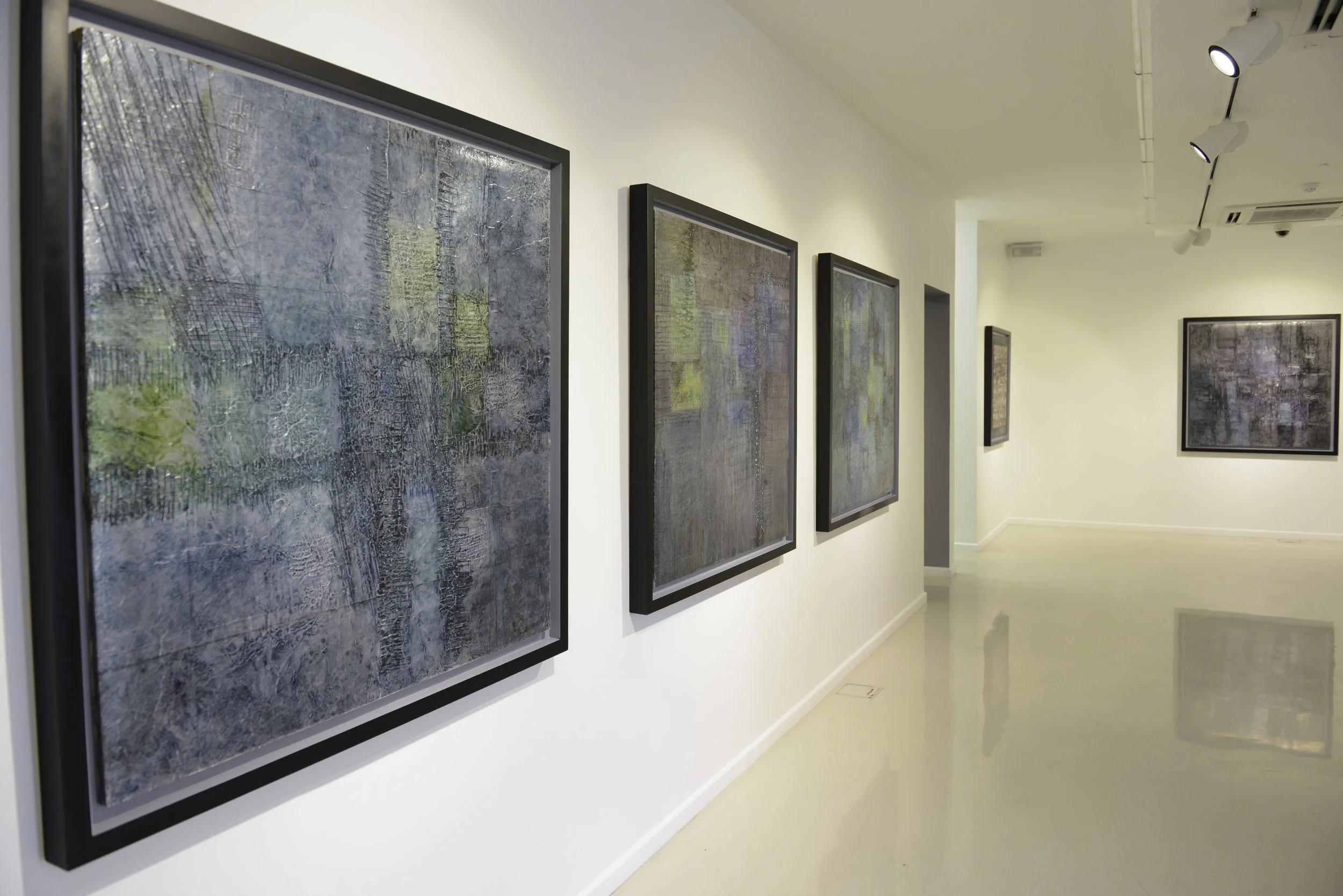
Manouchehr Niazi can be considered a philosophic painter with a Dervish-like humility, creating works that can pacify the soul and the body of spectators. He is a popular painter with more than half a century of experience, starting from his studio-shop on Manouchehri Street through to Khosh Street and on to the realm of philosophy and classical use of color, line and rhythm. When Manouchehr Niazi was creating his paintings on canvas during the late 1950’s, the same symphony of blossoming flowers and torrential rain could be felt in his work. A full- fledged Naturalist, Niazi was in love with the nature even before getting admitted to the Kamal-ol-Molk School of Arts in Tehran, and later to the Queen’s College in New York. That is why out of tens of art movements, Niazi chose iconoclastic styles and bright colors of Impressionism, and later Fauvism.
He started and still continues his long constant journey from his studio-shop on Manouchehri Street. The early experiments in the nature culminated in leading works in Abstraction.
parviz tanavoli and atelier niavaran
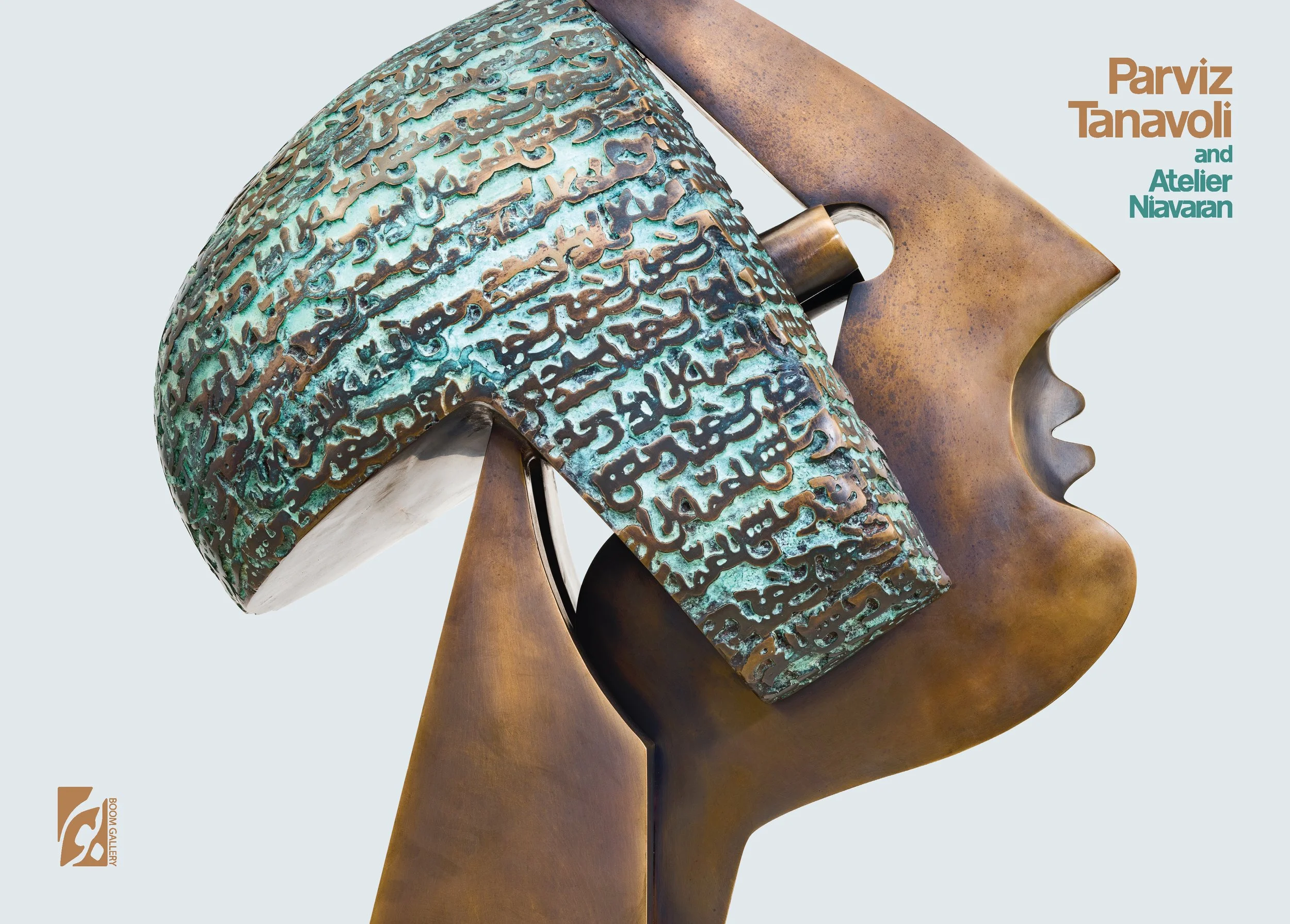
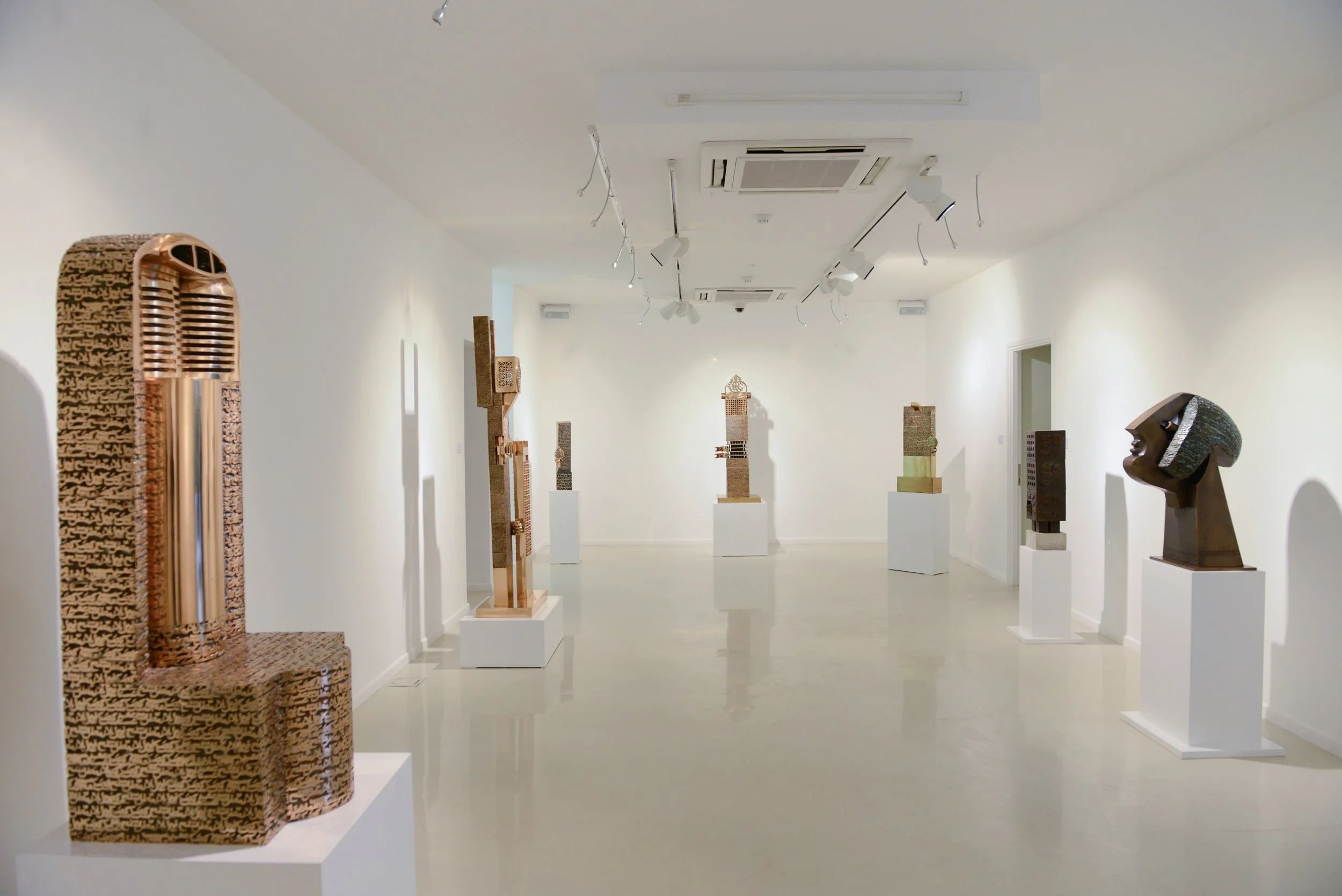
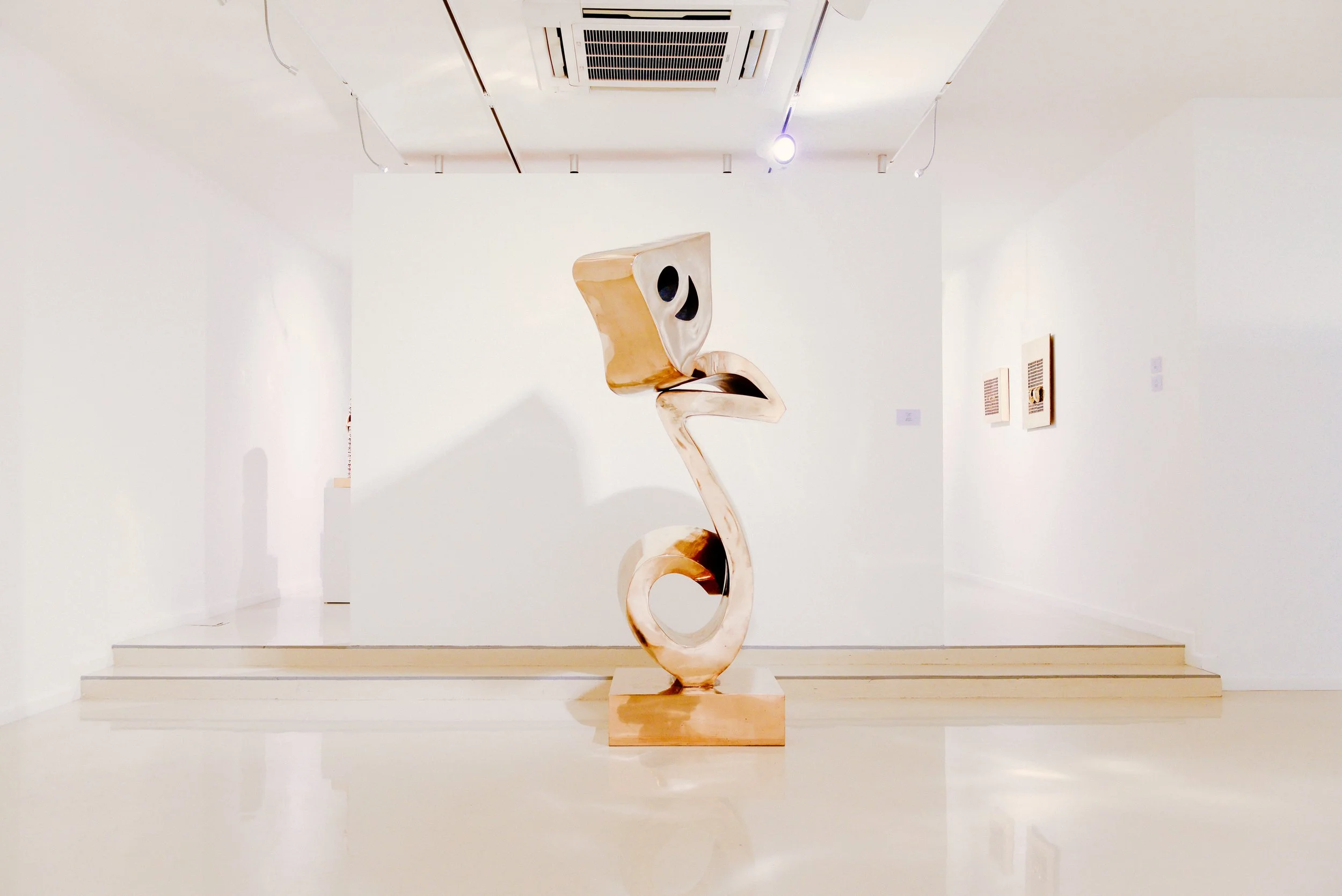
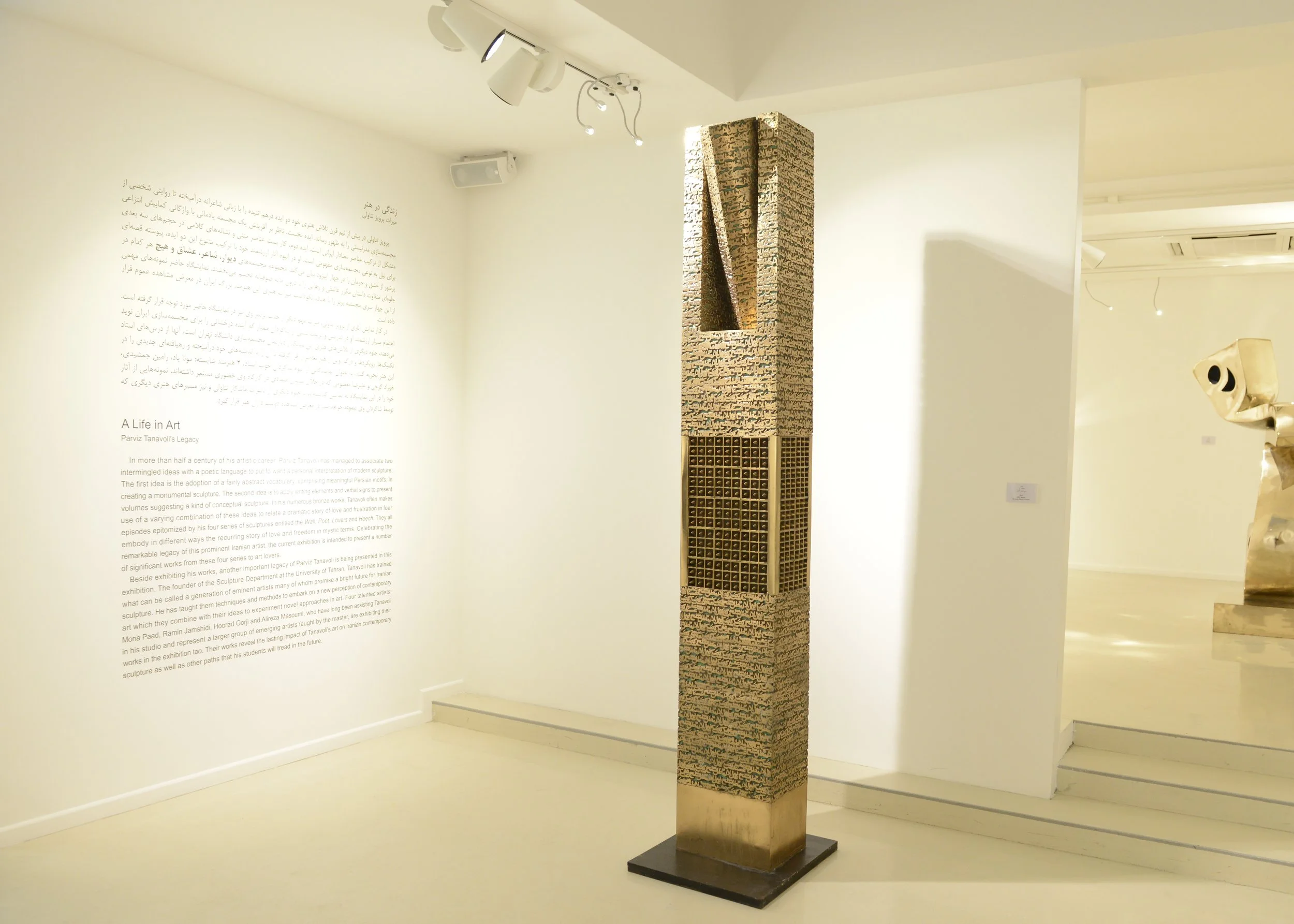
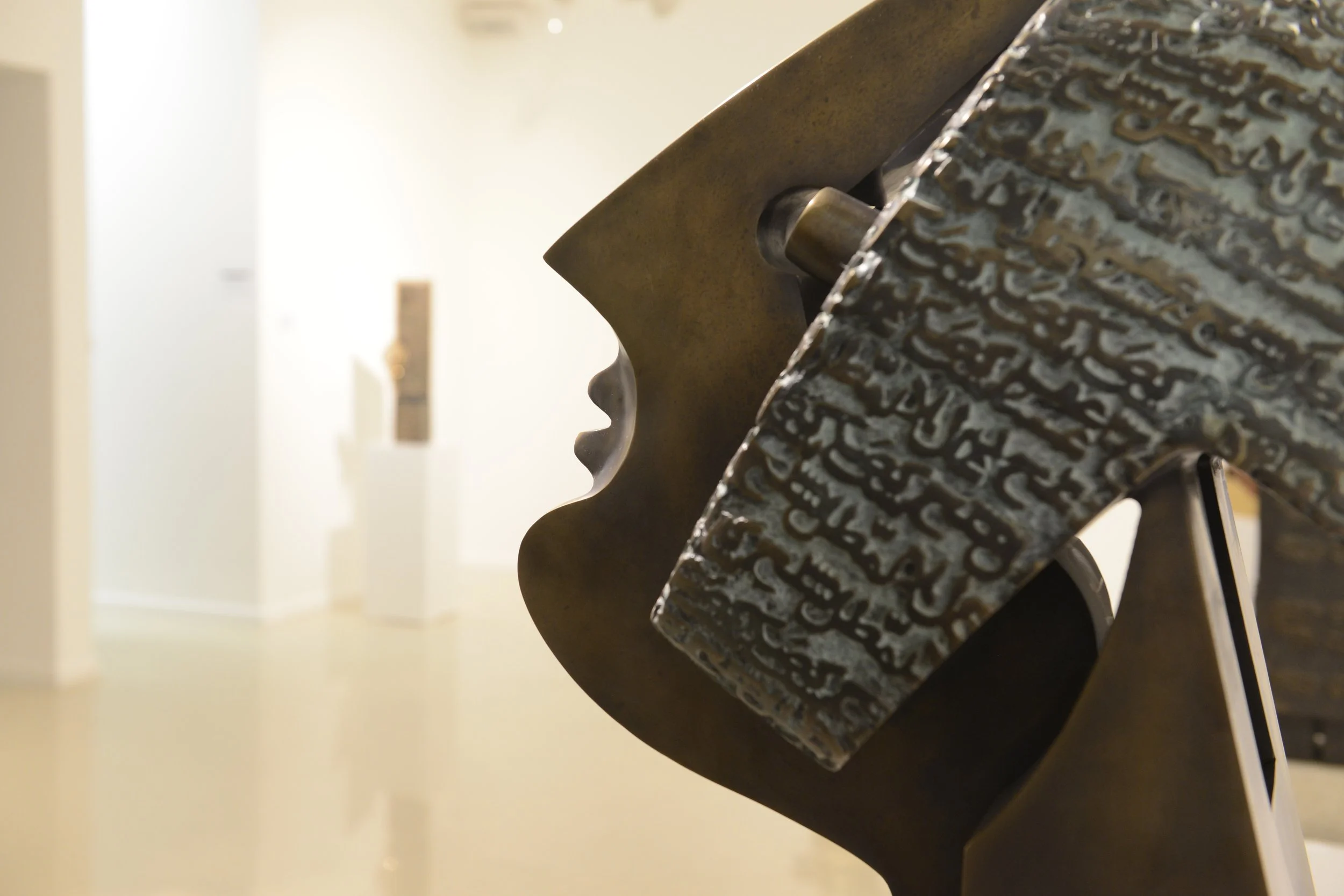
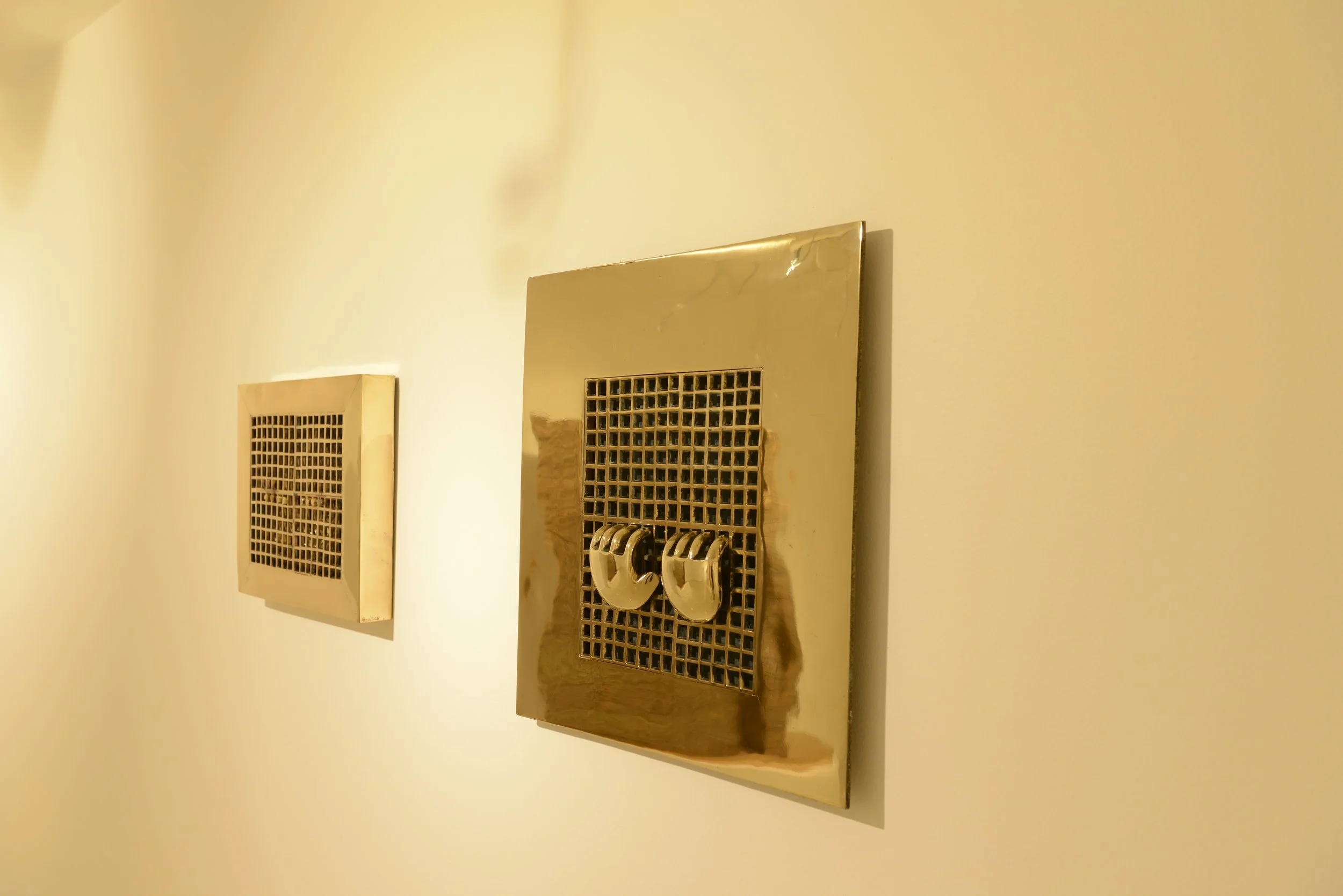
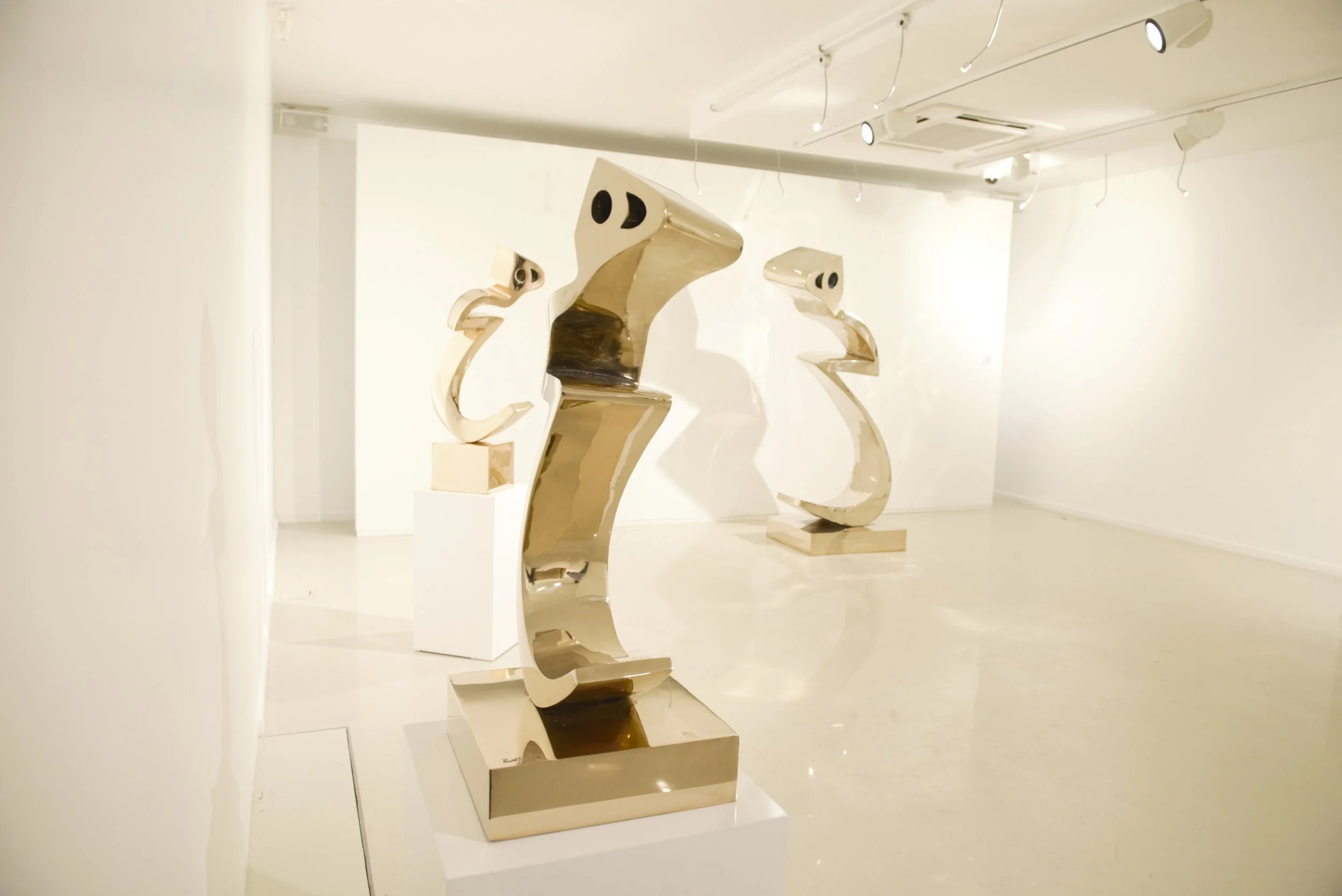
In more than half a century of his artistic career, Parviz Tanavoli has managed to associate two intermingled ideas with a poetic language to put forward a personal interpretation of modern sculpture. The first idea is the adoption of a fairly abstract vocabulary, comprising meaningful Persian motifs, in creating a monumental sculpture. The second idea is to apply writing elements and verbal signs to present volumes suggesting a kind of conceptual sculpture. In his numerous bronze works, Tanavoli often makes use of a varying combination of these ideas to relate a dramatic story of love and frustration in four episodes epitomized by his four series of sculptures entitled the Wall, Poet, Lovers and Heech. They all embody in different ways the recurring story of love and freedom in mystic terms. Celebrating the remarkable legacy of this prominent Iranian artist, the current exhibition is intended to present a number of significant works from these four series to art lovers.
These ideas are well crystallized in the Wall series, which includes formally the purest and stylistically the most modern works of Tanavoli. Recalling classical monuments, the Walls are basically free-standing monolithic sculptures that evidently reincarnate great ancient walls and relics of the Achaemenid or Sassanid dynasties. Inscribed by textual manuscripts and figurative reliefs, they are memorials to the ancient Persian civilization to which the artist pays tribute in his oeuvre.
Unlike modernist sculptures, the works of the Wall series are not essentially about the volume, but actually point to the surface of the sculpture which, being decorated by dense inscriptions, evokes historic inscriptions beyond its apparent shape. In fact, the visual power of modern geometric sculptures here lies in the surface of the Wall seemingly to recall the remains of the typical walls of ancient Persian palaces such as Bisotun Wall. The inscriptions engraved on the Wall series are occasionally pictorial calligraphy reminiscent of Egyptian and Sumerian reliefs, but at times, Arabic writings or simply a uniform textual patterns, rarely in Farsi, but always obscure and illegible.
elusive recollections
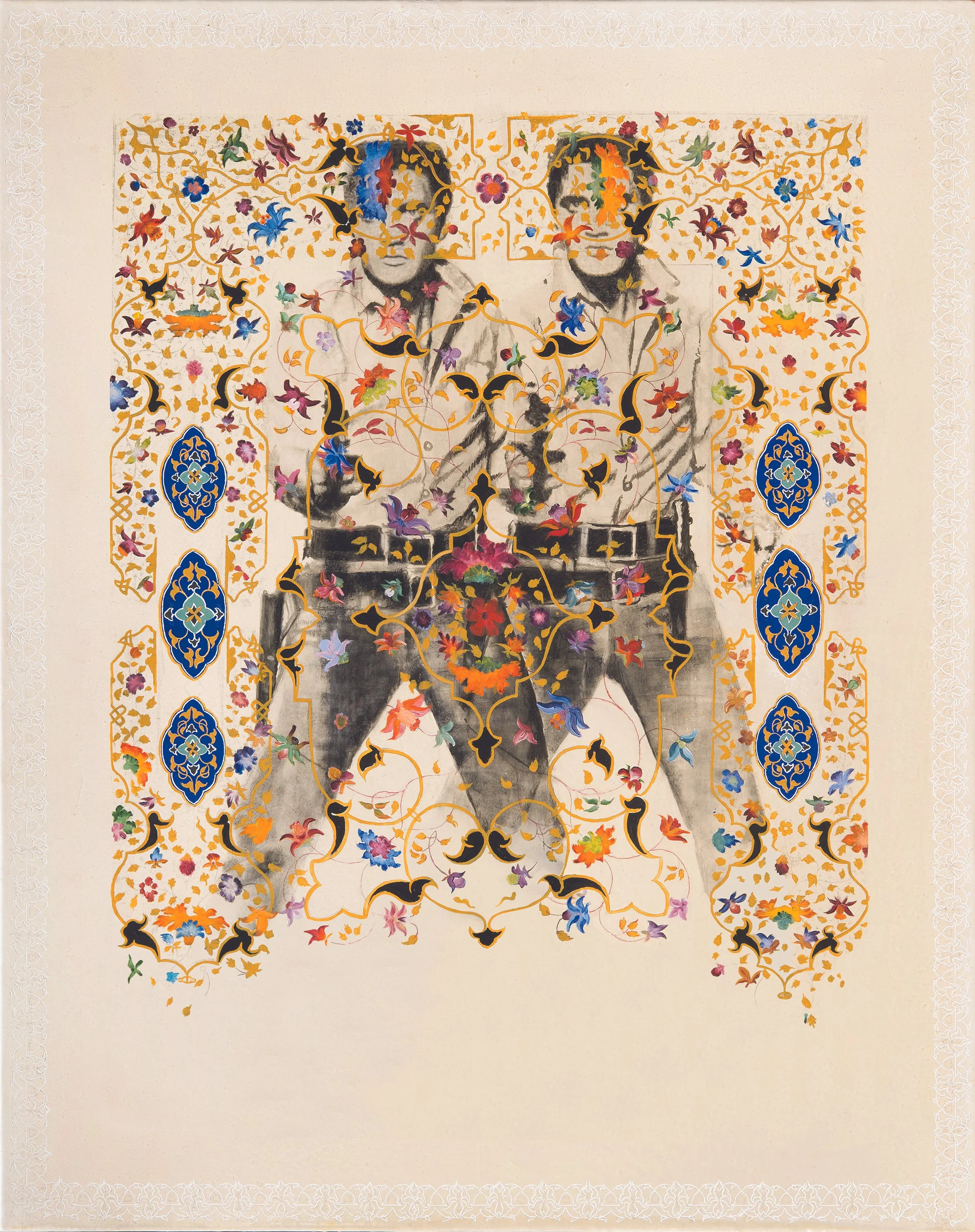
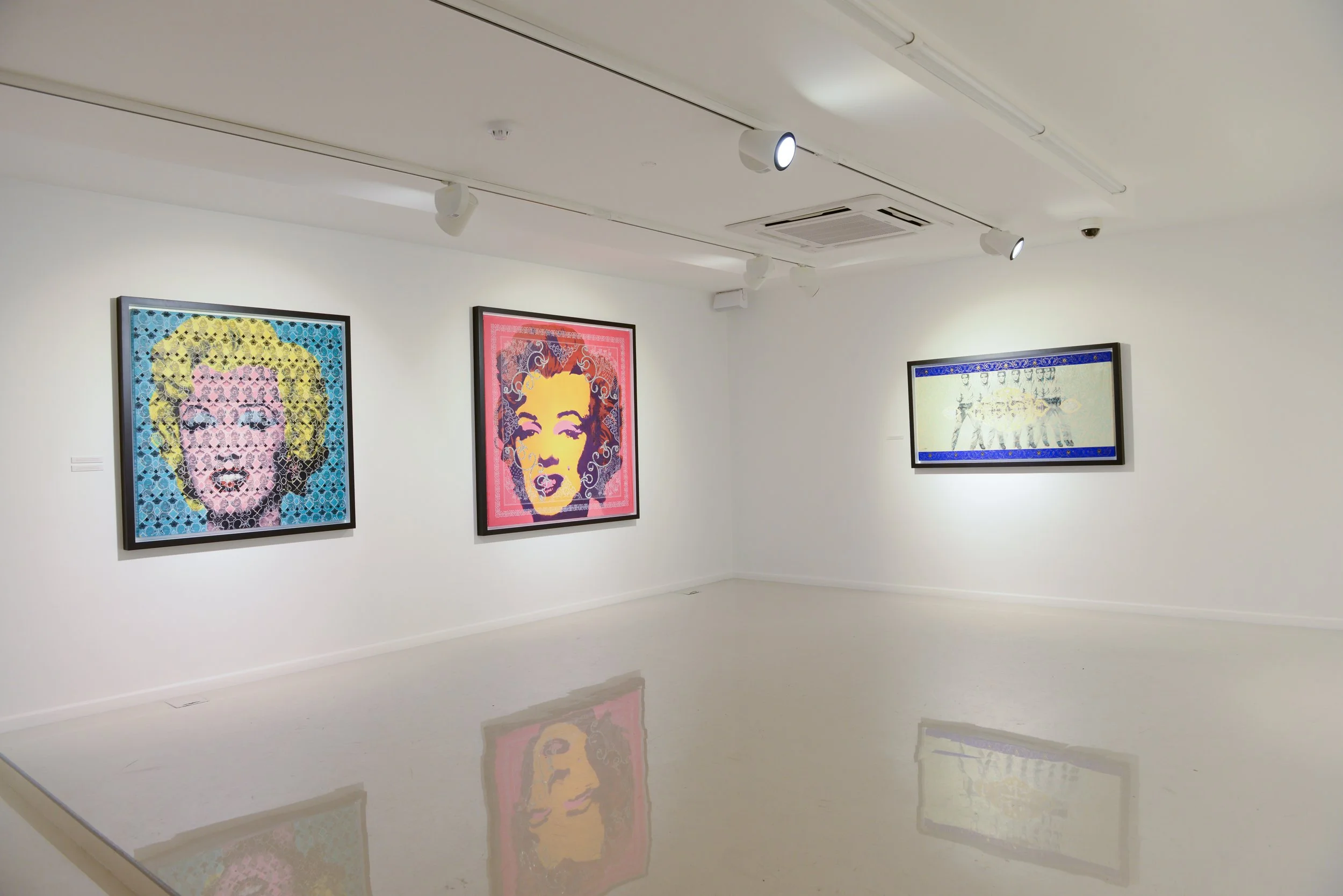
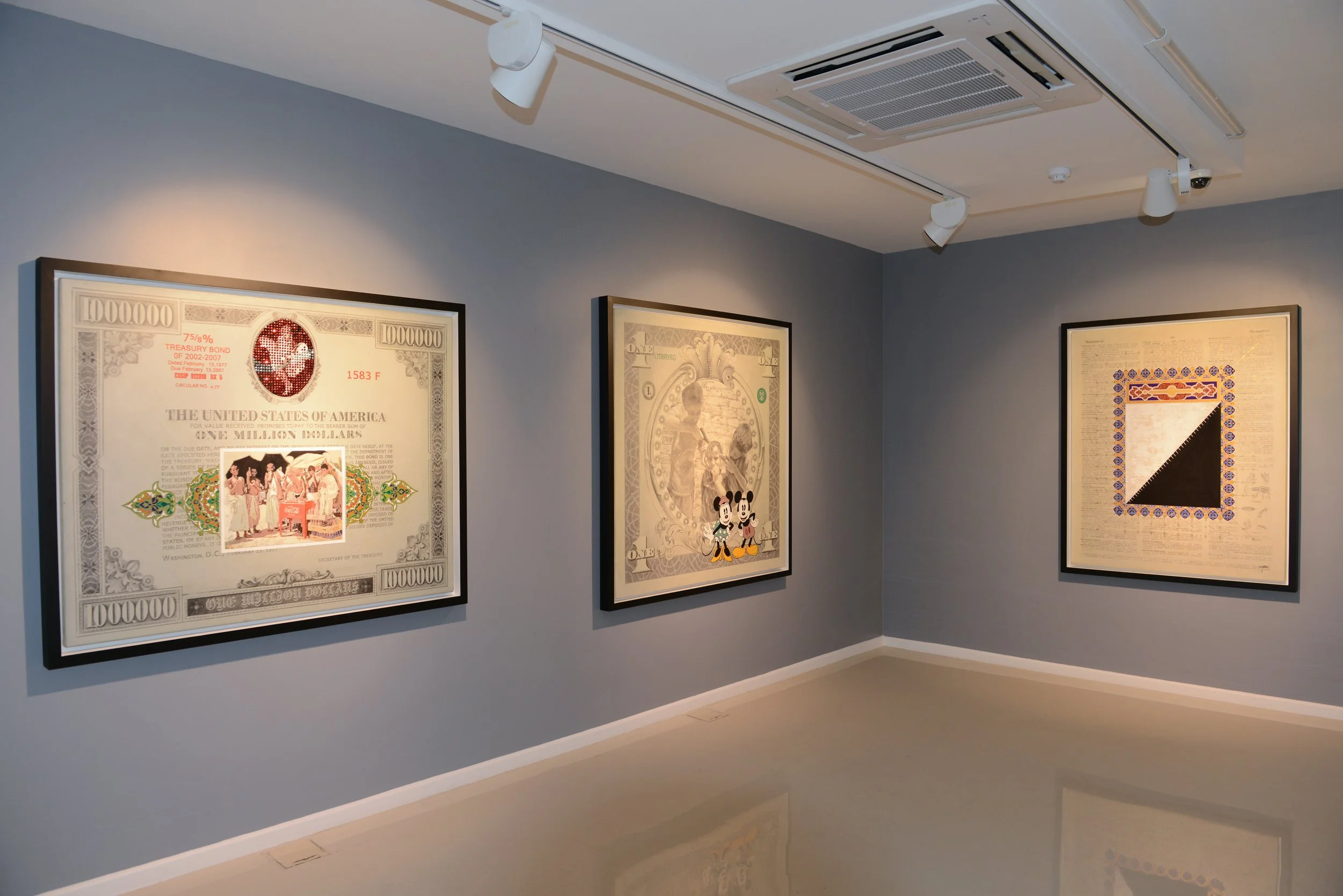
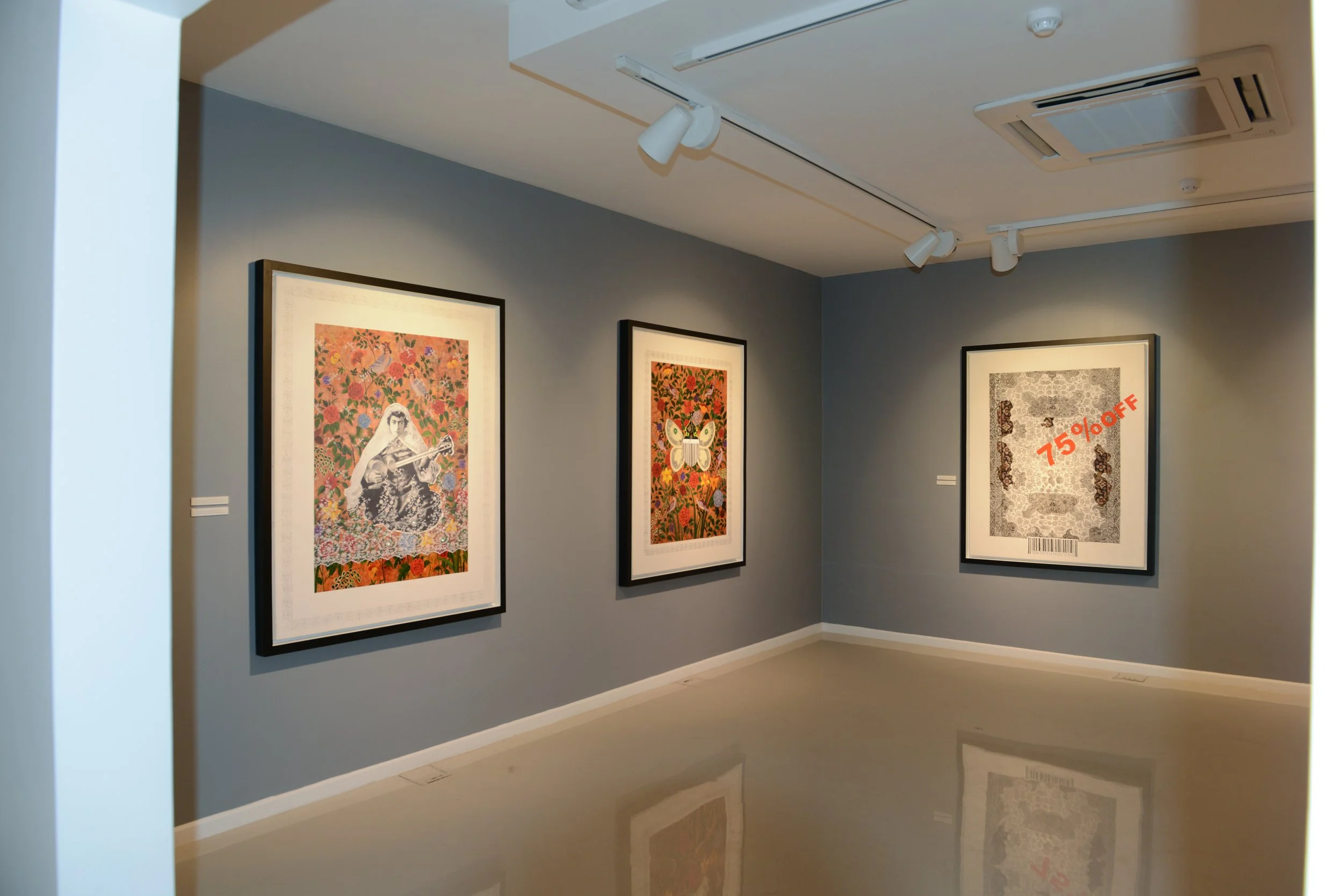
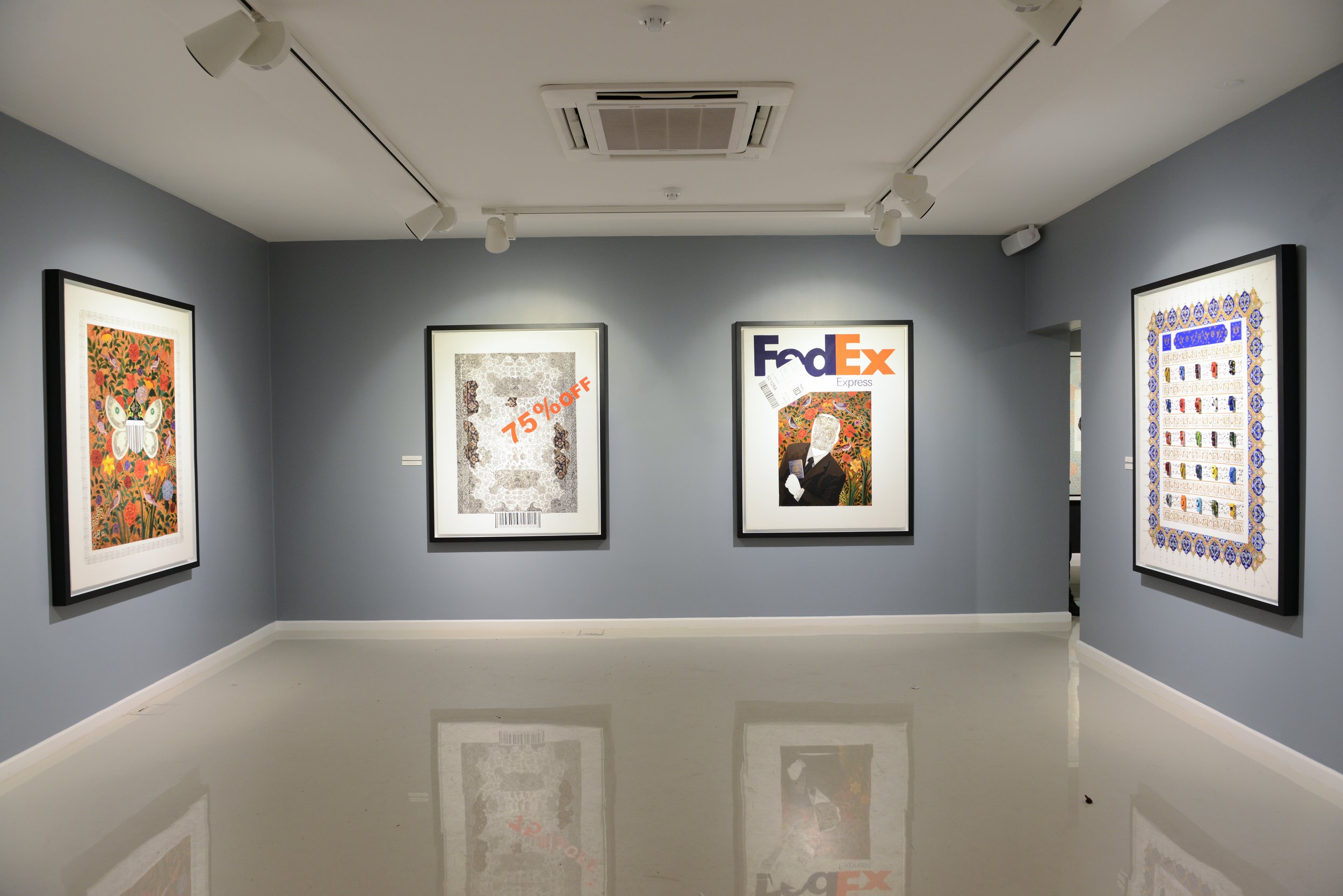
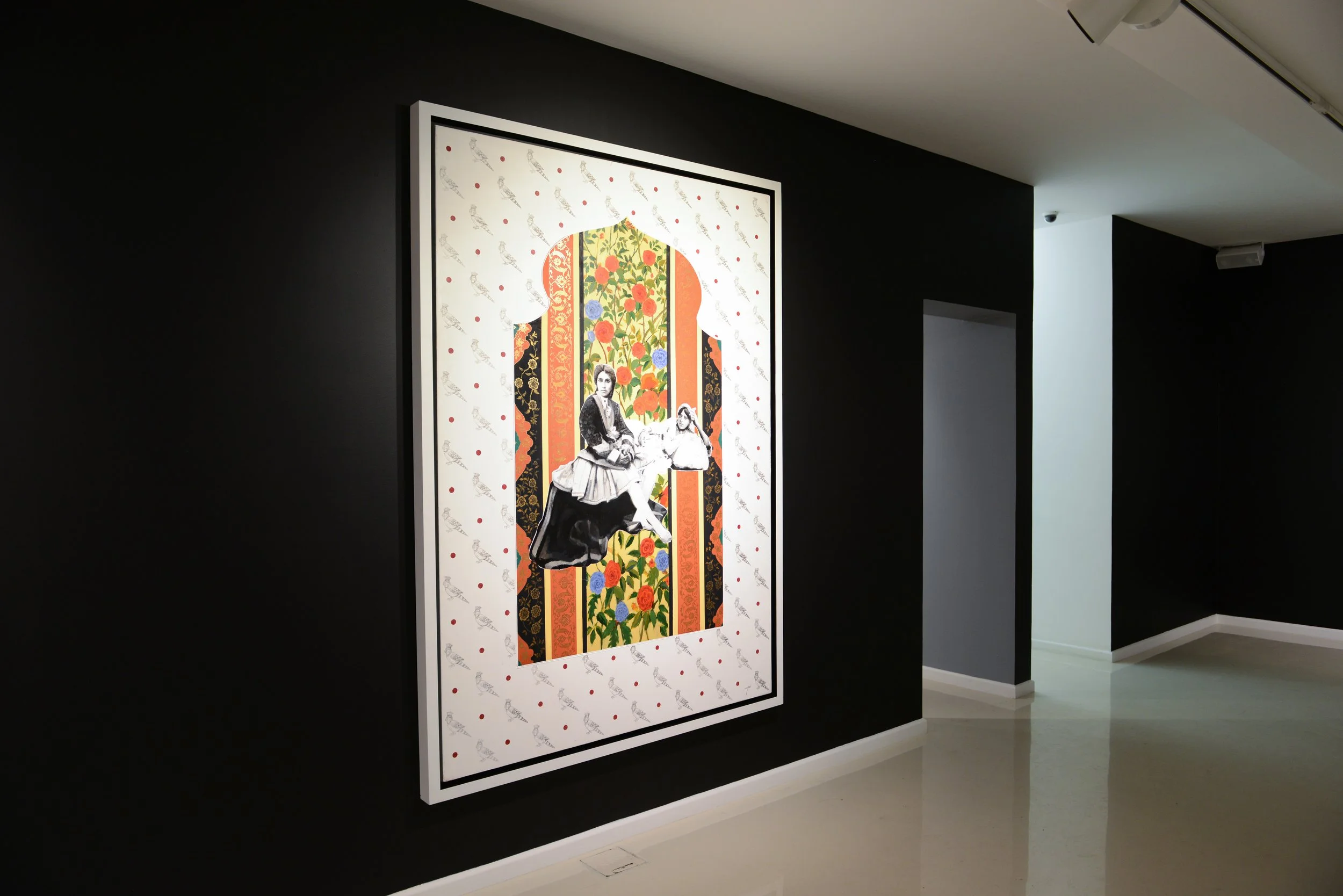
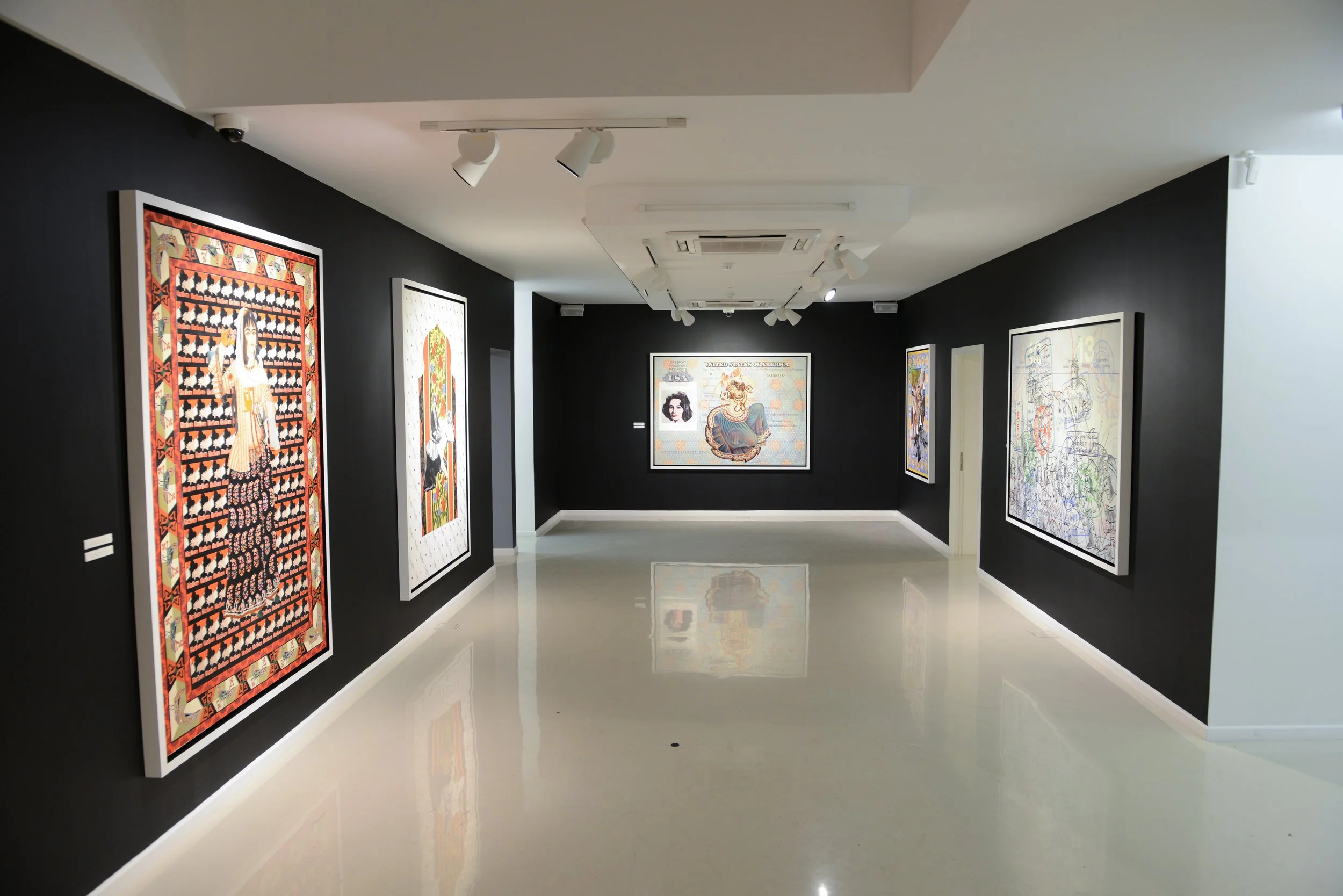
Interpretatively speaking the teleology or the end result of Sabzi’s work is abstraction. His paintings, while graphically objective and figurative, nevertheless, seek release from the narrow confines of reality. To carefully read his art is to decipher the ouroboros structure that begins as seemingly real and ends conceptually in abstraction. Thus, the implications of his works are broad, universal and metaphysical. His device for abstraction is subtle, for the means by which he structures and creates this abstraction is through the intermingling of disparate cultural symbols that bespeak the elusive narratives of transcendental identity and belief. To put it differently, as much as the symbols in his works are temporal and contextual, these symbols, by addressing the mythic-narrative signs rise above the daily experiences and the functionally known. Sabzi’s images are often culled from the Western and Eastern artistic repertoire which, when conjoined, appear as distinctly alien outlooks, and thus not surprisingly, these designs allude to the interminable and unbounded possibilities of being. It is this quality more than any other that makes these recollections and reformulations in his art elusive and thus abstract.
layers of abstraction
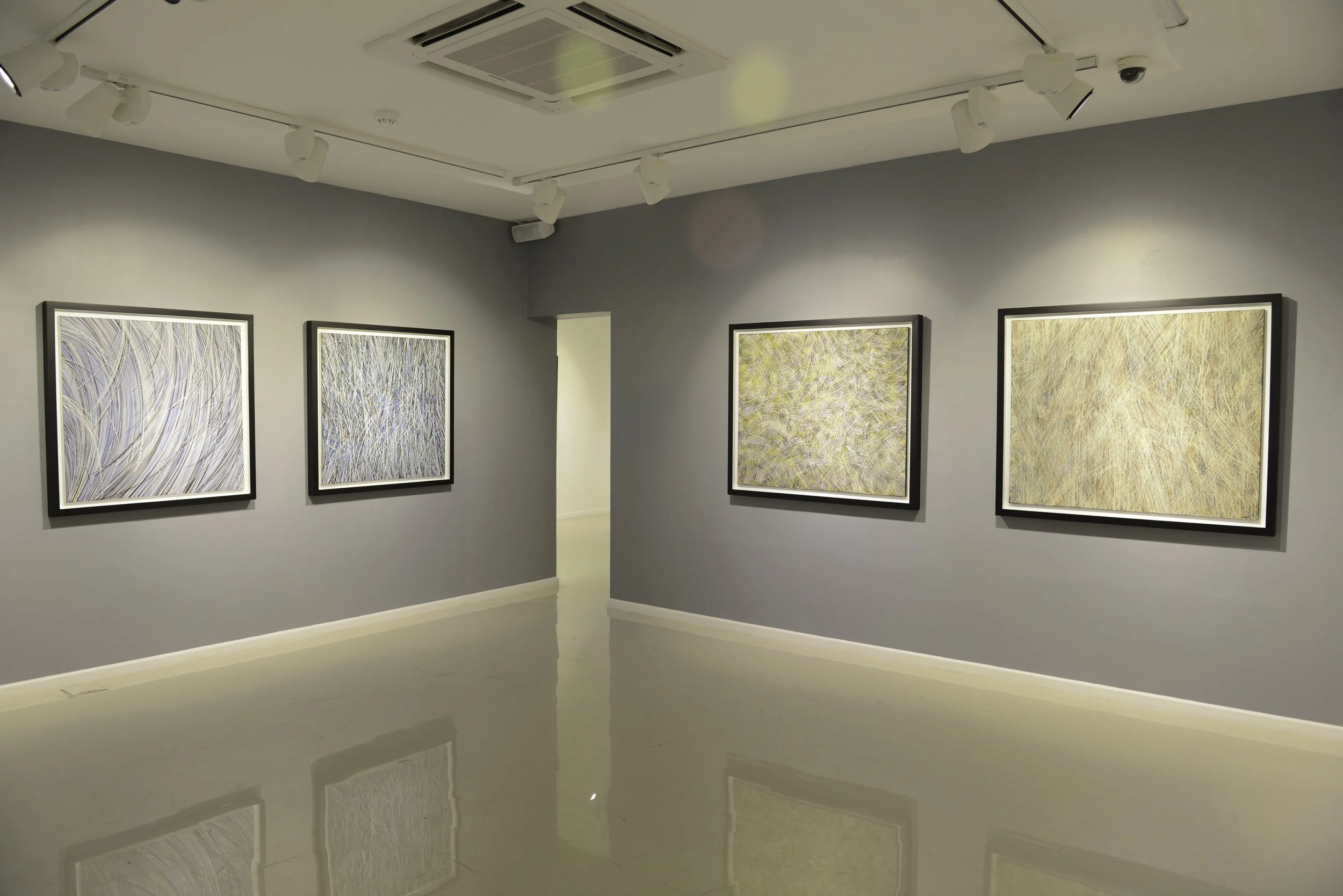
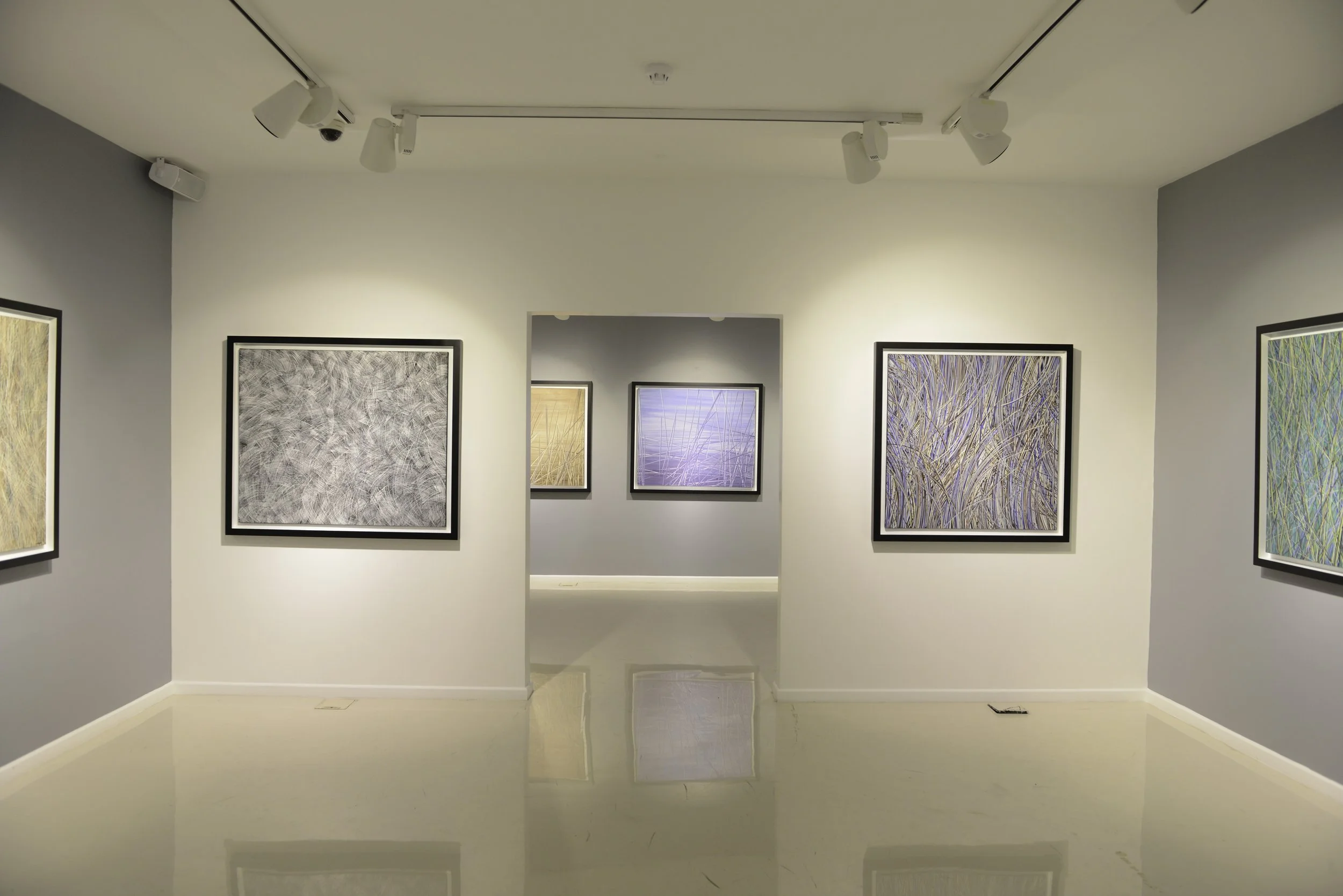
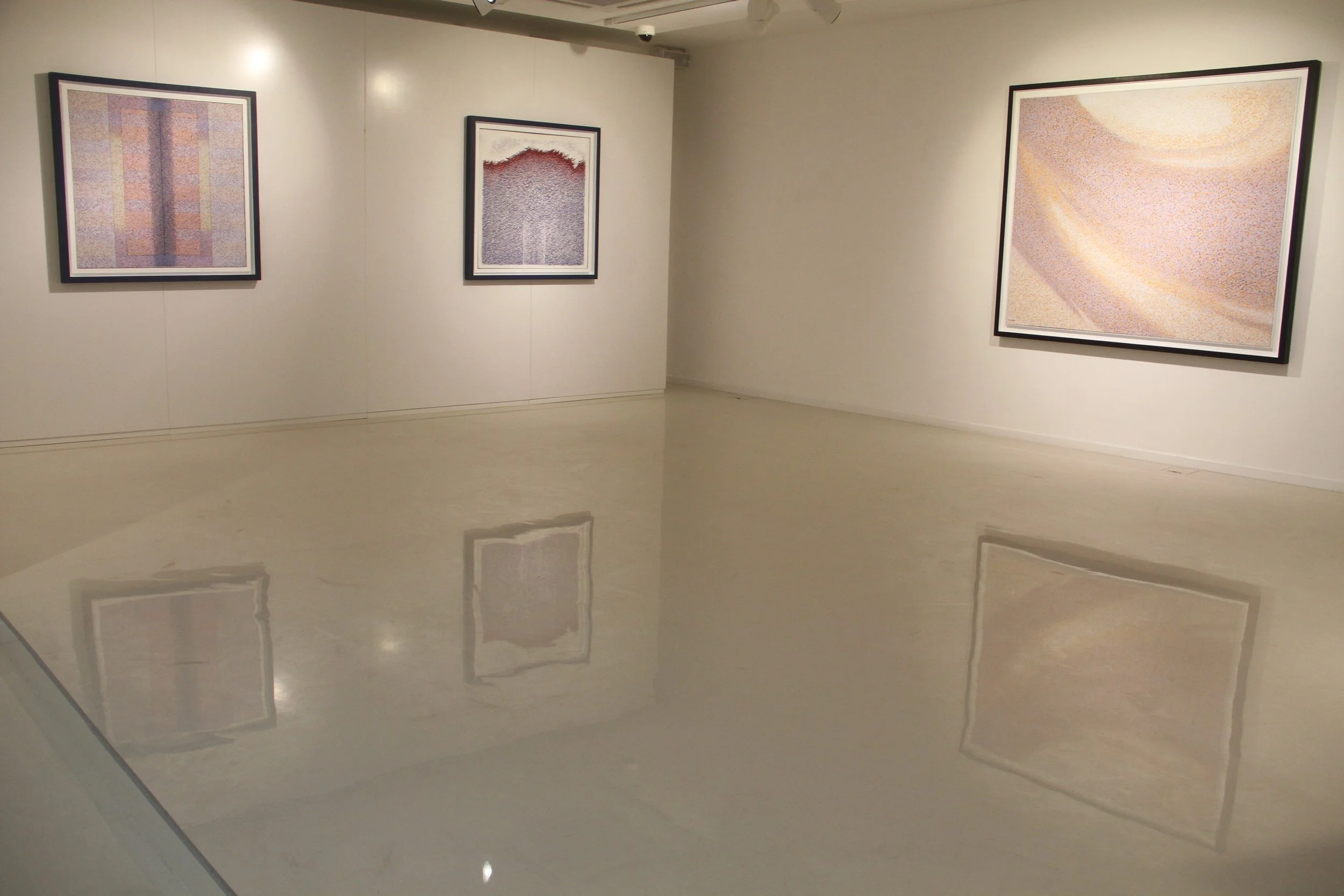
The works of Reza Khodadadi present various aspects of assembling patterns and shapes alongside each other in mixed media. Continuity and colored material play an integral part in his art. His love for Rumi’s poetry adds a poetic narrative to his paintings. In this series “Heyrani va Zekr” (Bewildered Chants) the viewers face an abstract work which allows them to make a literal ‘reading’ of a visual expression. The Bewildered series is created with carefully drawn overlapping lines. These lines stand out in the background even though they are at times diluted, and their resemblance to straw and hay gives the painting the feel of a landscape. These landscapes seem distant from eastern landscapes yet during his creative process Khodadadi distances his work from these familiar scenes. The over-stacking and criss-crossing of lines confer on the painting a feeling of pattern. Straight lines begin to curl and give a feel of wind and dishevelment that can be fathomed as tantamount to bewilderment. The contrasting lines play an integral part in the aesthetics of this painting while the colors are from the same group (unless used for background spacing). Line segments are the simplest of visual ingredients, yet the artist, through detailed stacking and shading, has turned them into patterns. A sort of optical illusion is produced by this stacking that concentrates how they are viewed.


vision of three
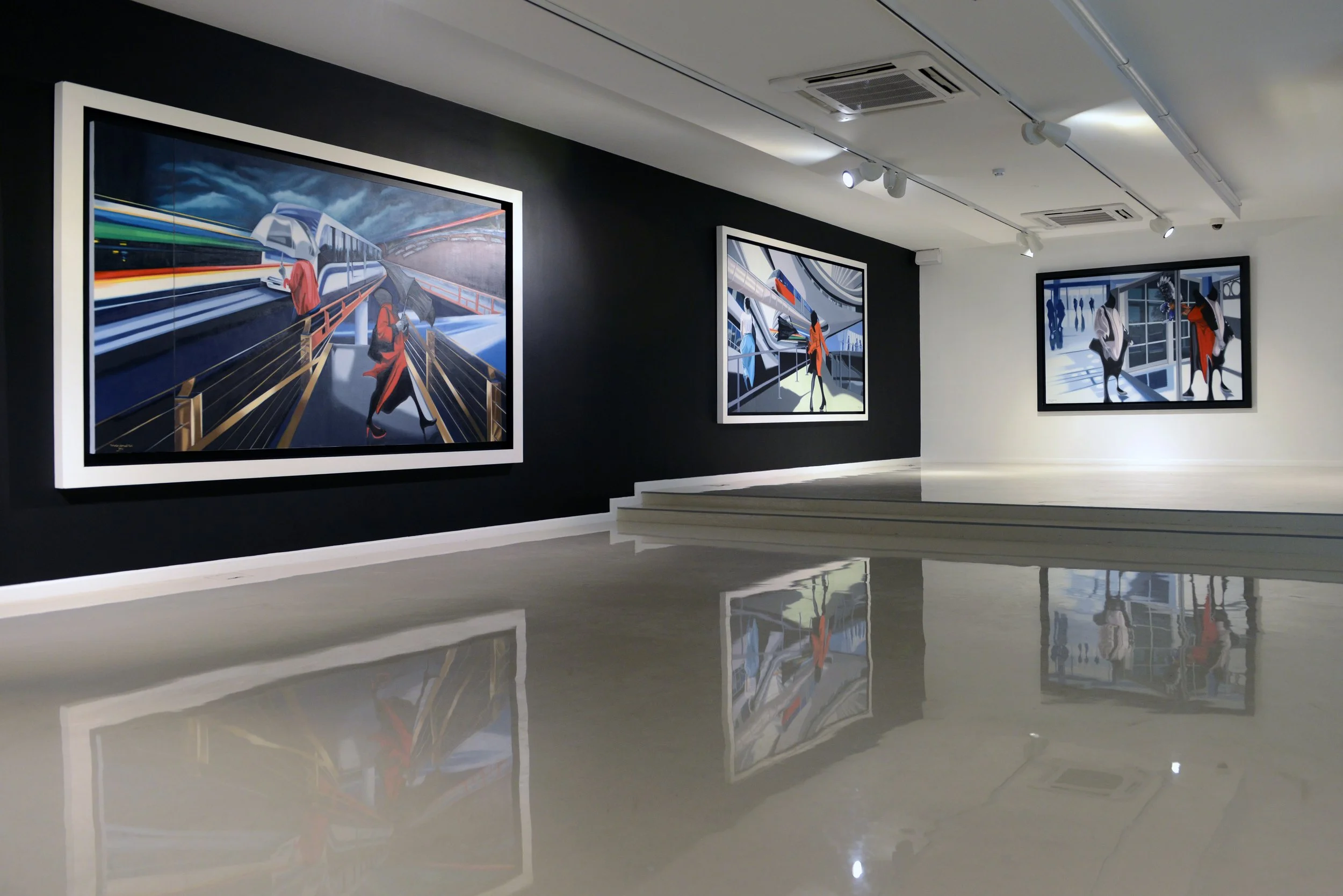
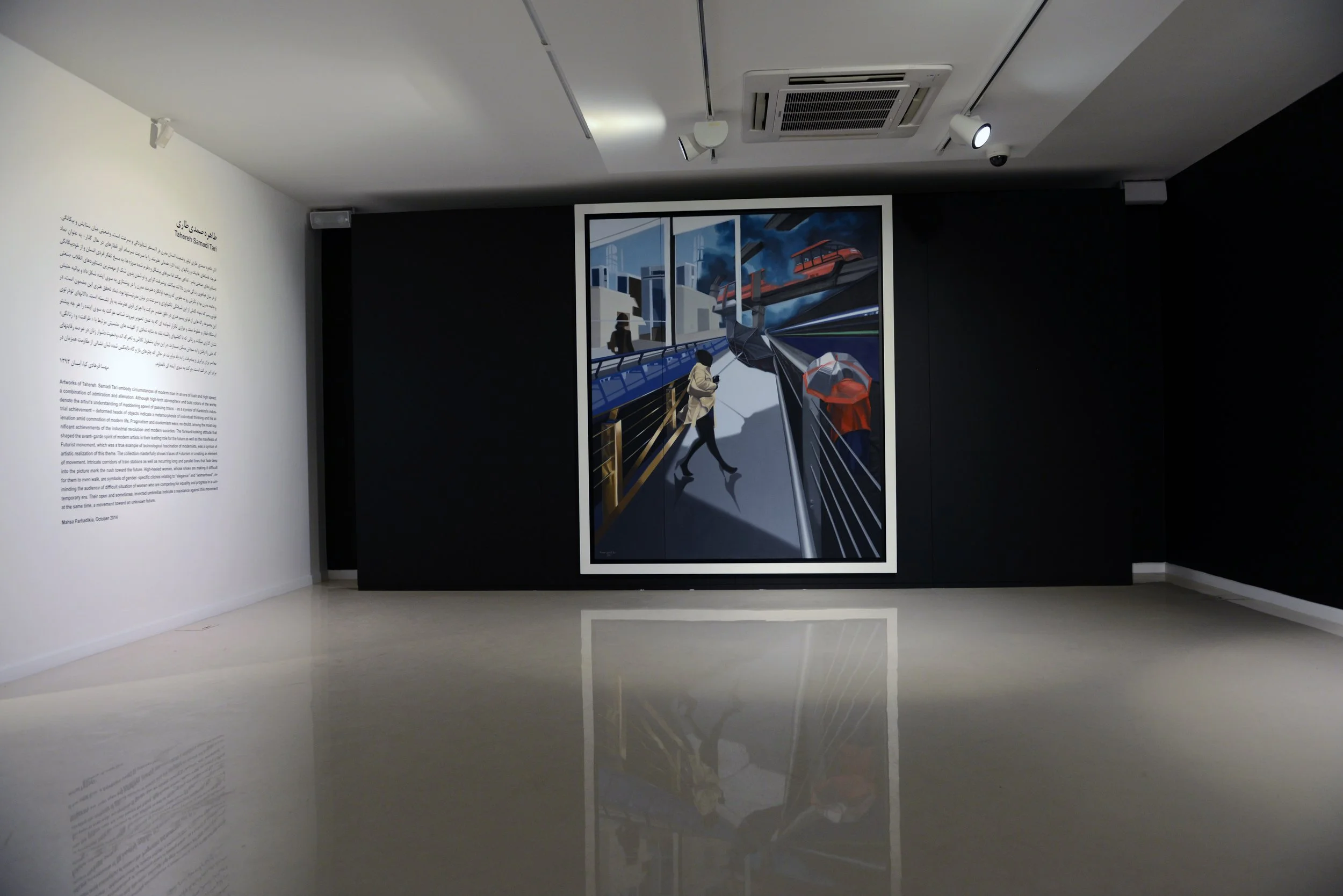
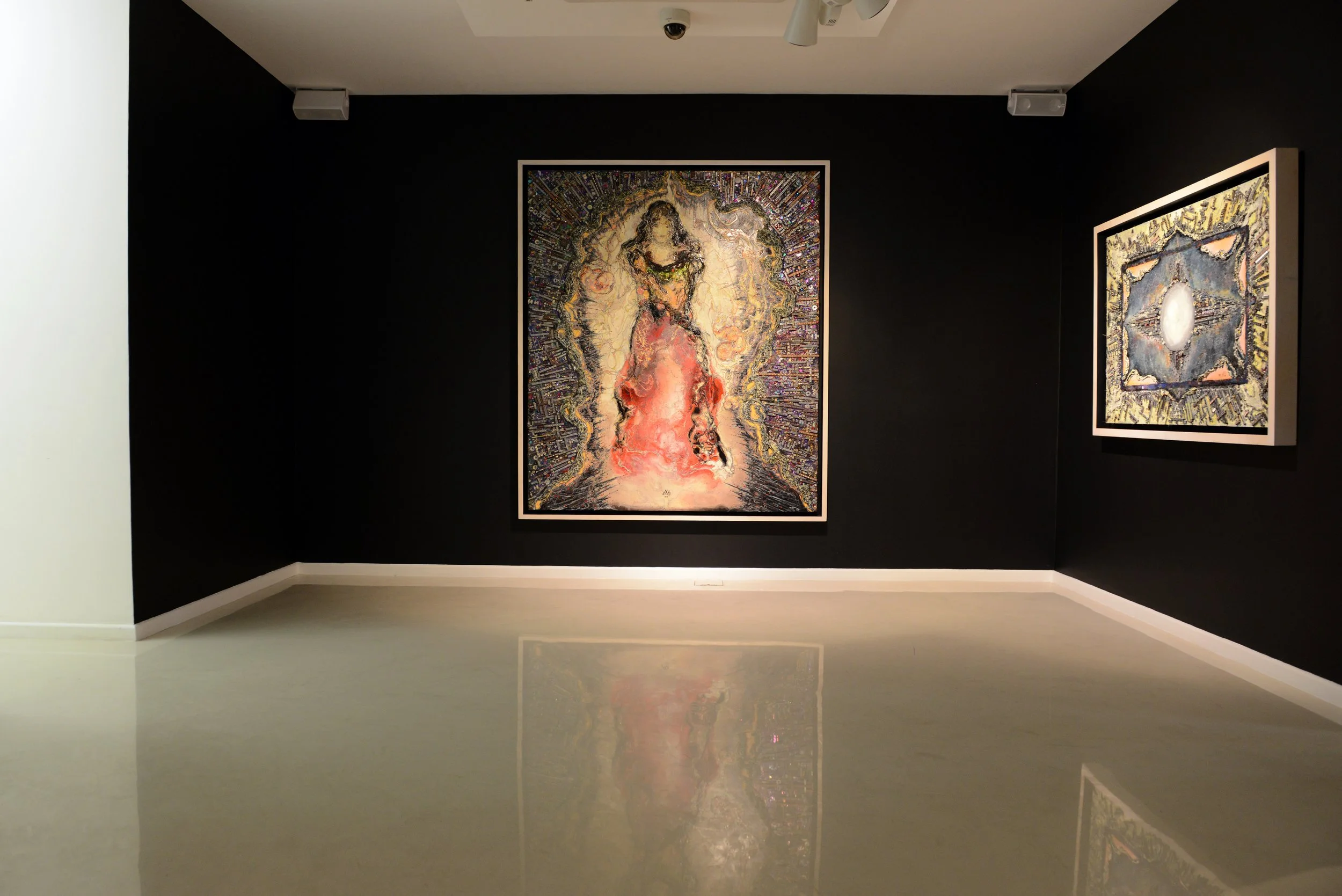
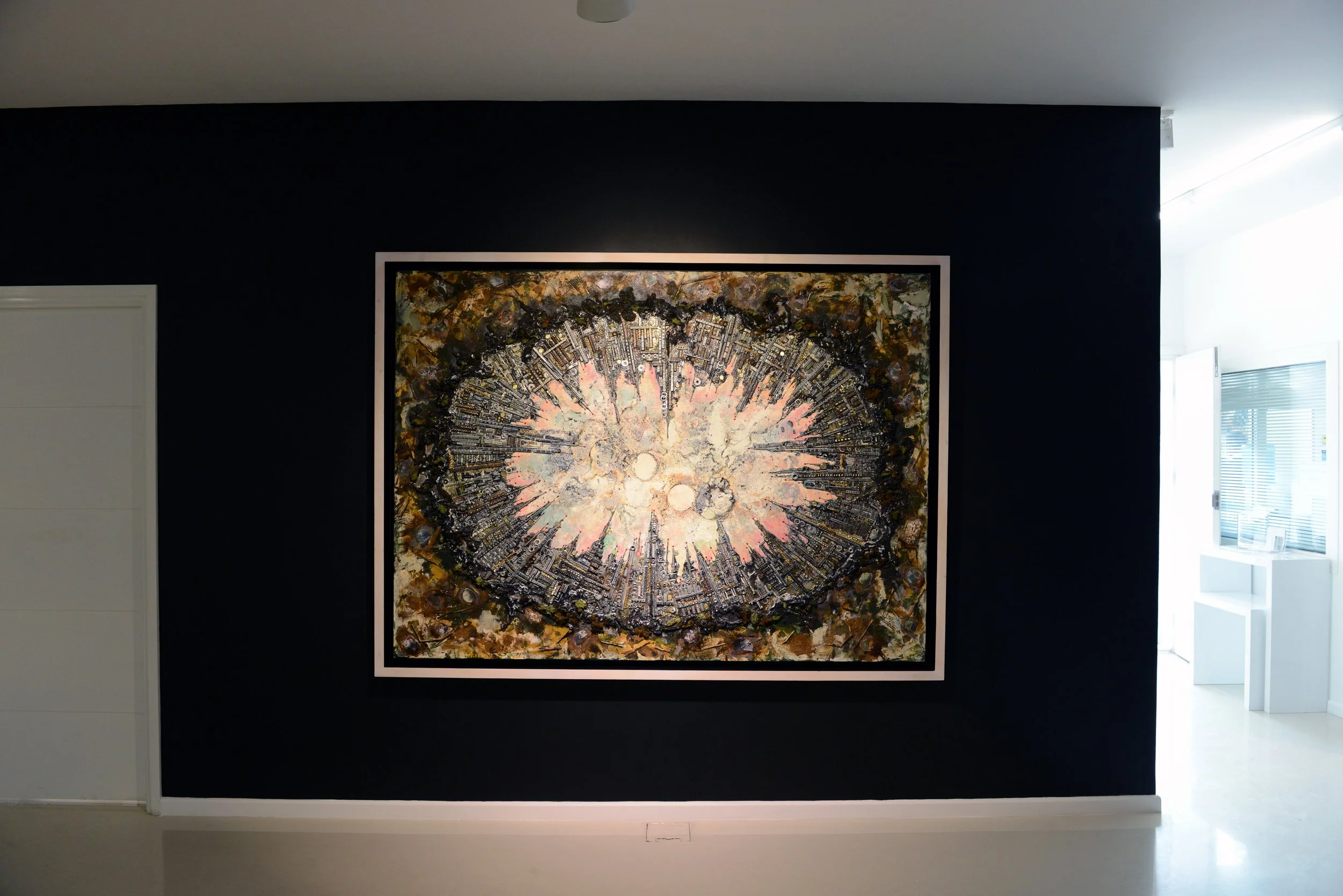
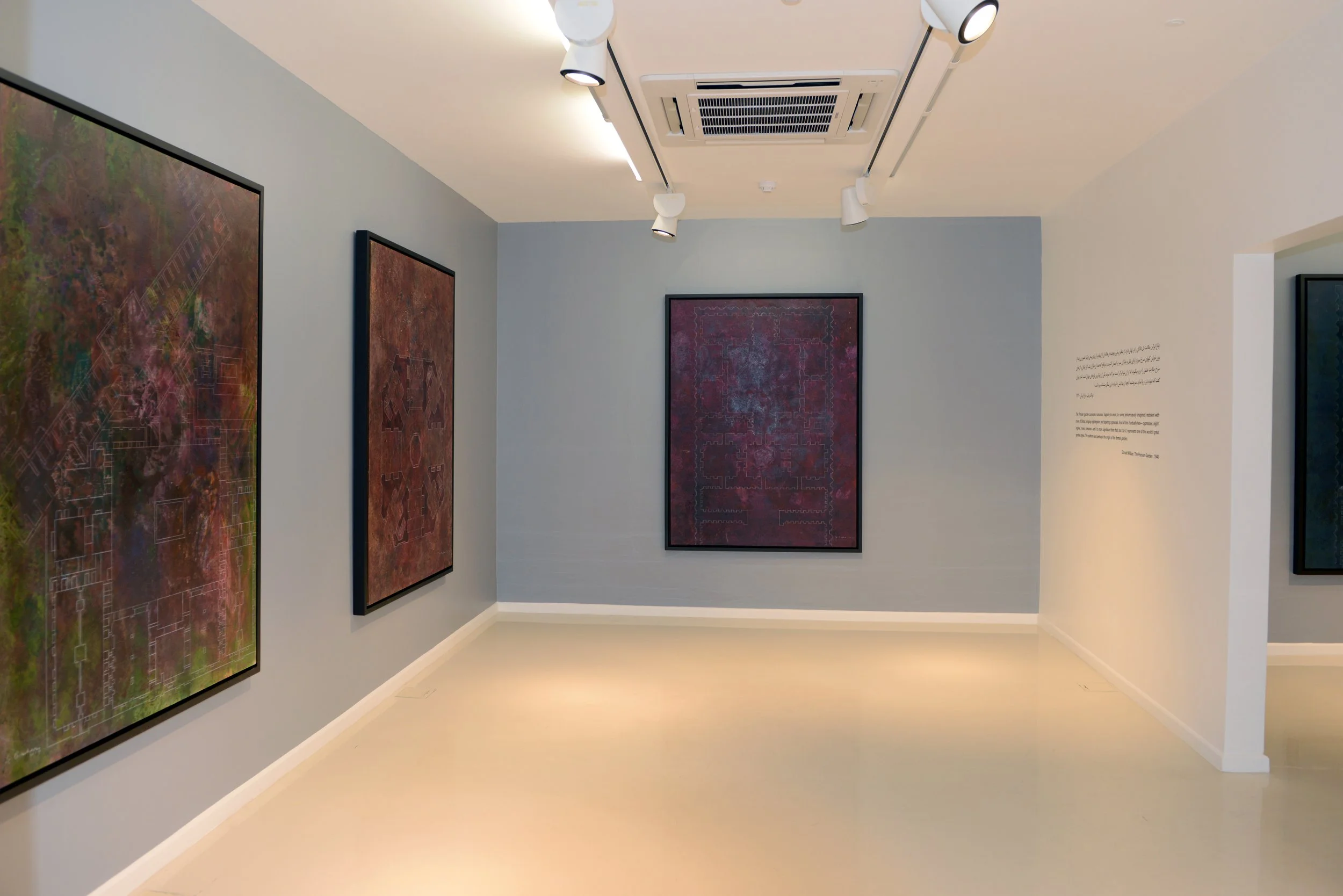
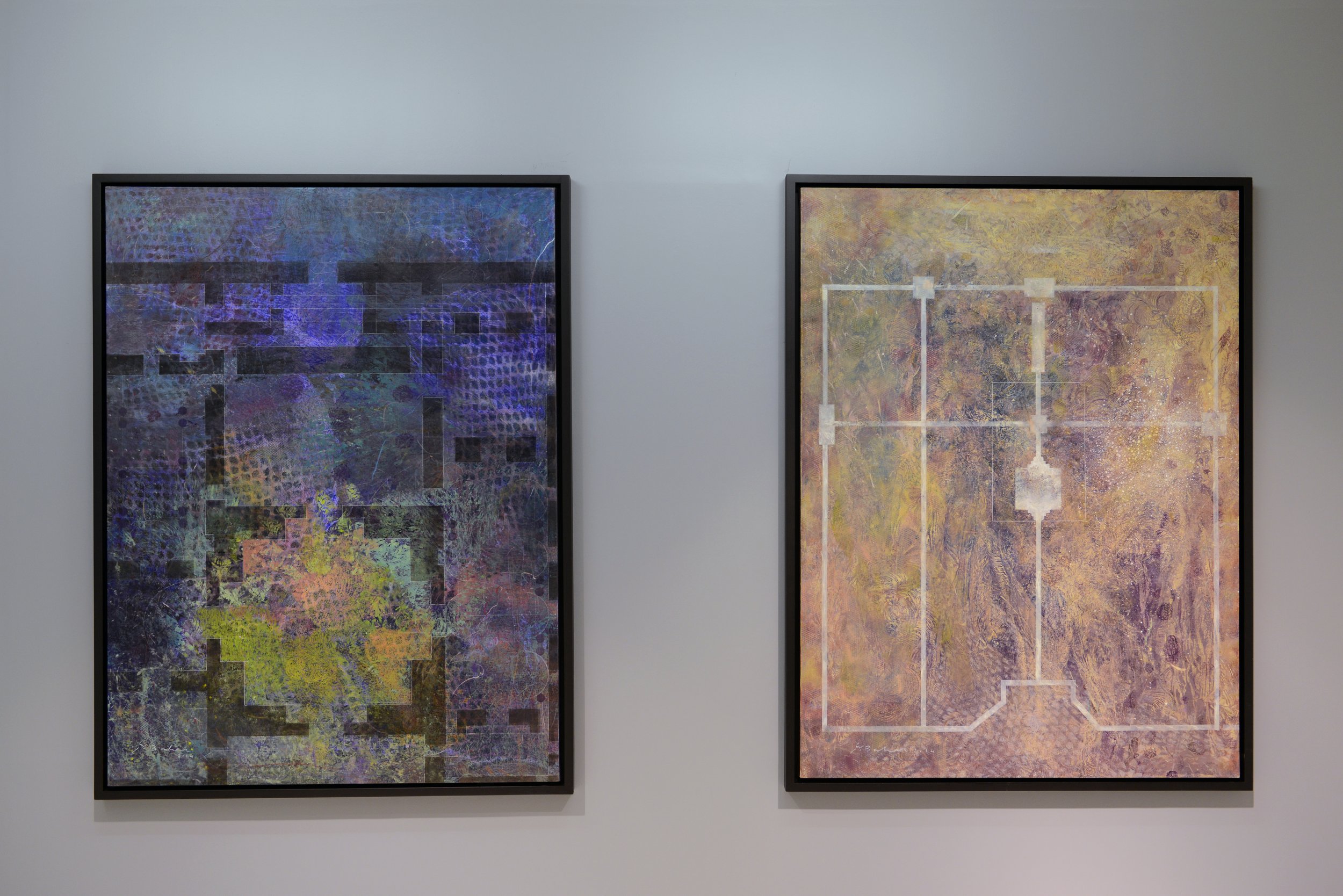
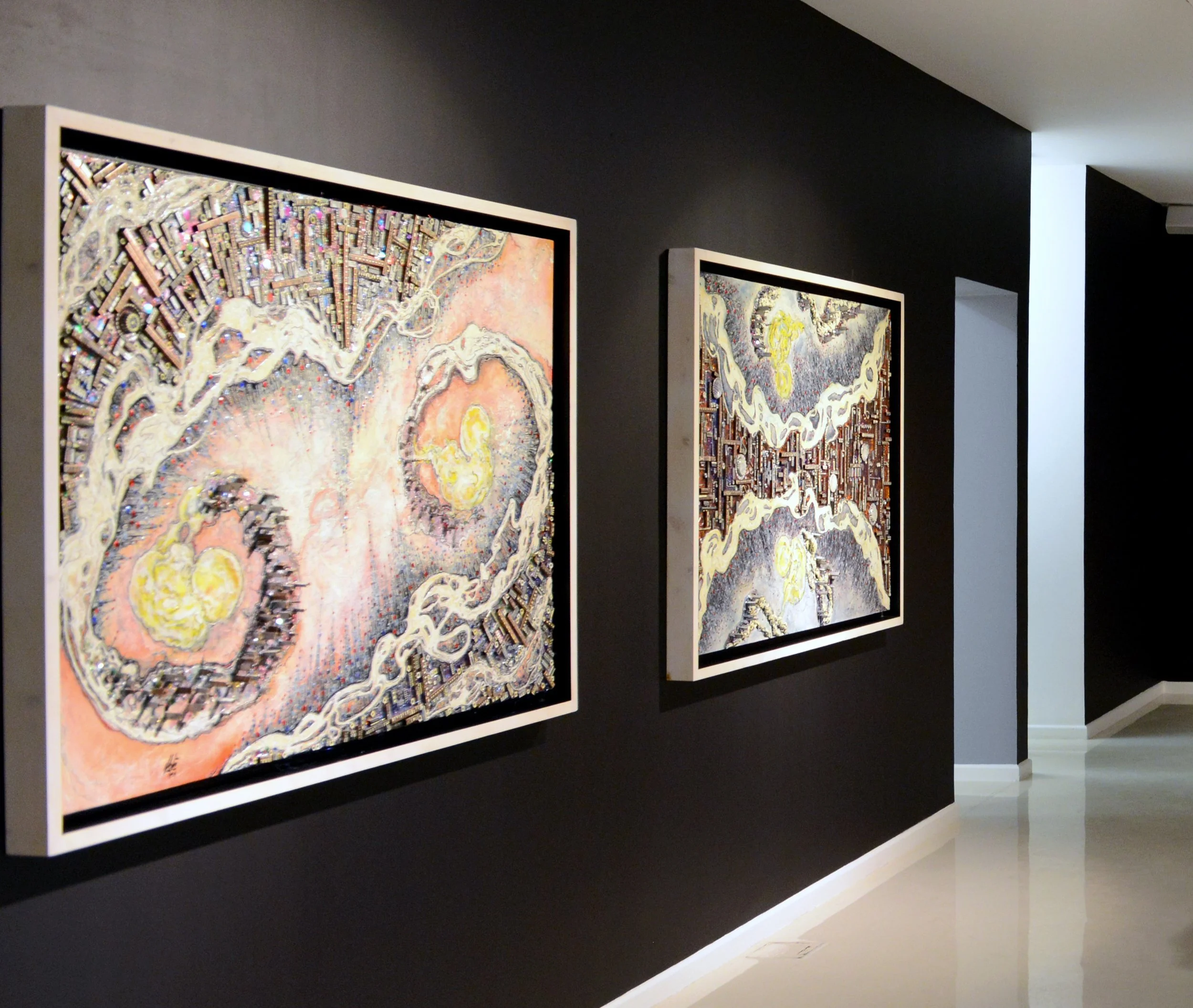
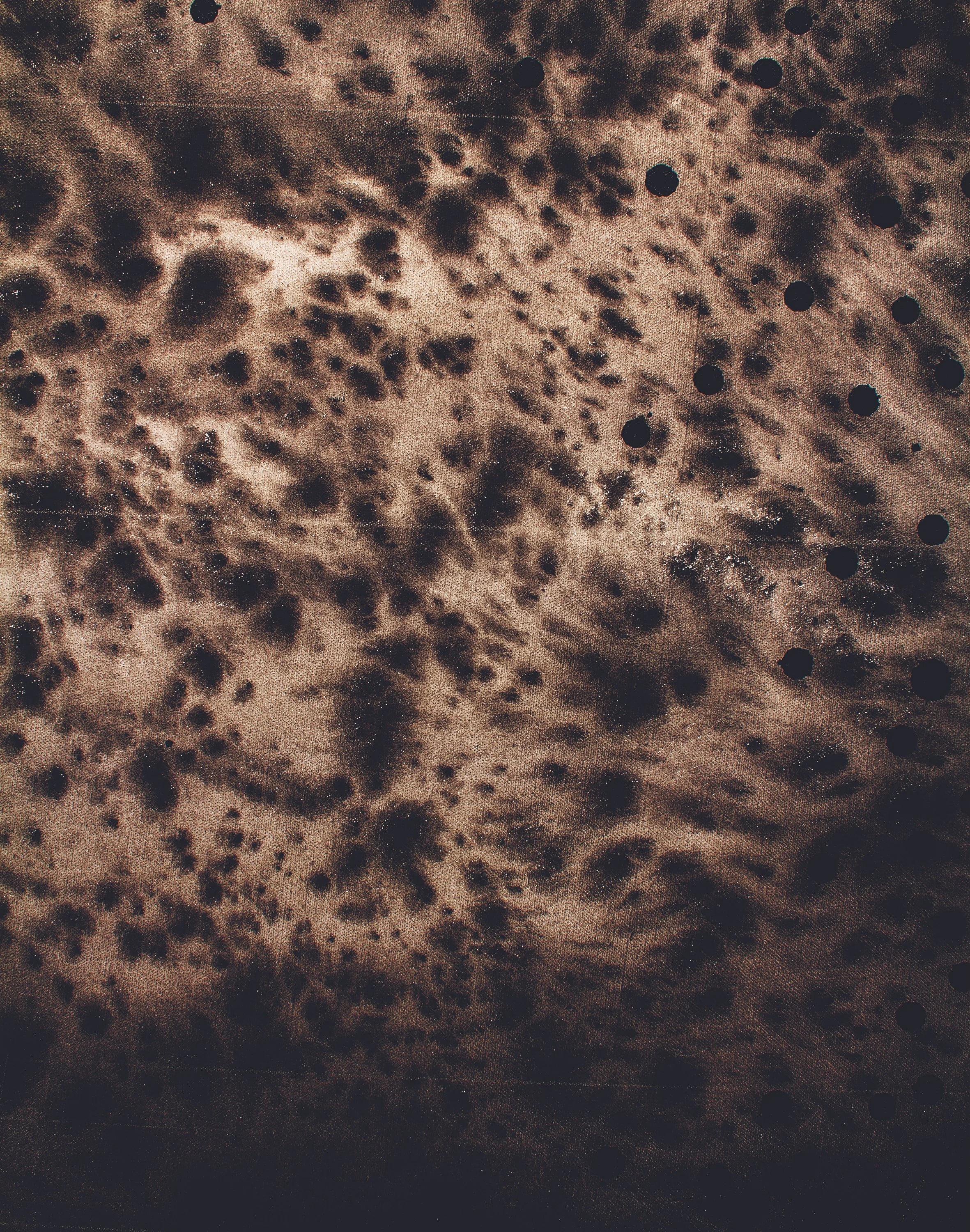
The present exhibition is perhaps a combination of three solo exhibitions of artworks of three renowned Iranian contemporary female painters brought together as a single show. Conceptually speaking, these collections reveal that an identity crisis and a conflict associated with modern life have been the dominant theme and main concern of these artists in creating their works. What constitutes the core of the exhibition, while serving expressionism, is an architectural element. Structural use of "virtual architecture", injecting it into the form and content of works, which, according to Gilles Deleuze, has a fundamental connection to the concept of womanhood, unravels profound correlation of works of the three artists.
Distortion and defamiliarization of architectural elements and symbols in paintings, based on the Deleuze doctrine, signifies secret feminine aspects embedded in these symbols. The tendency not to stop at the moment and this successive regeneration continue to exist in various forms and in different narrative styles. Distorted urban spaces in Samadi Tari’s works offer a “critical review of hastiness and pure rationalism”. Appearance of ordinary elements and objects in construction projects in Vakili’s works and a display of giant, magnificent structures that would collapse once you approach them, “negate originality of identity”. Architectural plans and strict demarcations on a background of diverse colors as well as an abstract depiction of imaginary gardens call to mind the idea of “protection of memories” in Behbahani’s works. Exploiting a contemporary approach and a feminine language that makes use of virtual architecture deep within, all three artists express a single notion in unison; regeneration at the present moment.
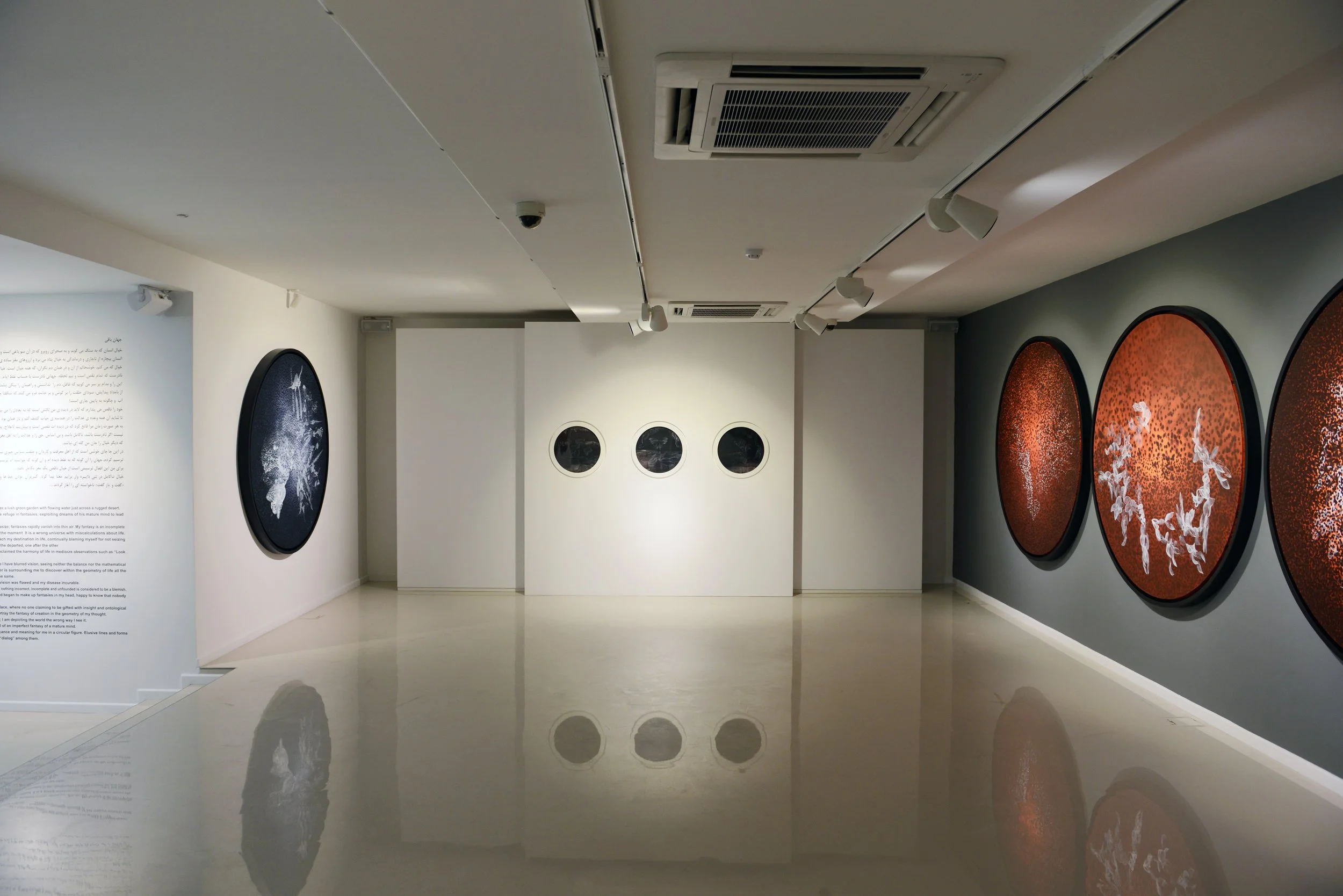
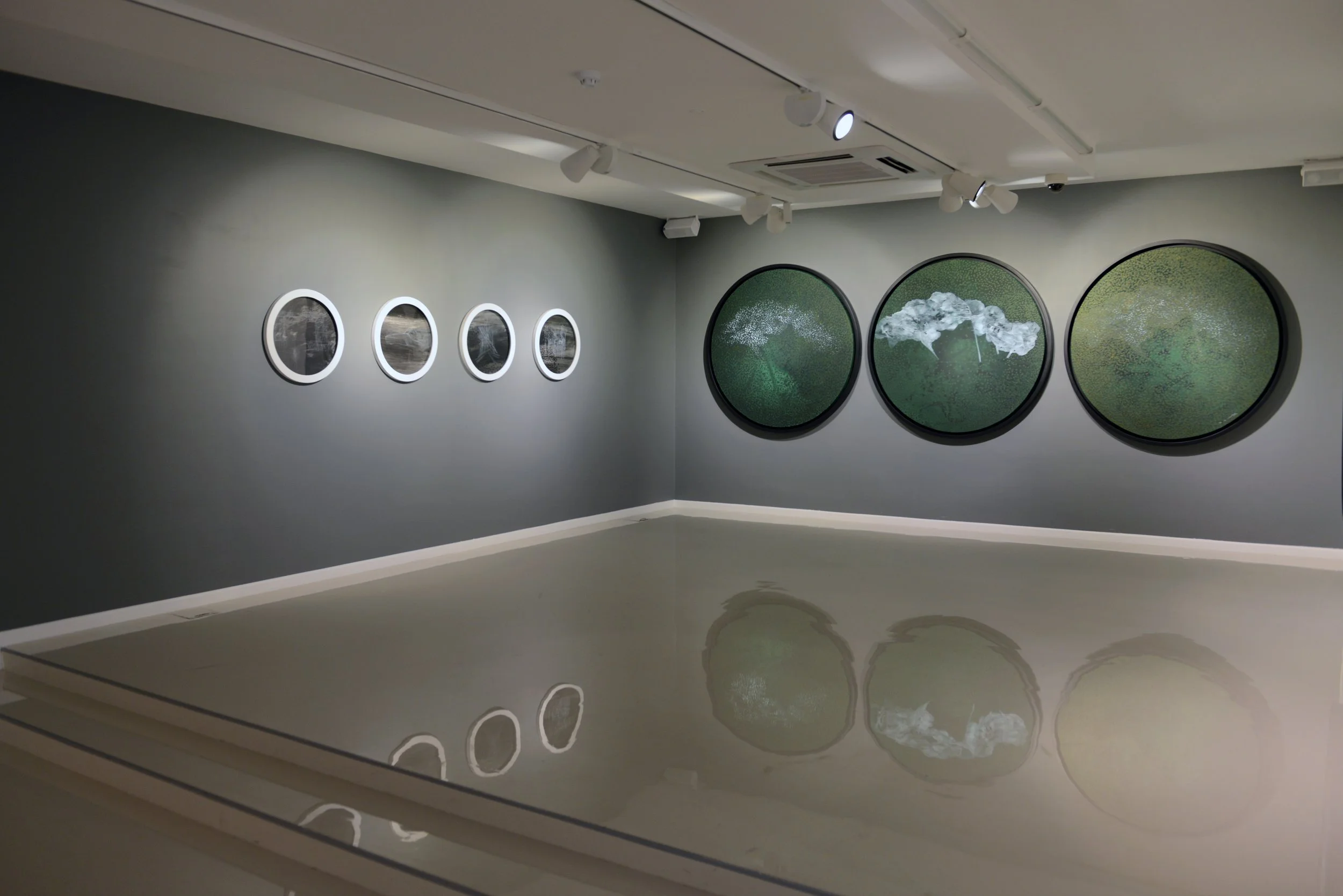
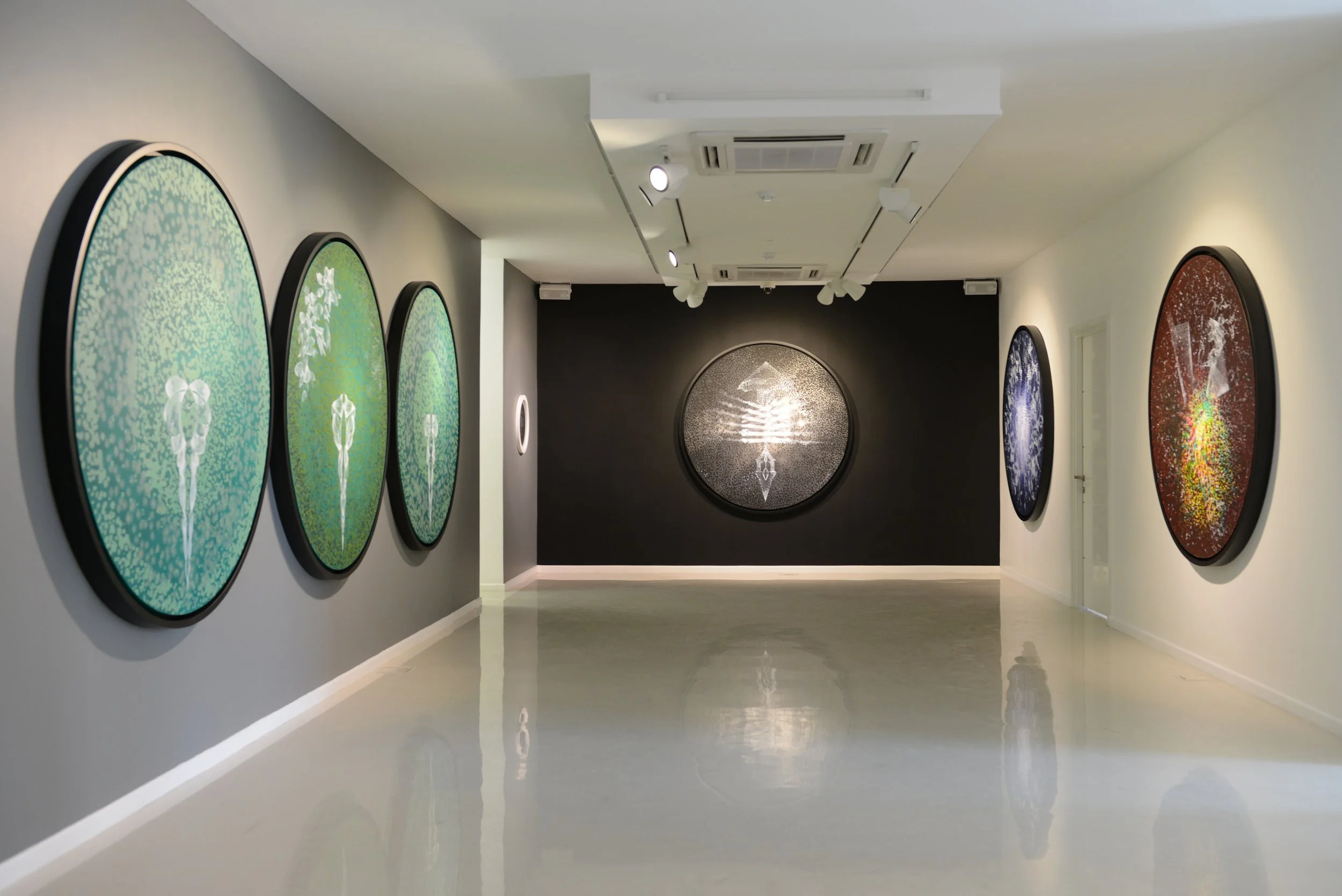
transient dreams in passing fantasy
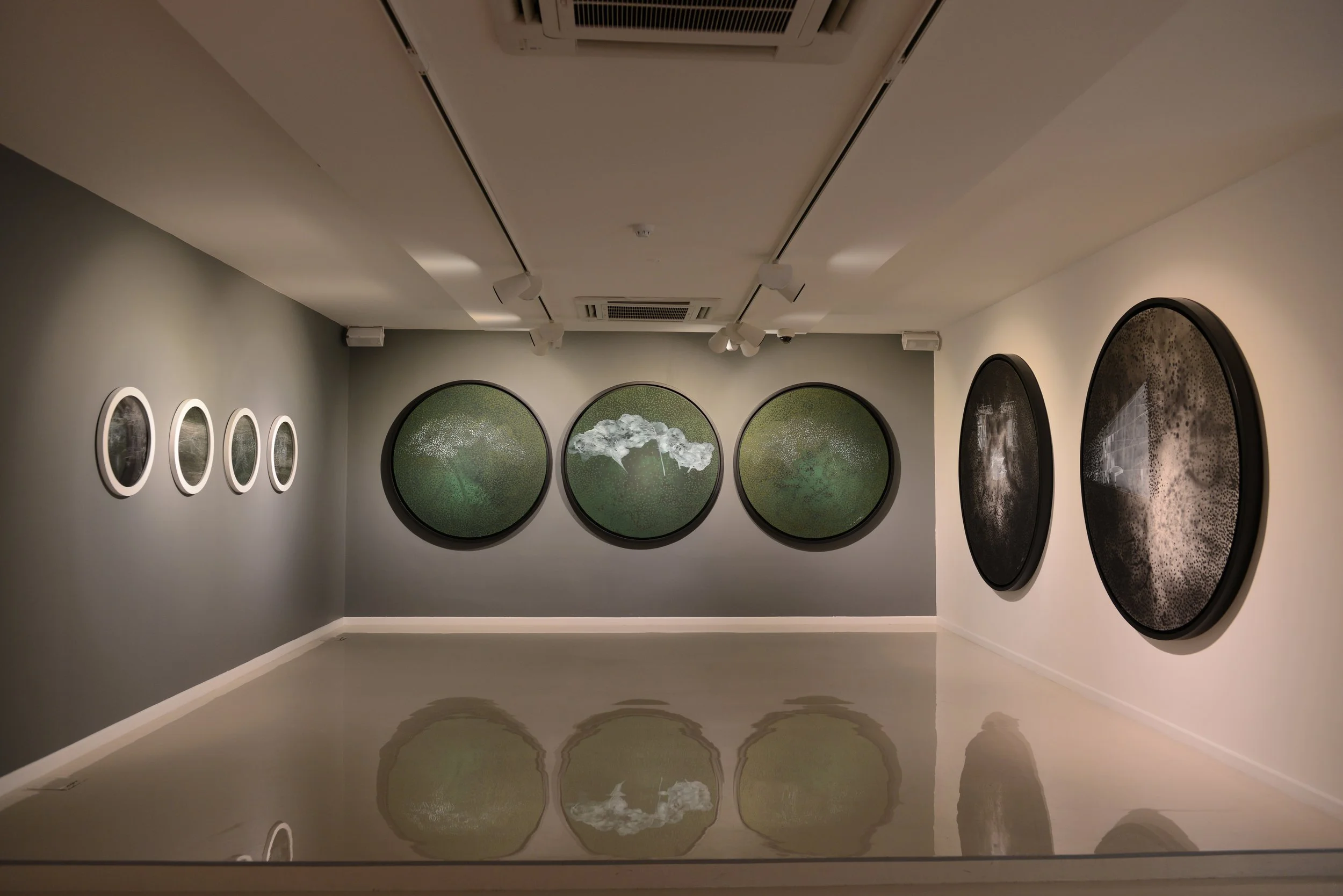
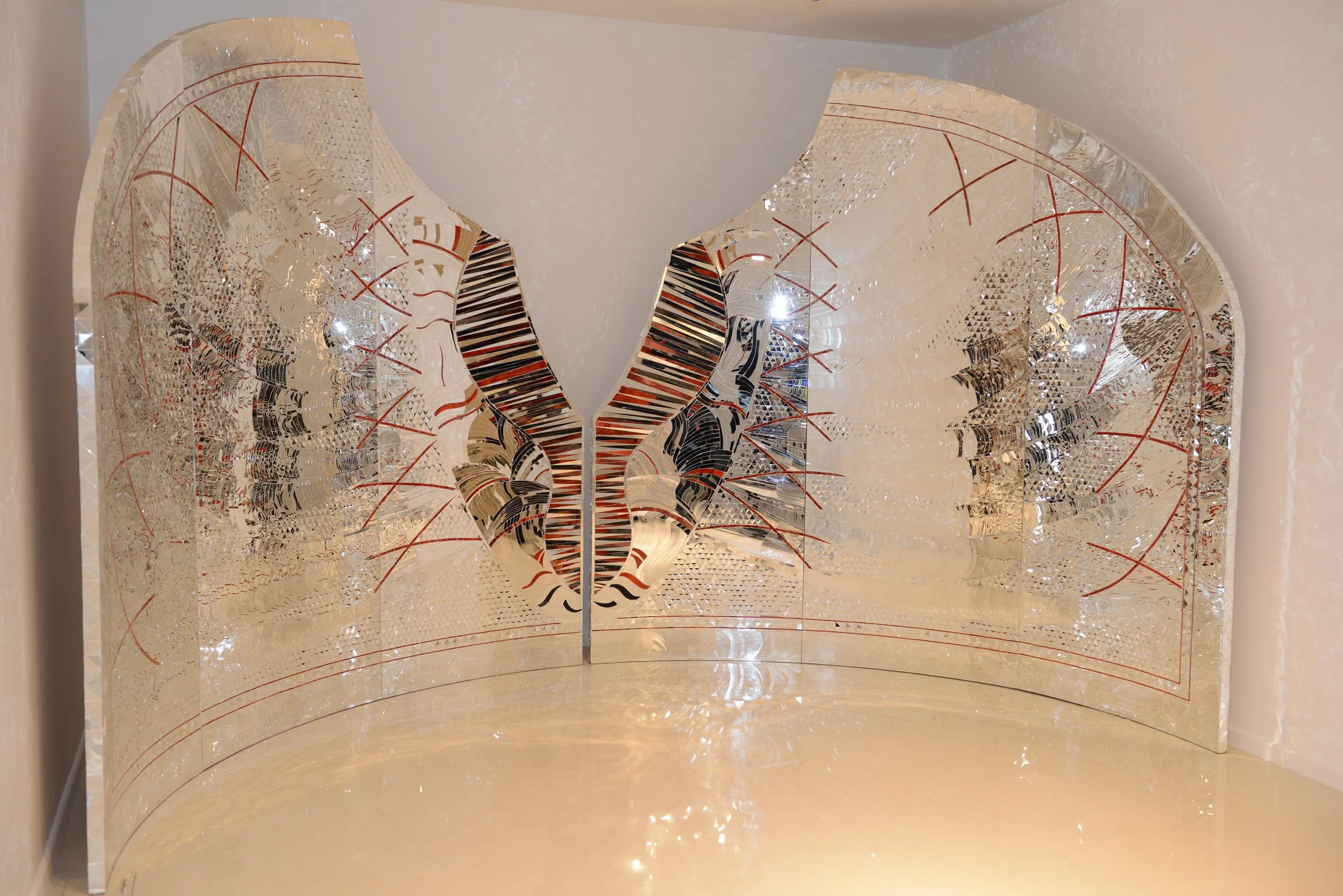
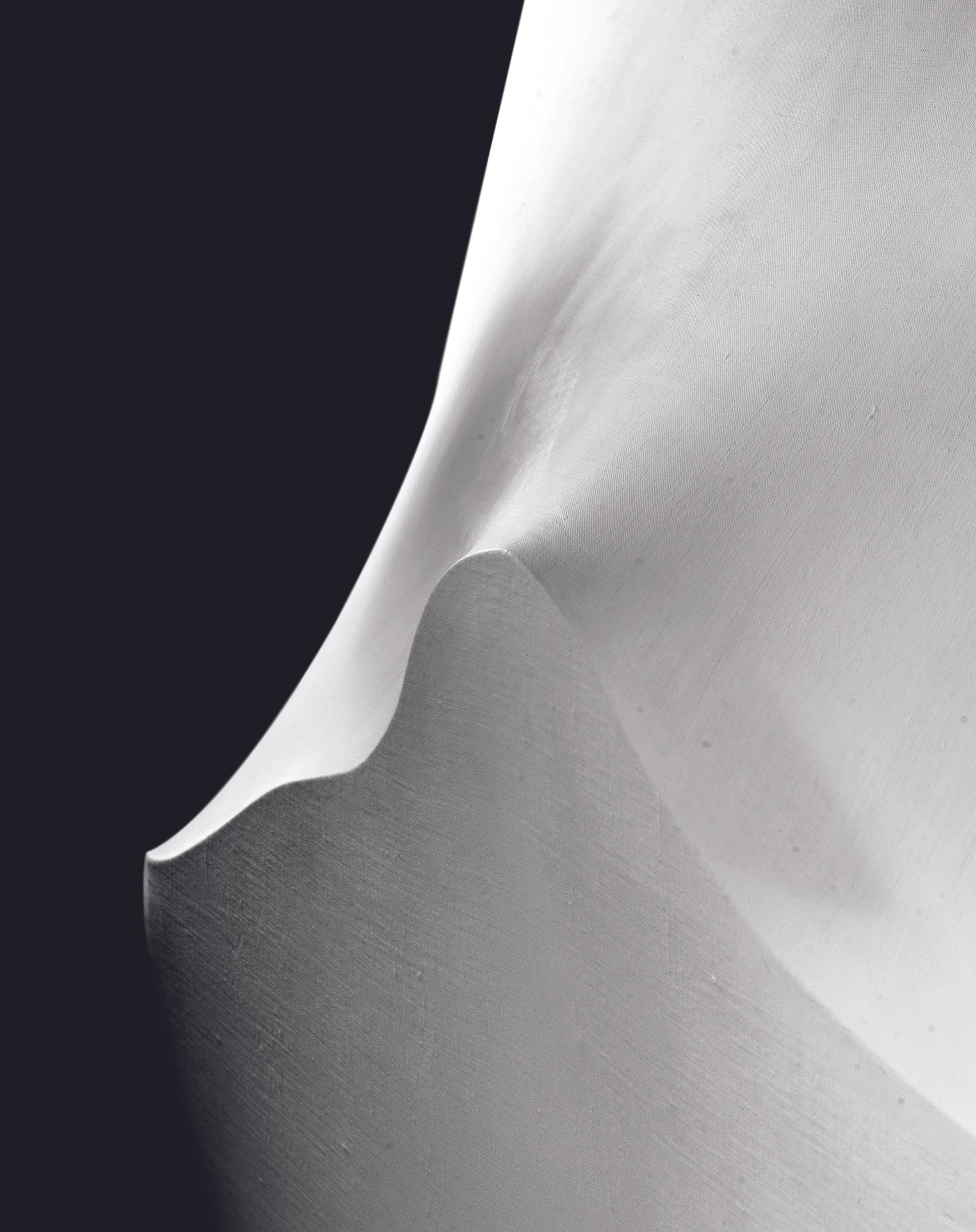
Spiritual observation of Iranian artists of the past as well as consistency of their words and thoughts are absolutely fascinating to me. One wonders how an observation can become a fantasy and so perfectly turn into diverse art forms.
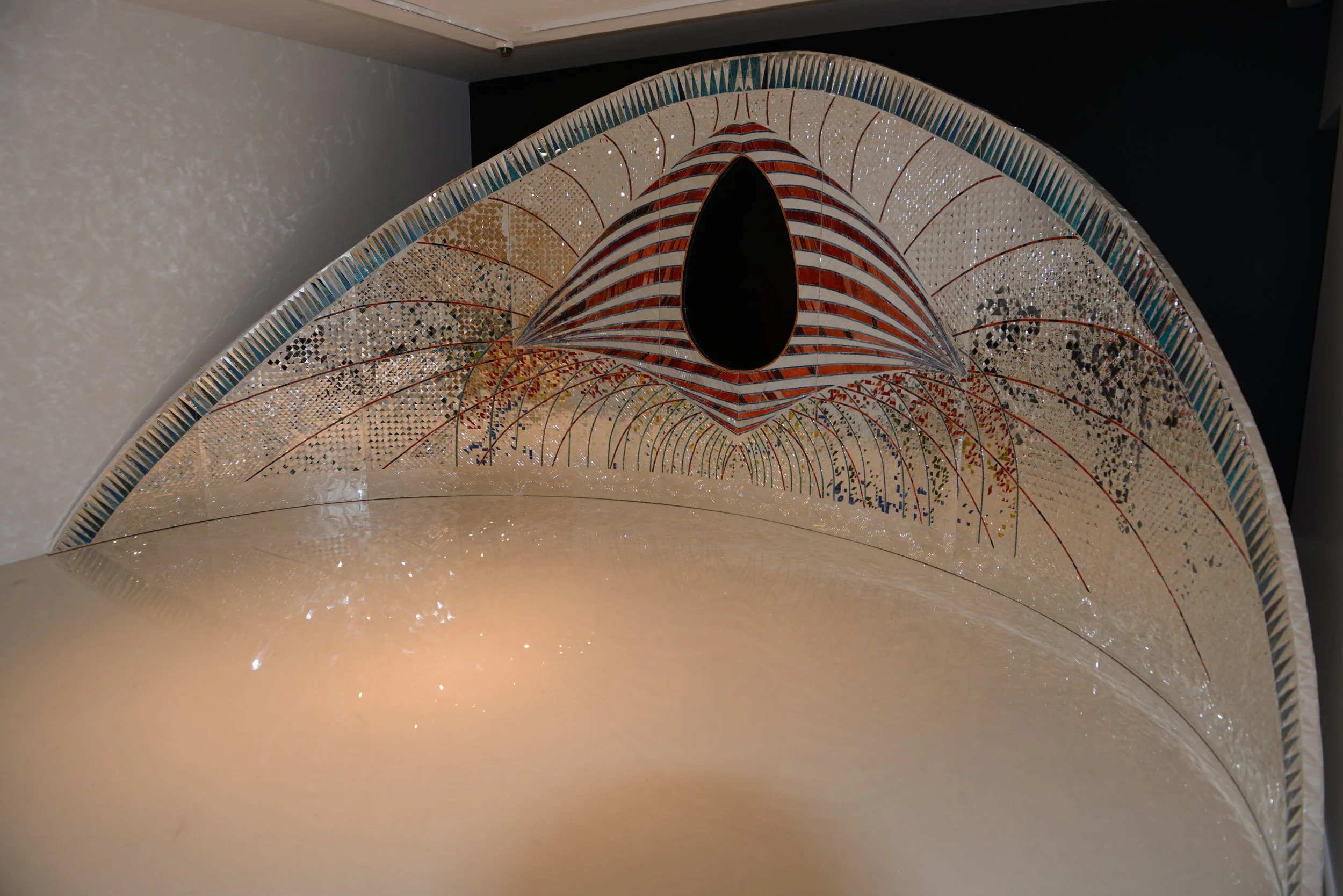
This is far from what my fantasy is; neither does it come close to my observation. What I have in mind is distortion as well as shedding doubt on that consistency. Throughout this period of my career, invisibility of visible objects emerges in my work in various forms, reappearing this time in the form of mirror-works.
Disintegration of an object and its incomplete, obscure appearance in multiple mirrors are providing me with an ideal language. Forms of organic phenomena of the past that reminisce dissected or lacerated organs are re-created through blending with residual materials and elements of oriental fantasy.
And ultimately, laceration of an organic object in an oriental fantasy was such presented …
the white passion
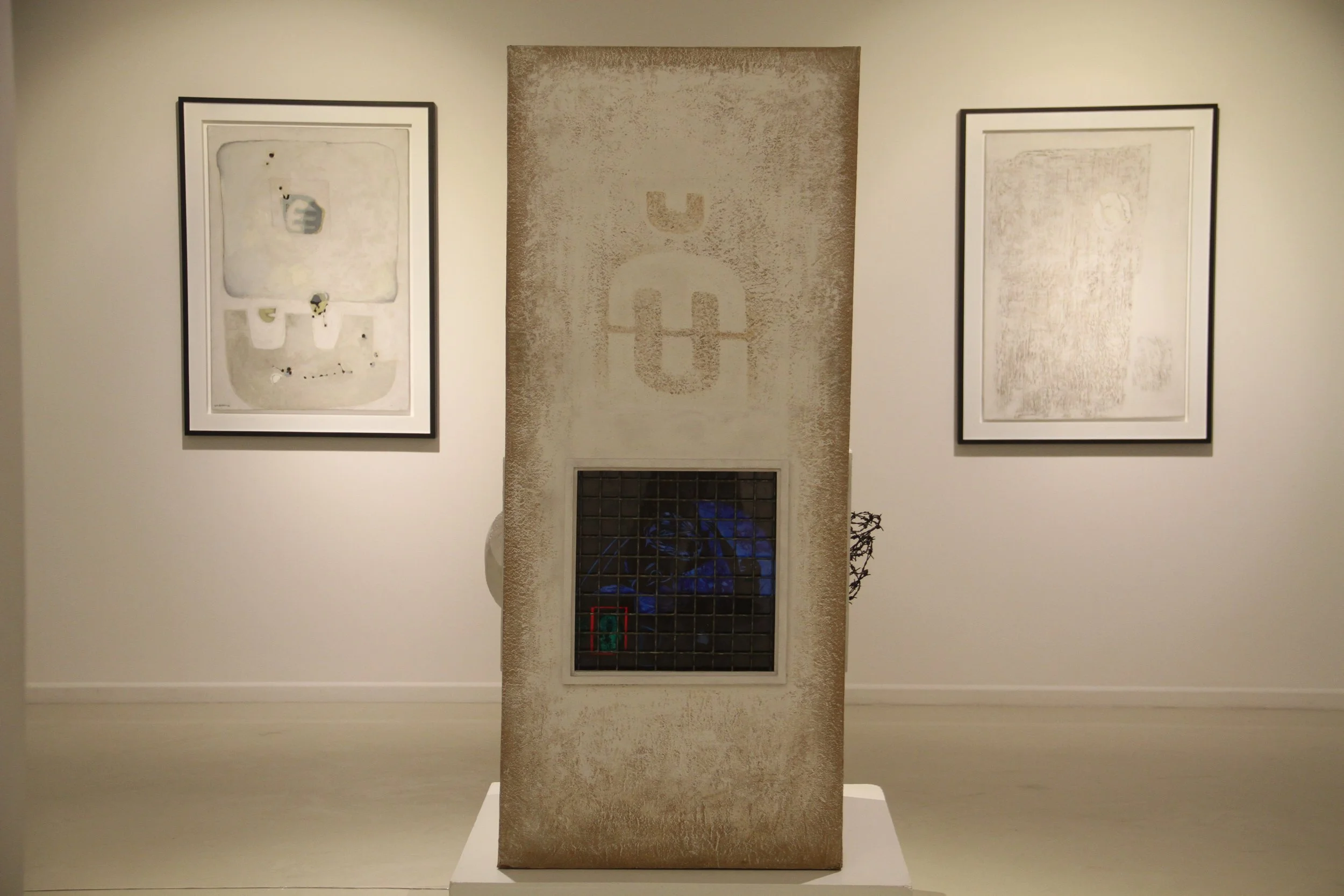
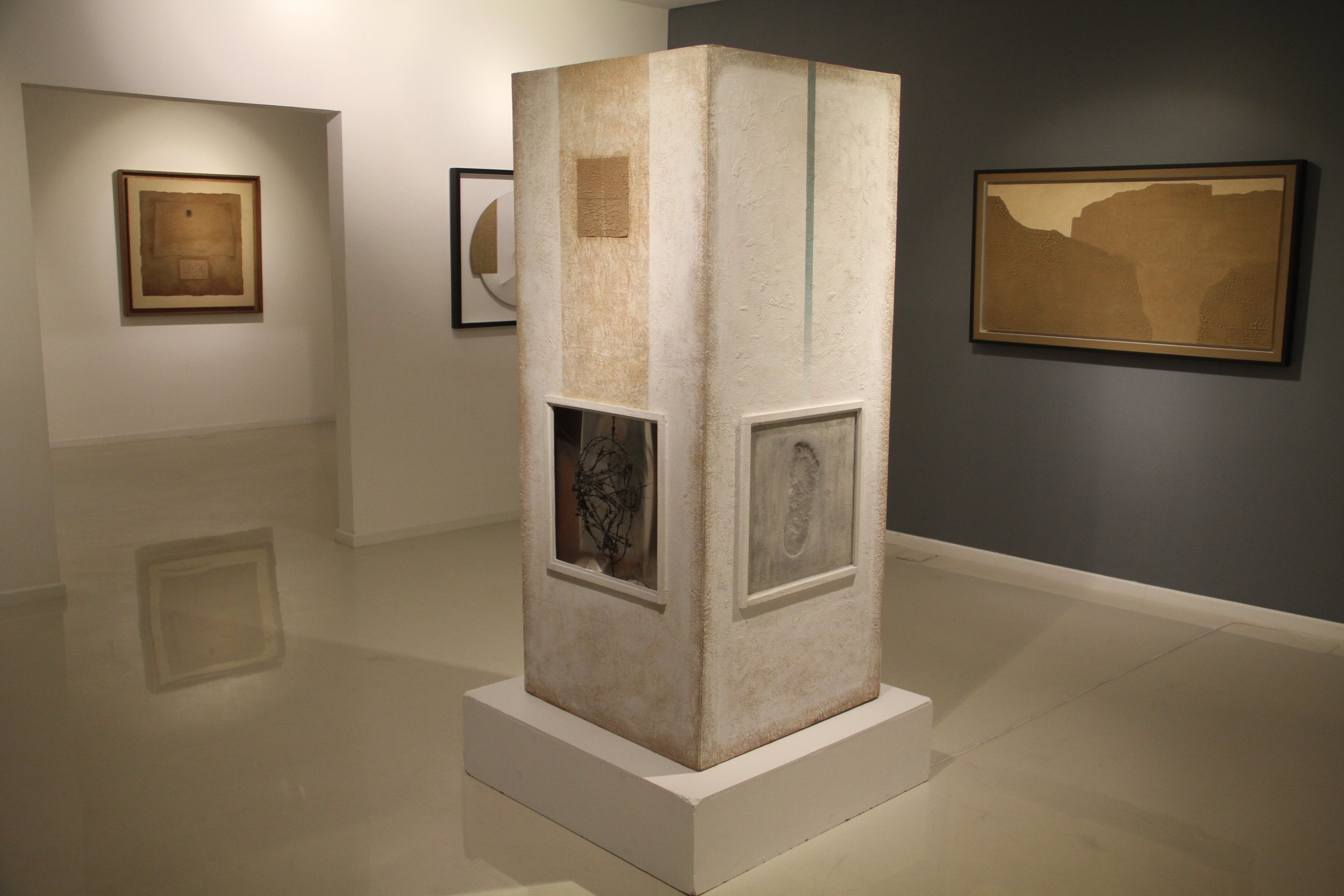
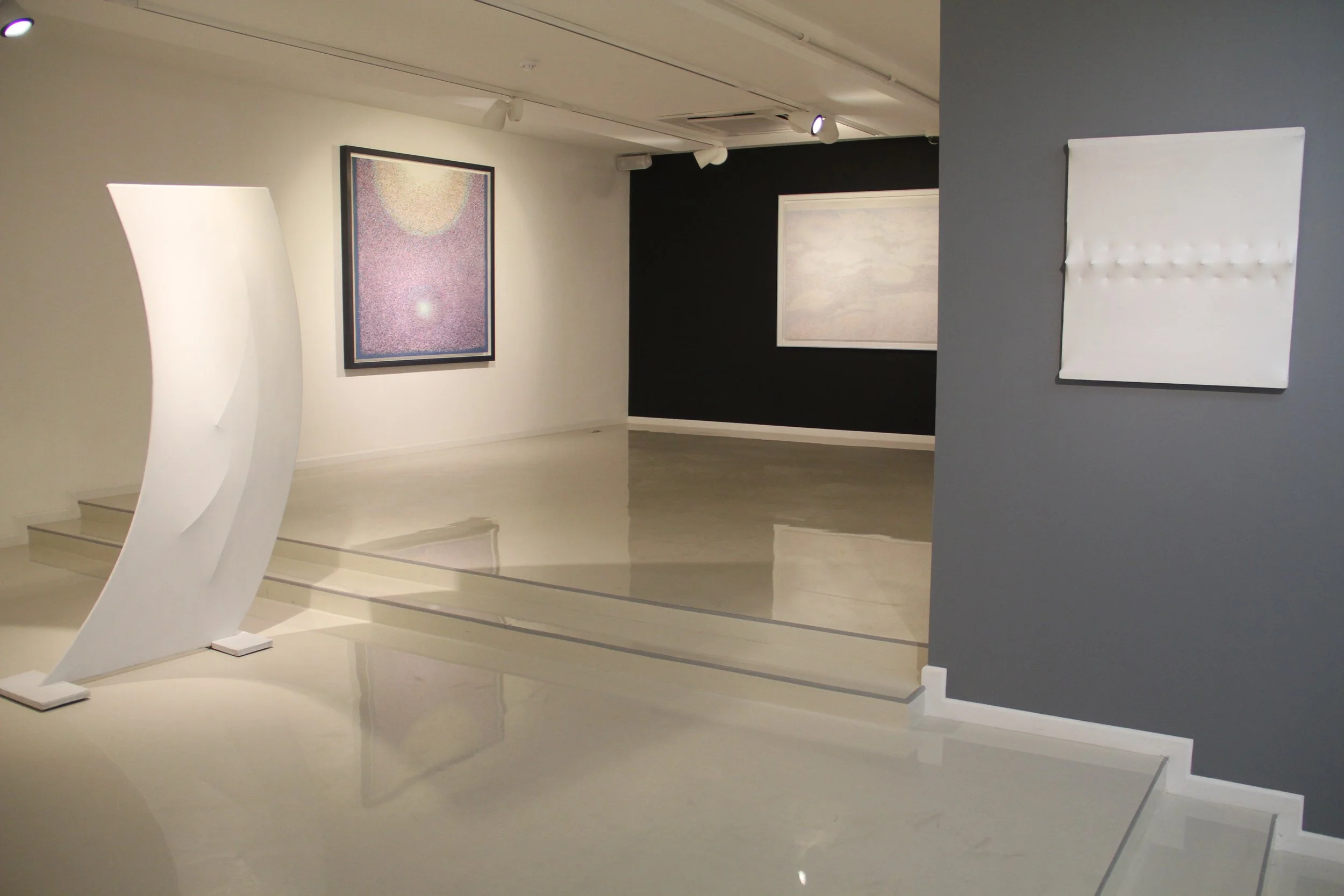
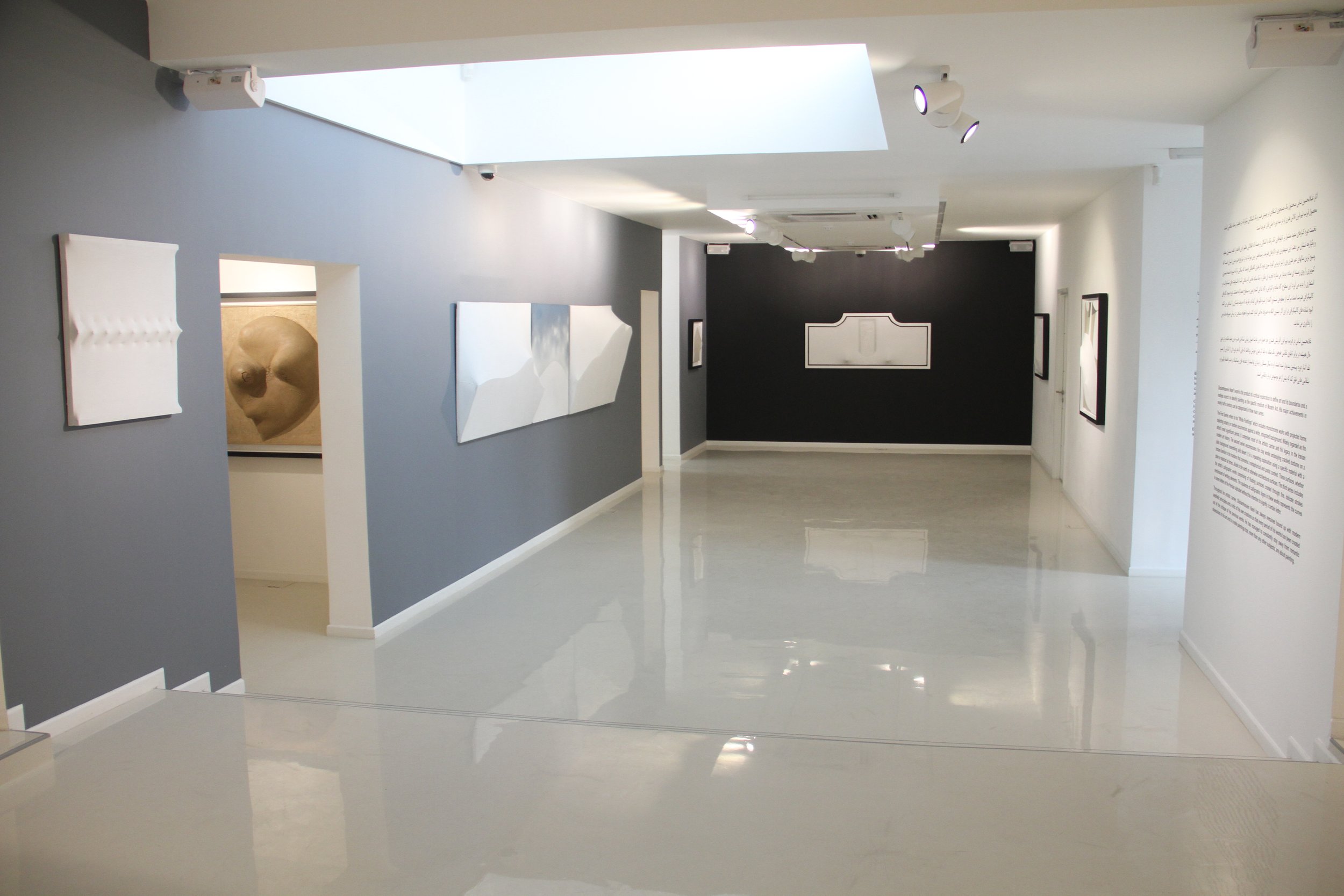
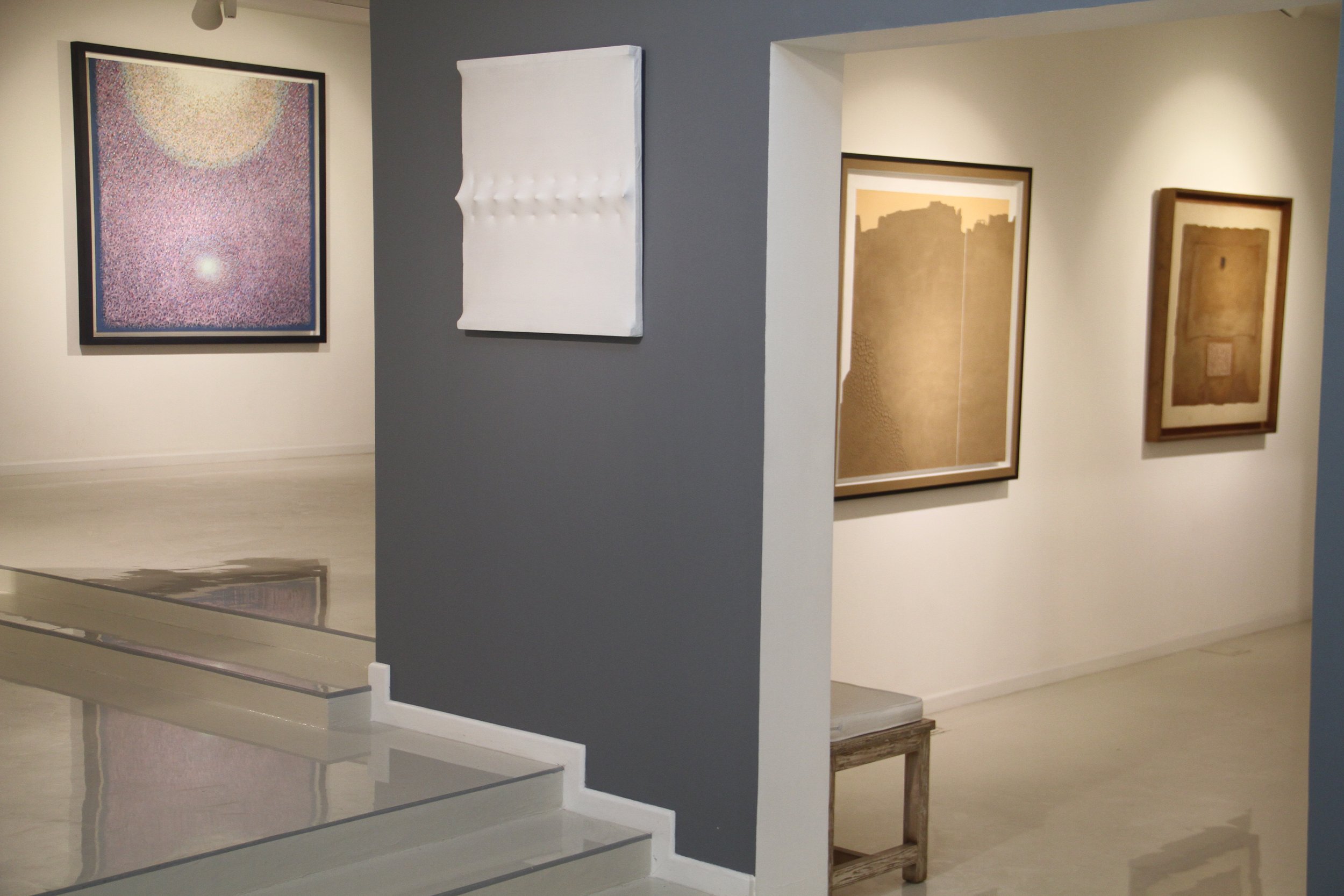
Gholamhossein Nami’s work is the product of a critical exploration to define art and its boundaries and a restless search to identify painting as the specific medium of Modern Art. His major achievements in nearly half a century can be categorized in three main series.
The First Series refers to his “White Paintings” which includes monochrome works with projected forms depicting orderly or random occurrences against a white, integrated background. Widely regarded as the artist’s most significant period, it comprises most of his artistic carrier and his legacy in the Iranian modern art history. The second series encompasses his clay works embodying cracked textures on a plain background resembling arid desert. It is a repeating exploration using a specific material with a texture familiar to the Iranians that connotes a metaphorical and poetic context. These surfaces, whether plain or abstract at times, allude to the earth or otherwise architectural surfaces. The third series includes the artist’s calligraphic works comprising of floating surfaces created through fine, delicate strokes reminiscent of writing elements. The opulence of calligraphic signs in these works represents the curves in some letters of the Persian alphabet without the intention to signify a certain letter.
Throughout his artistic carrier, Gholamhossein Nami has always remained bound up with modern aesthetic principles and a critic of his own creations so that every period of his works has been created out of the critique of his previous works. He has managed to constantly stay away from romantic obsessions in his art and to create paintings that, more than any other subjects, are about painting.
earth & alchemy
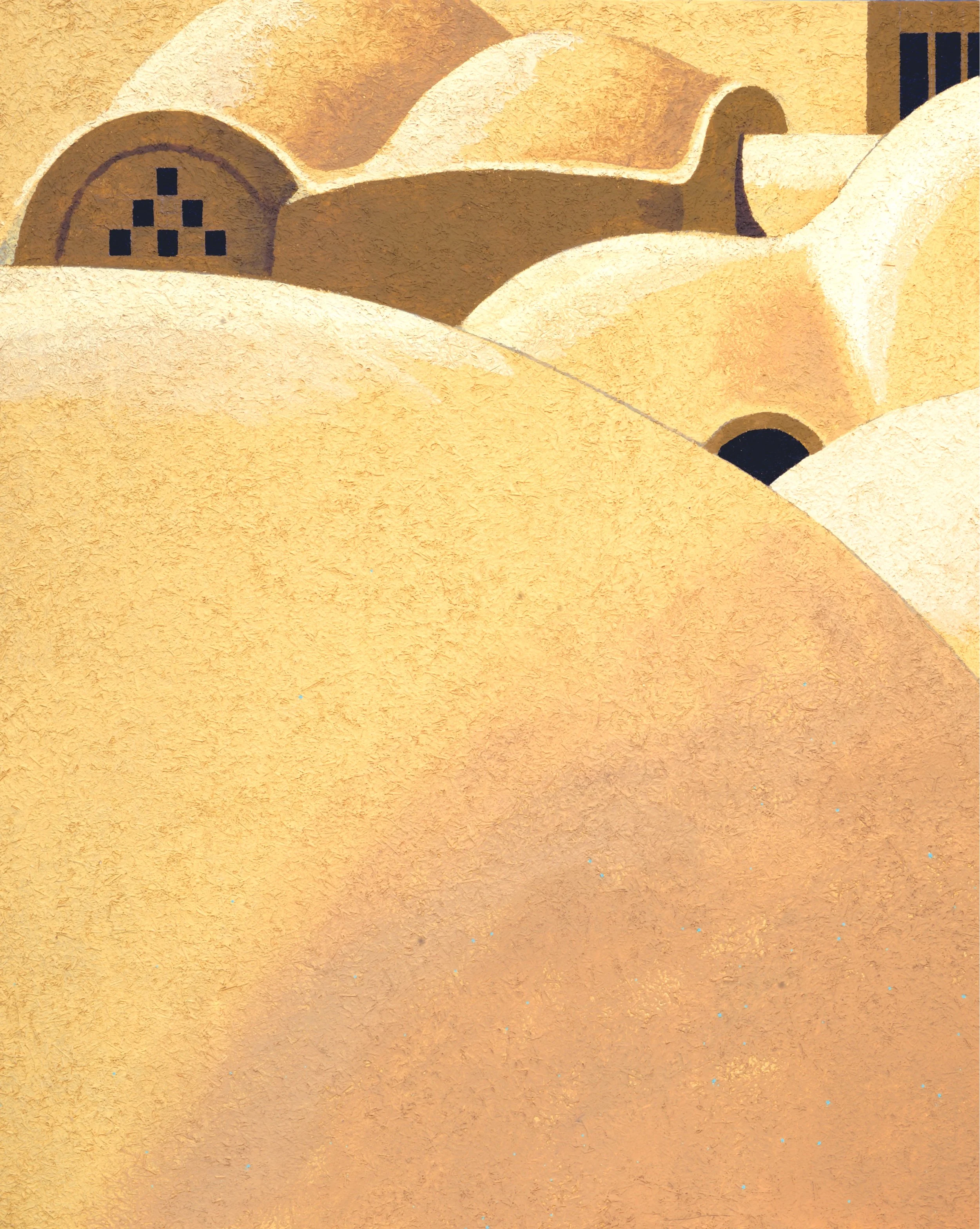
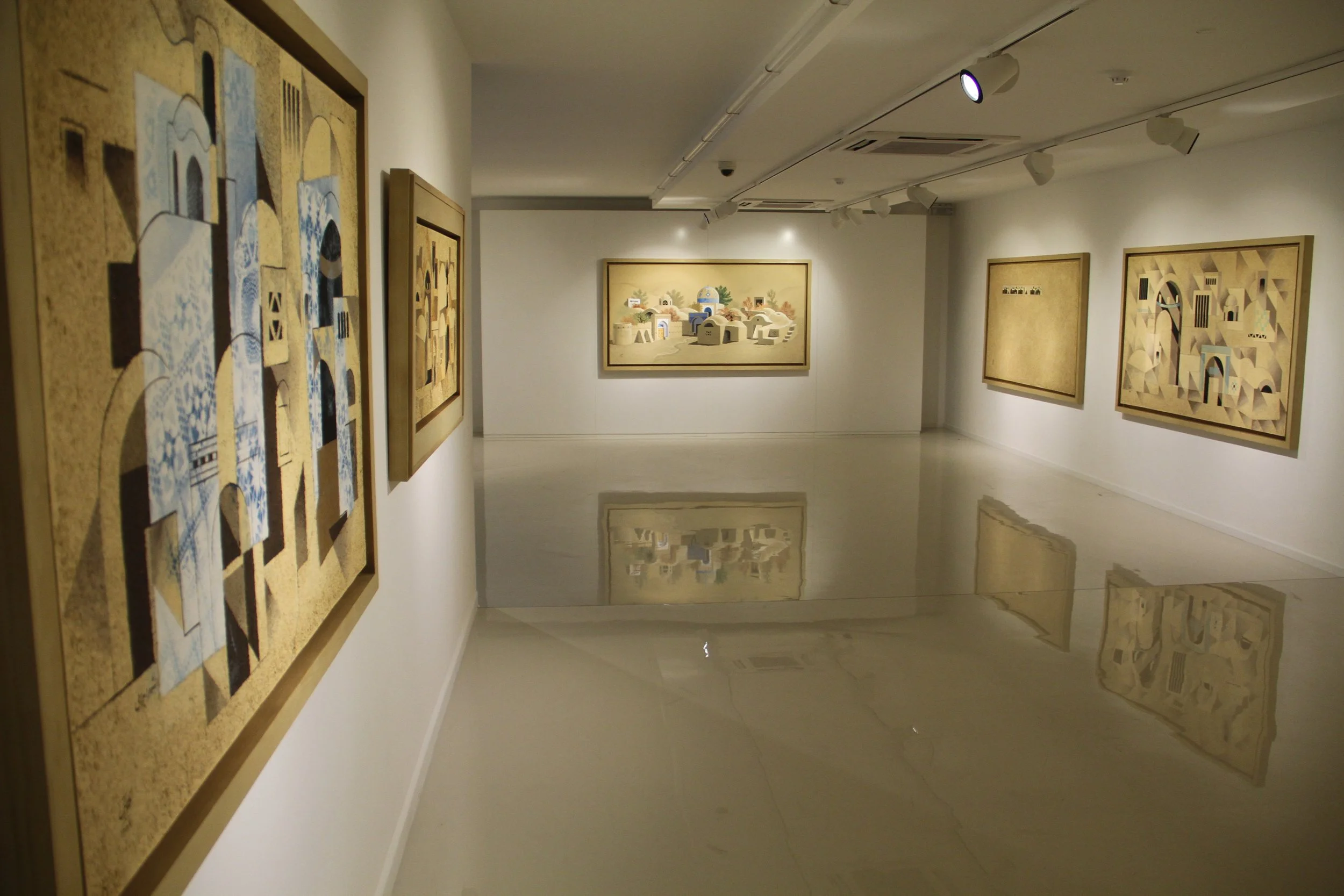
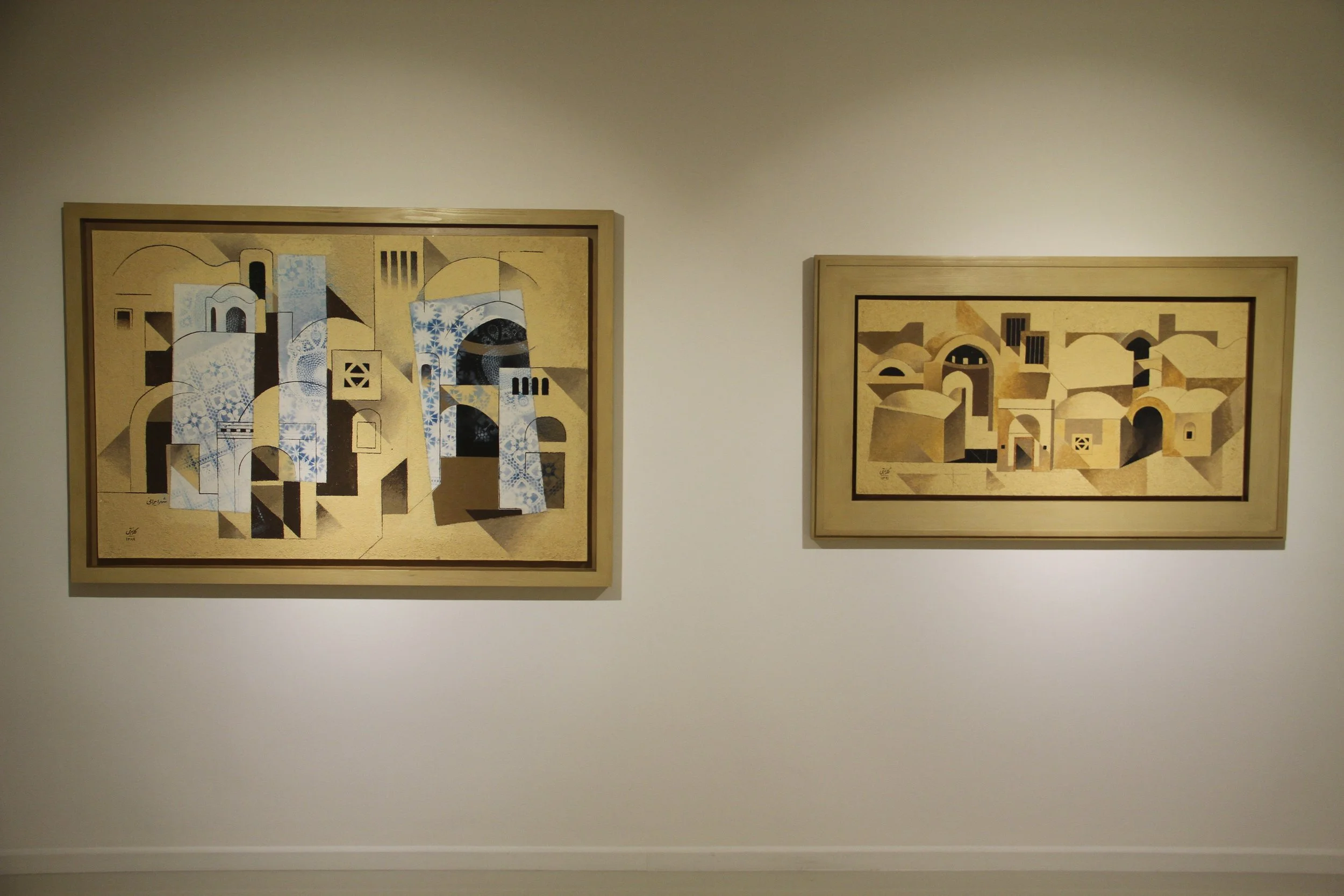
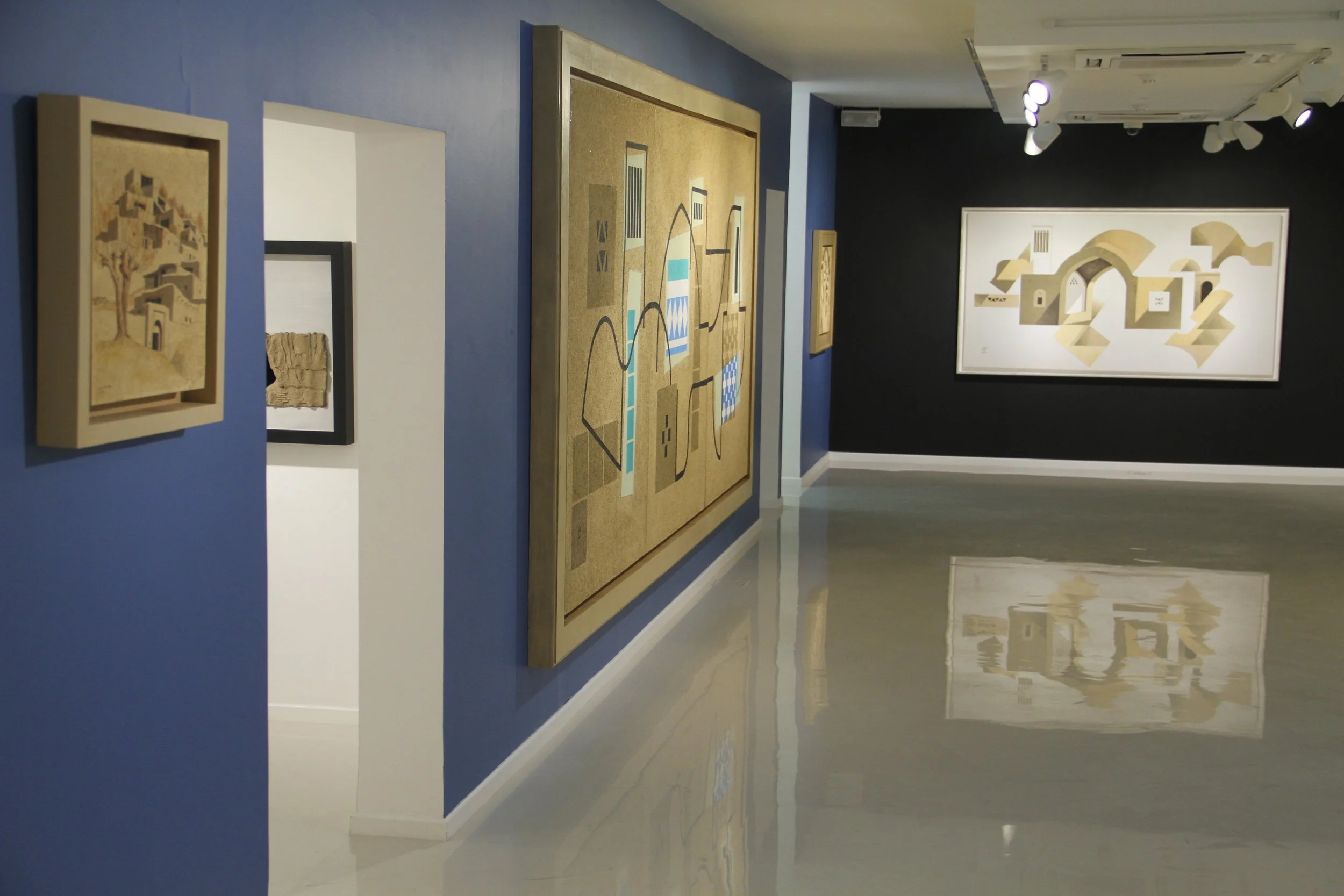
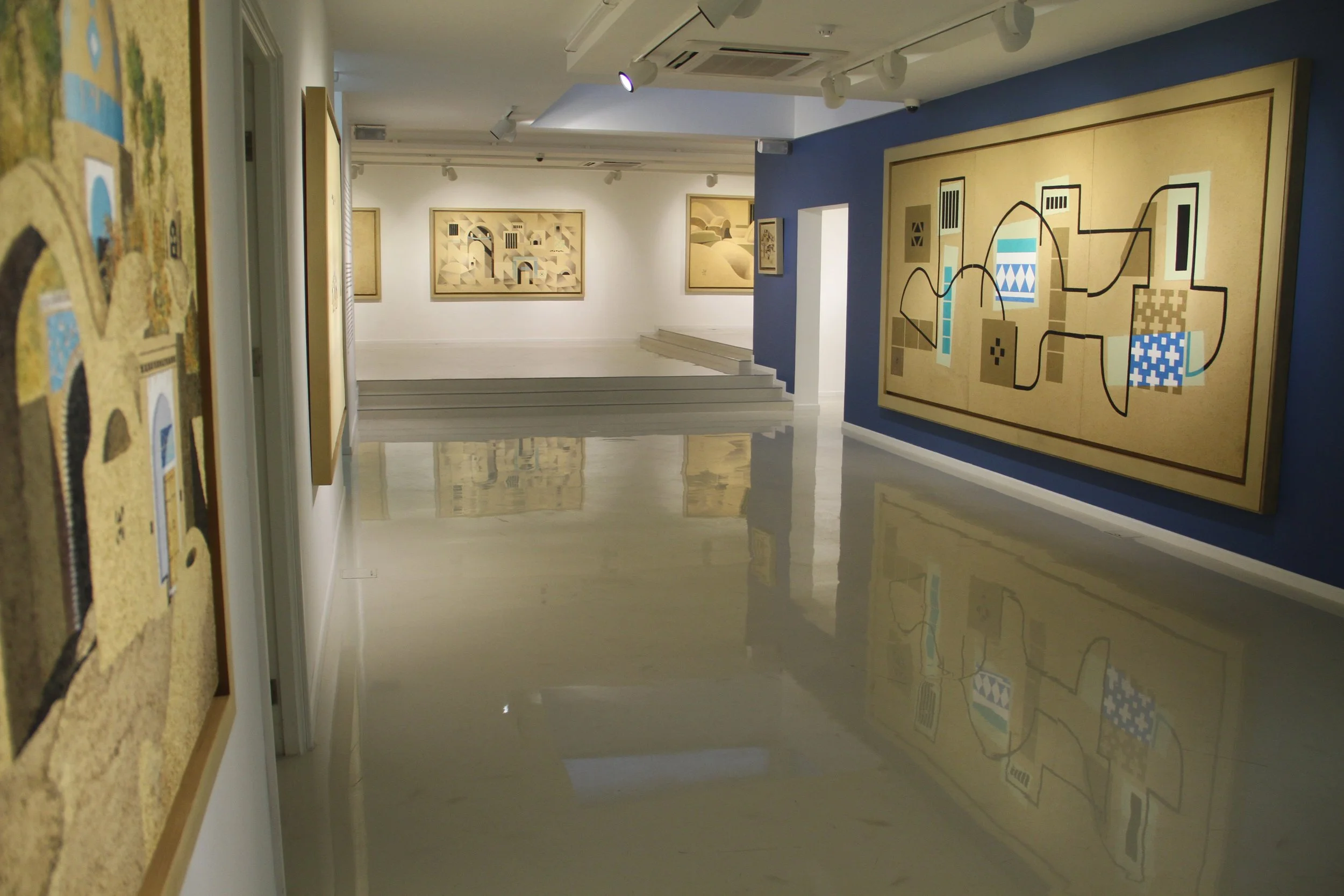
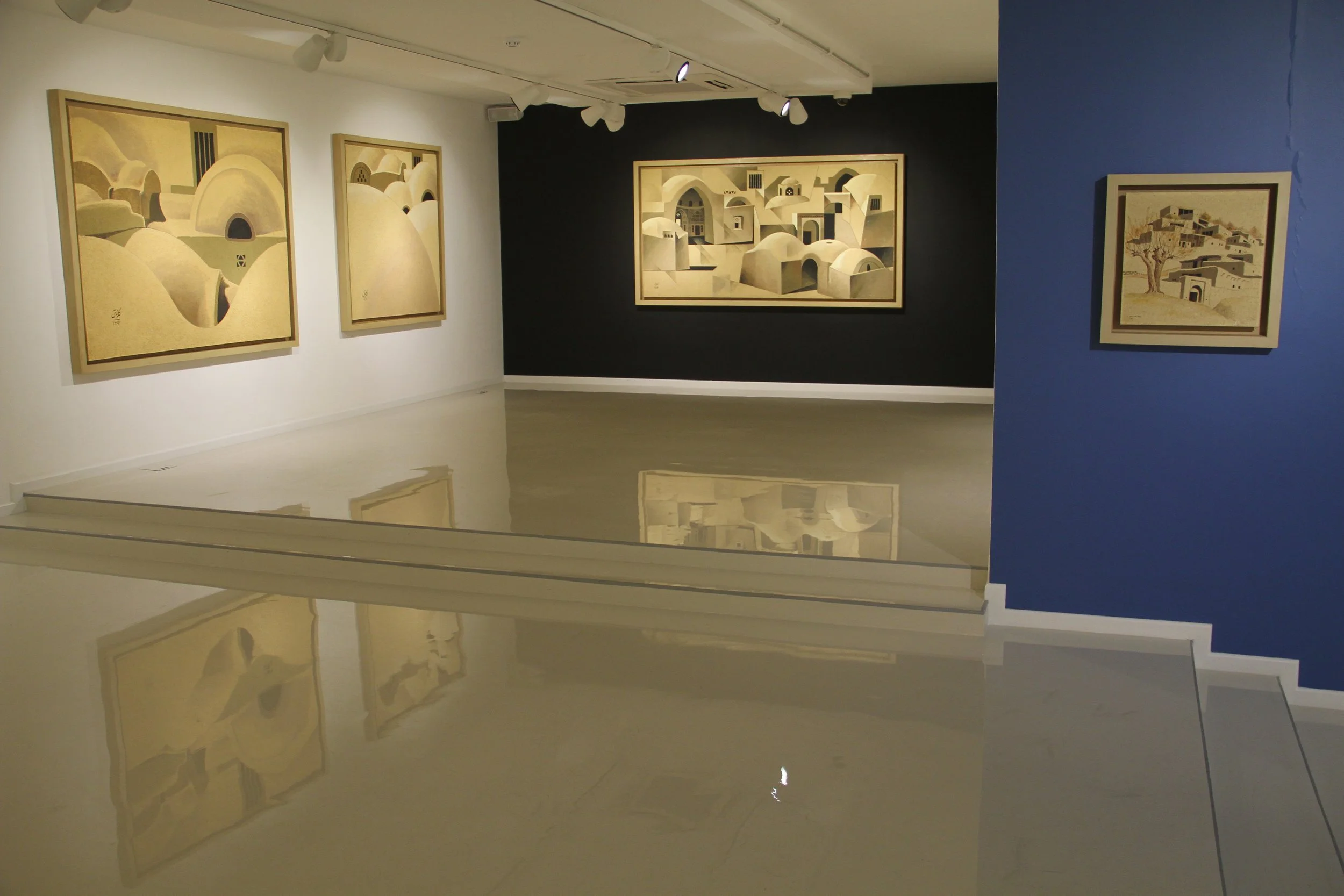
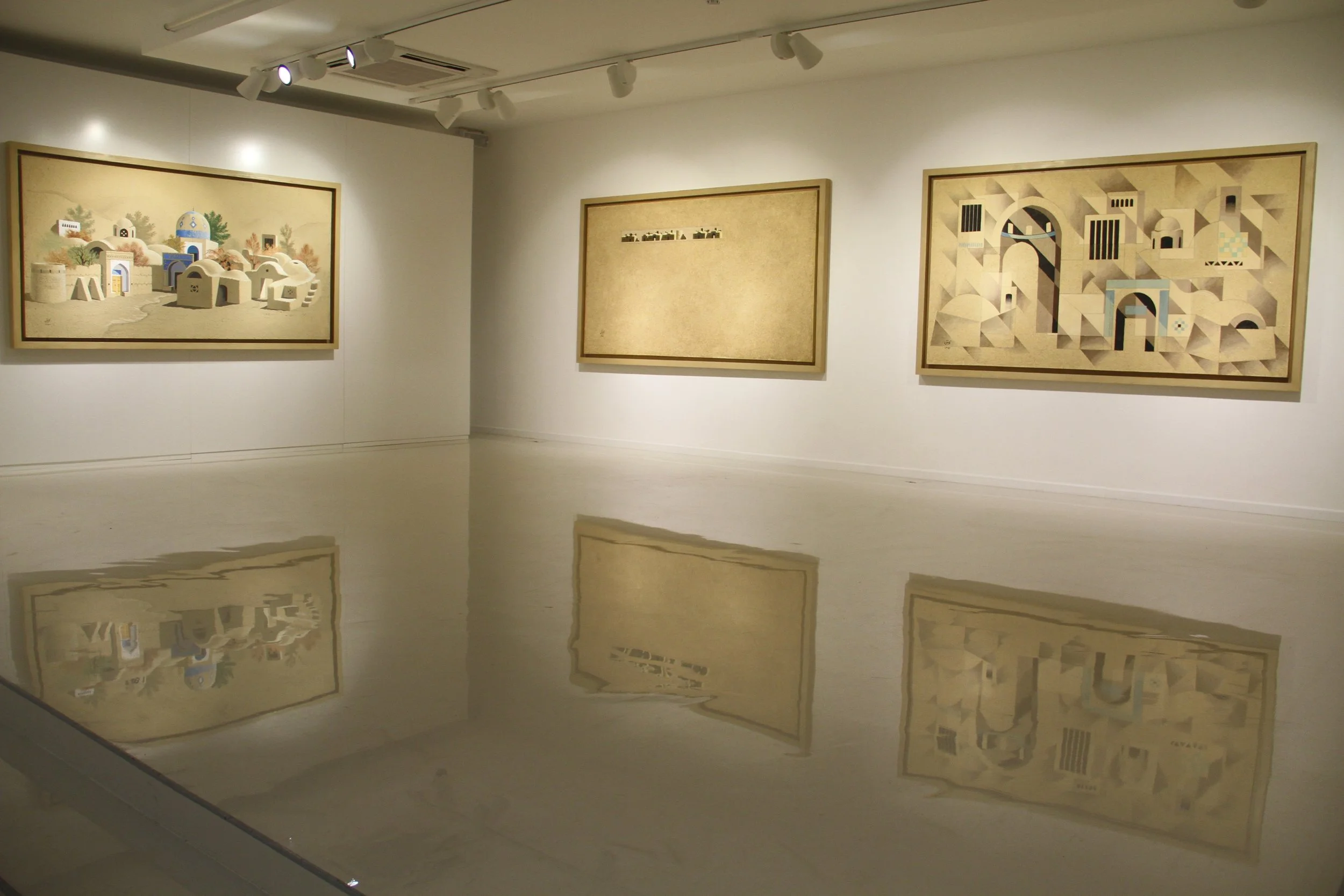
This exhibition presents a retrospective of Parviz Kalantari's oeuvre starting by his early period marked by Saqa Khaneh movement and encompassing his recent works.
Kalantari's art throughout the Saqa Khaneh period back in the 60s employed “ found objects” that can be interpreted as the artists effort to aesthetically document the urban legends of his homeland. After that period and only for a short while, Kalantari, in his “With Tribes” series, laid his focus on the forms and shapes of the human body in paintings that somehow refer to the facts of the time.
The clay plaster works of the artist, now regarded as his trademark, began in the 70s. The use of clay plaster in these works was initially the artist’s choice of material, but gradually transformed into a context to symbolize his mentality of the homeland.
Both in his combined objects works like "In Praise of Lorca"; in which he used old watches; and his clay plaster used as an instrument for some morphological experiences in human body series of “Clay Roofs”, we can see the artist’s practice of a vast array of visual medium all the way through his artistic activity.
When roofs, walls and gates of clay plastered houses shatter as depicted in "High Modernism" series; when the emergence of a phenomenon is witnessed in “Passing and …”; or as in “Persian City” in which an analytical attitude towards light and texture in Iranian architecture can be traced; and even in his latest series called “Nightly”; the artist's understanding of culture, history, beliefs, hopes and fears of the Iranians is clearly grasped.
idealism and painting
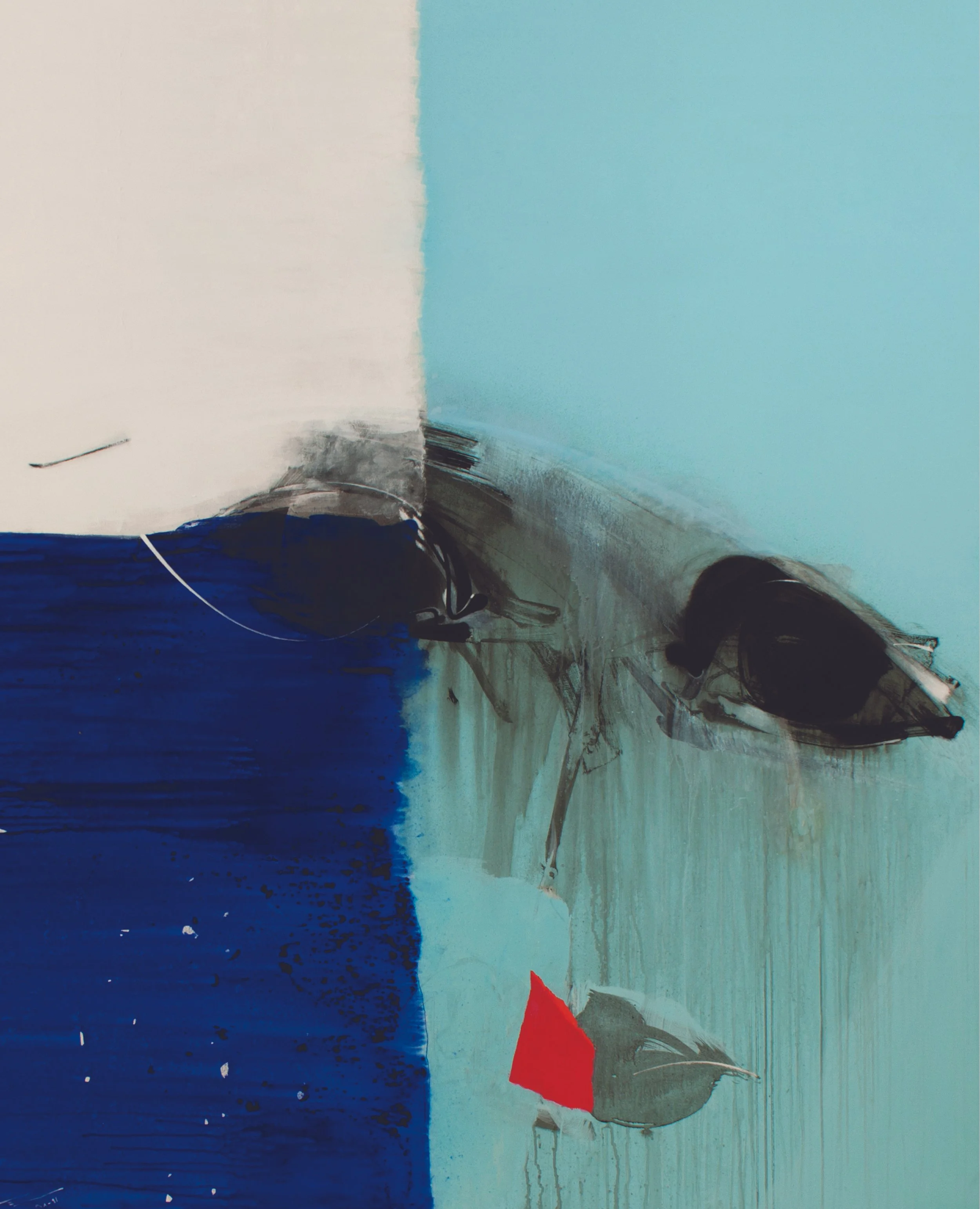
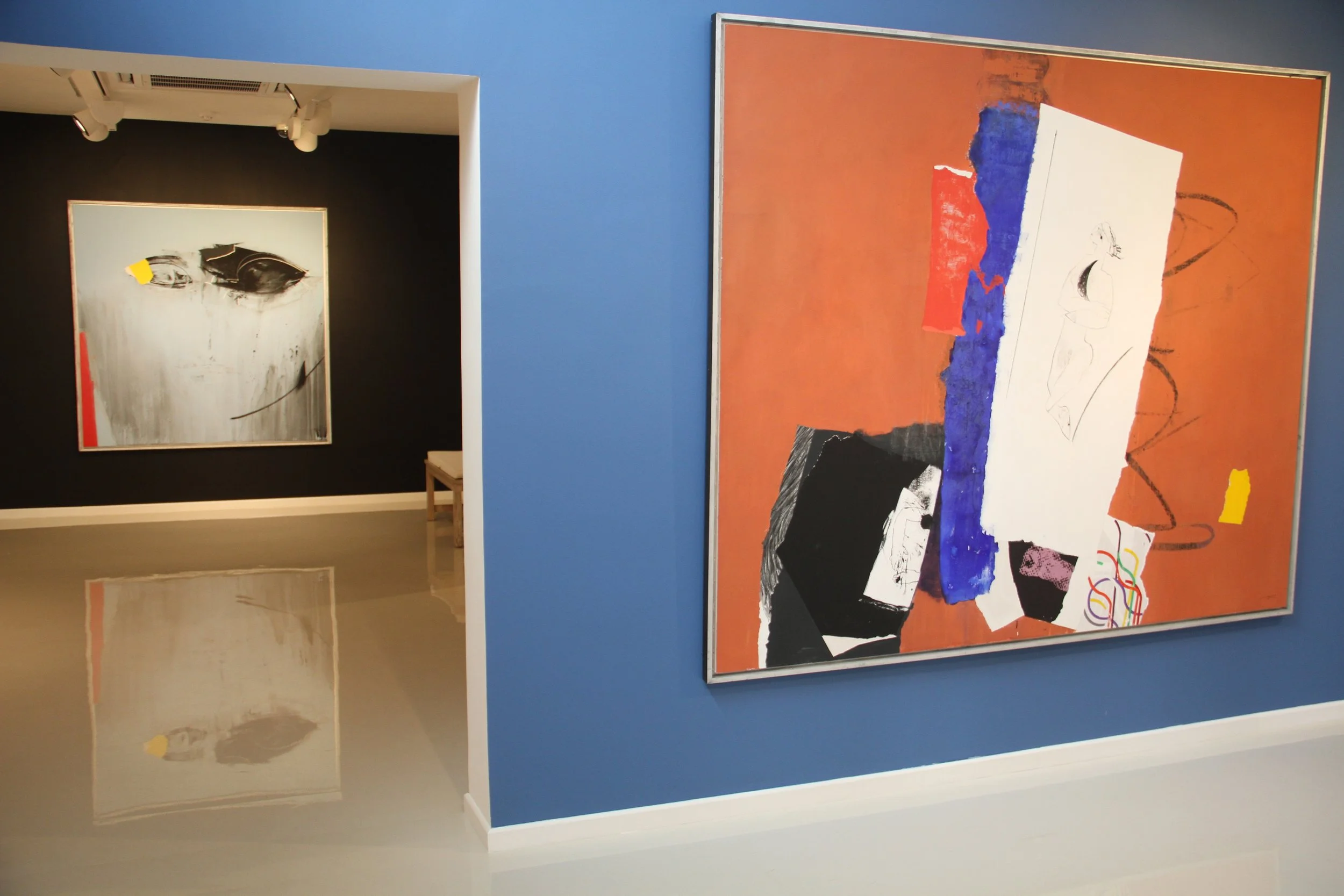
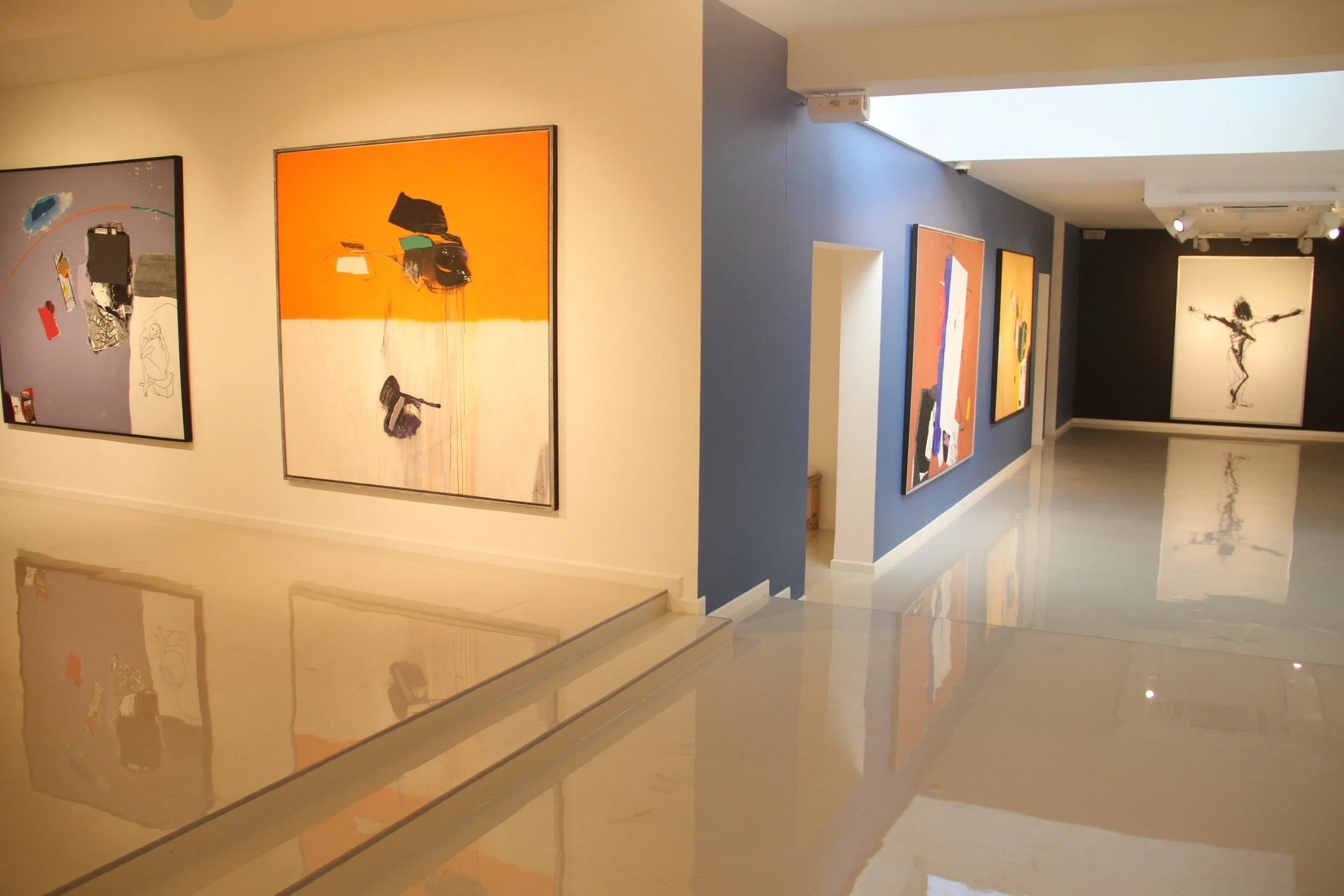
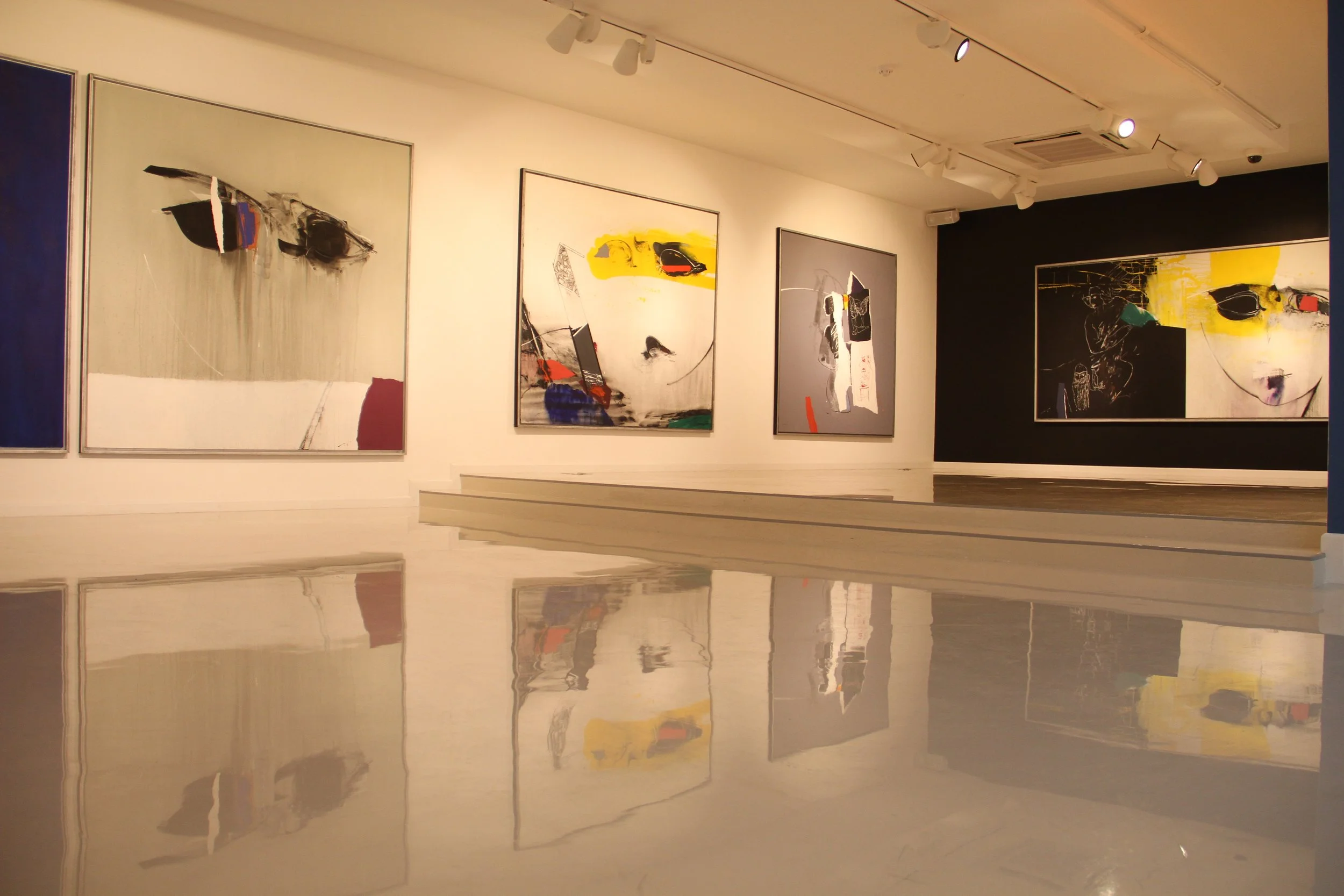
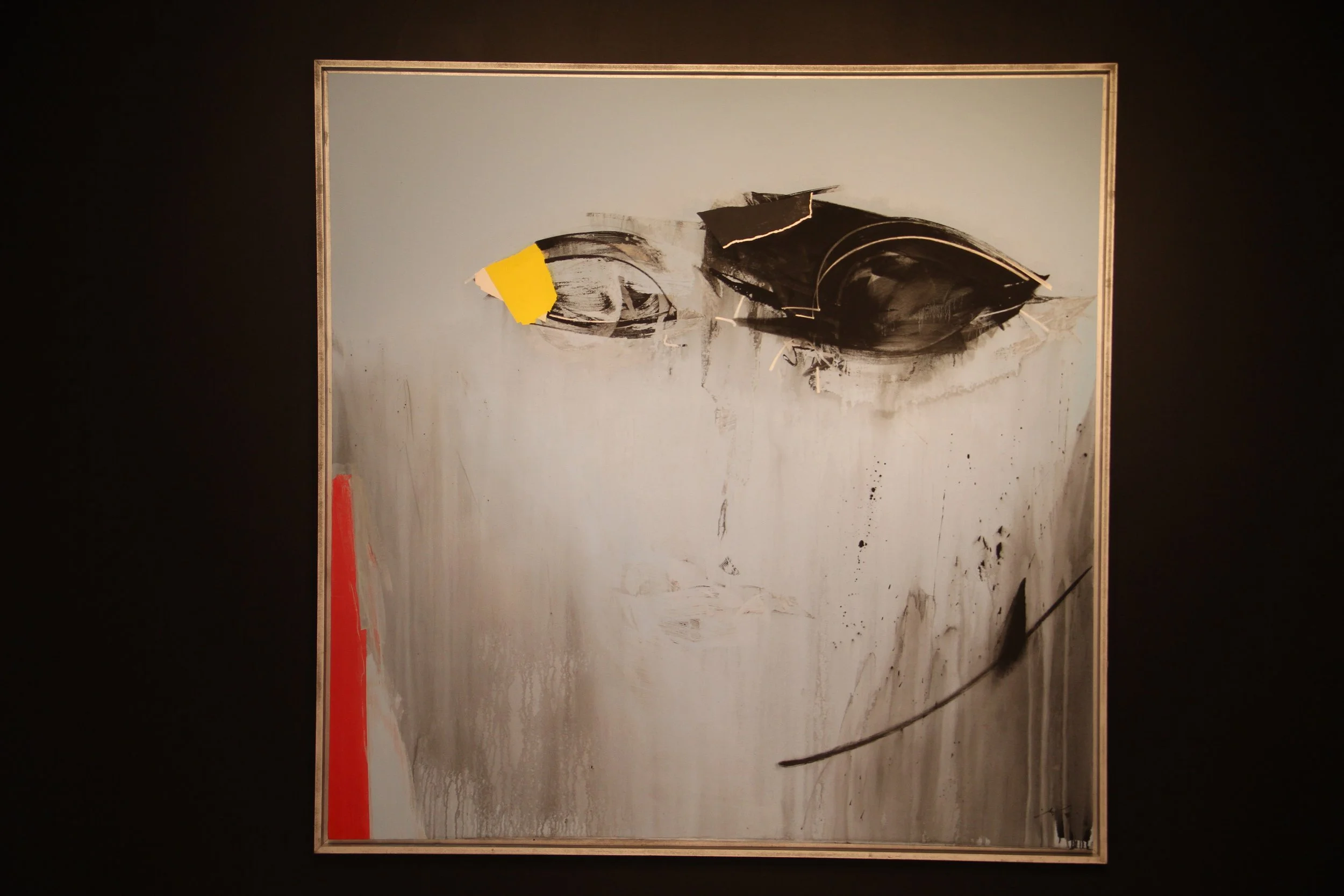
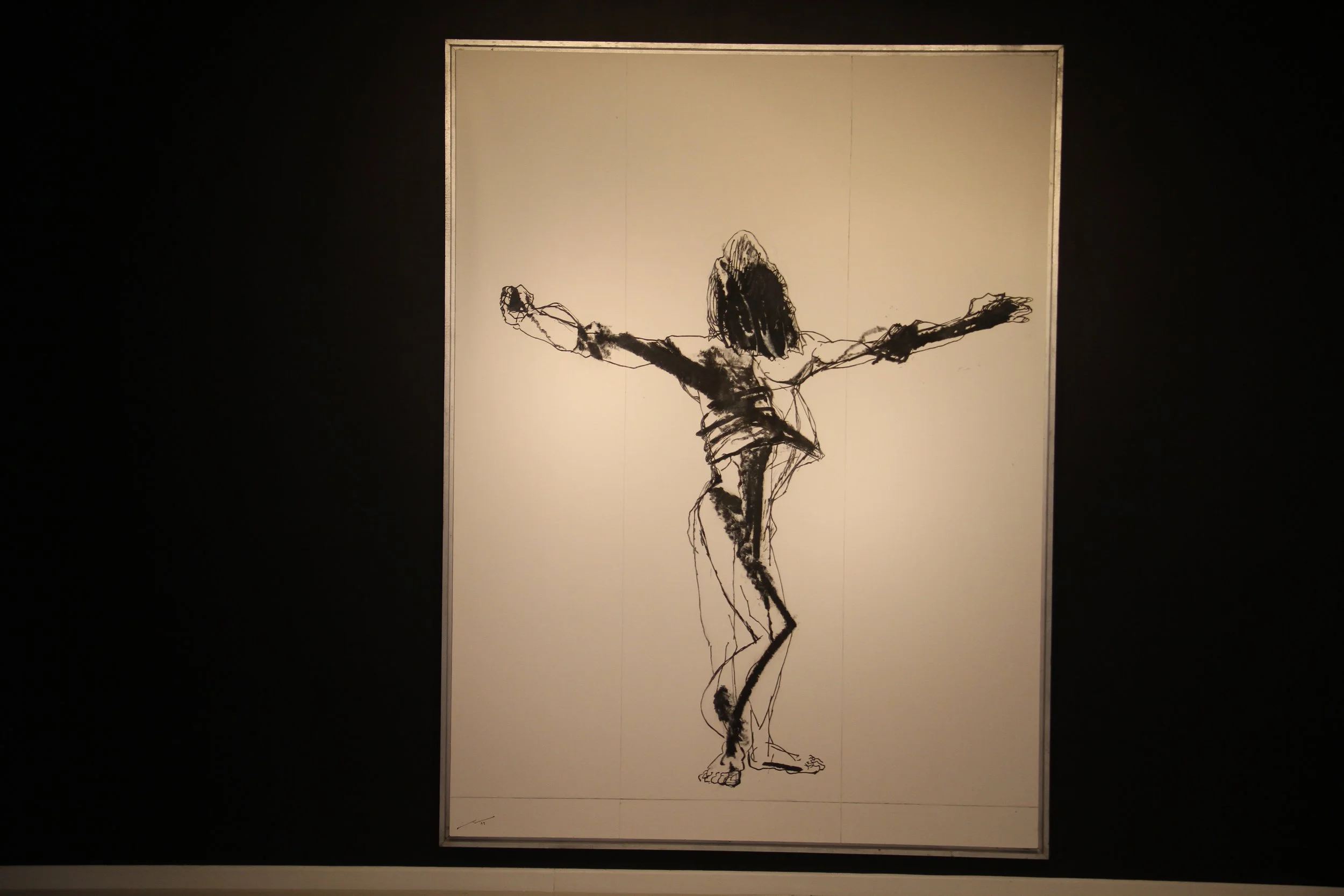
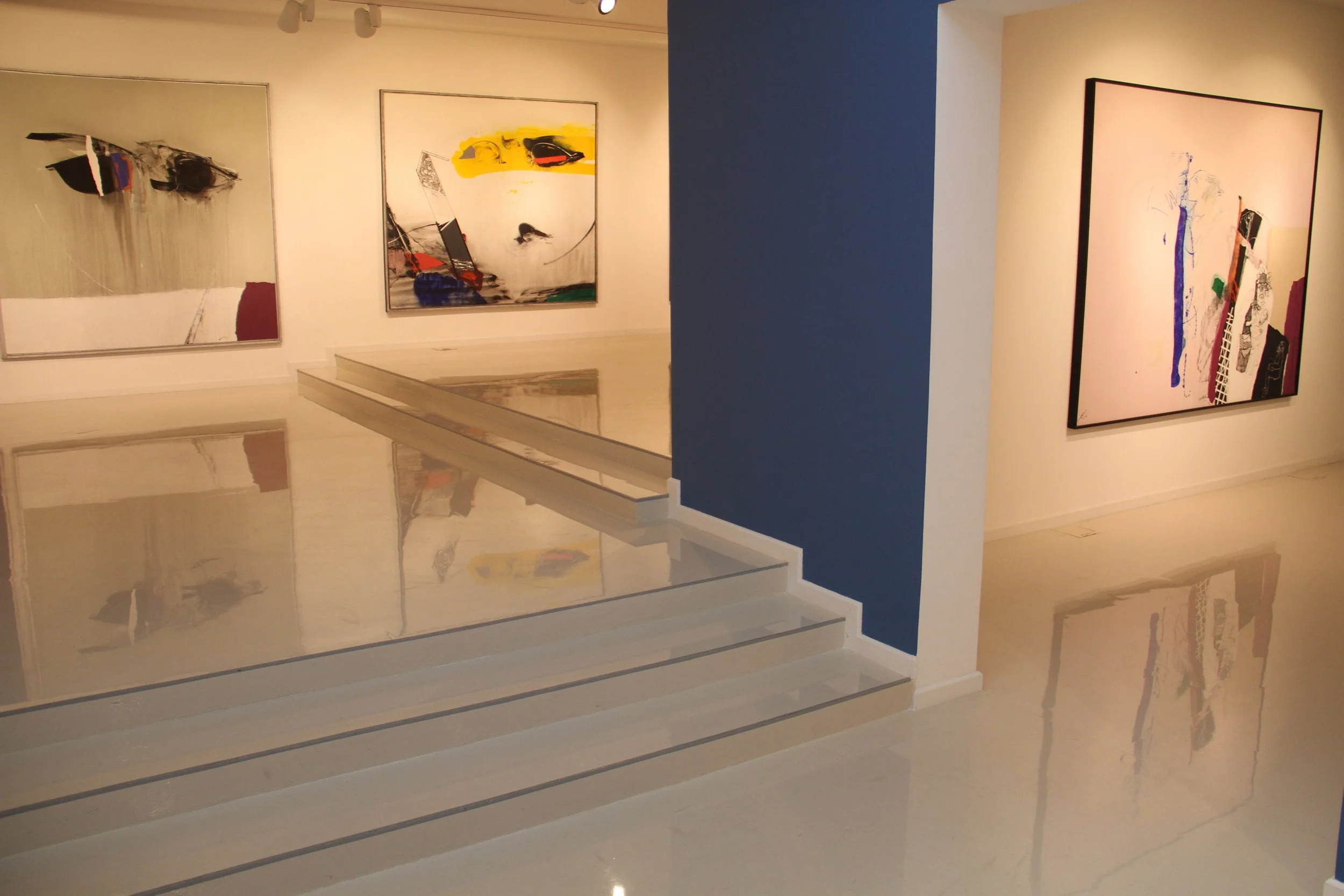
Moslemian’s works displayed in this exhibition include two major and inter-related series. The first series include large portraits of an emblematic sad female face with emphasis on the sorrowful eyes painted against a monochrome background. The second series encompasses more complex painting comprising of abstract and figurative elements, occasionally including the portraits, that are relatively more narrative and suggest cultural and historical references, but certainly having a less romantic impact on the viewer.
The artist’s amazing ability to organize these elements and their creative interactions with the empty spaces result in a sophisticated dialectic of the shapes and the background that is unique in contemporary Iranian painting. The colourful surfaces, drawings and portraits generate more of a metaphoric power than a visual rigor and this obviously hints various interpretations and allusions in the painting. The figures and lyric motifs suggest repeated references to historical memories, related to the icons of different periods or otherwise to certain social and political occurrences. The end-result is an expressionist painting with a tragic content, which offers moving and fascinating visual qualities.
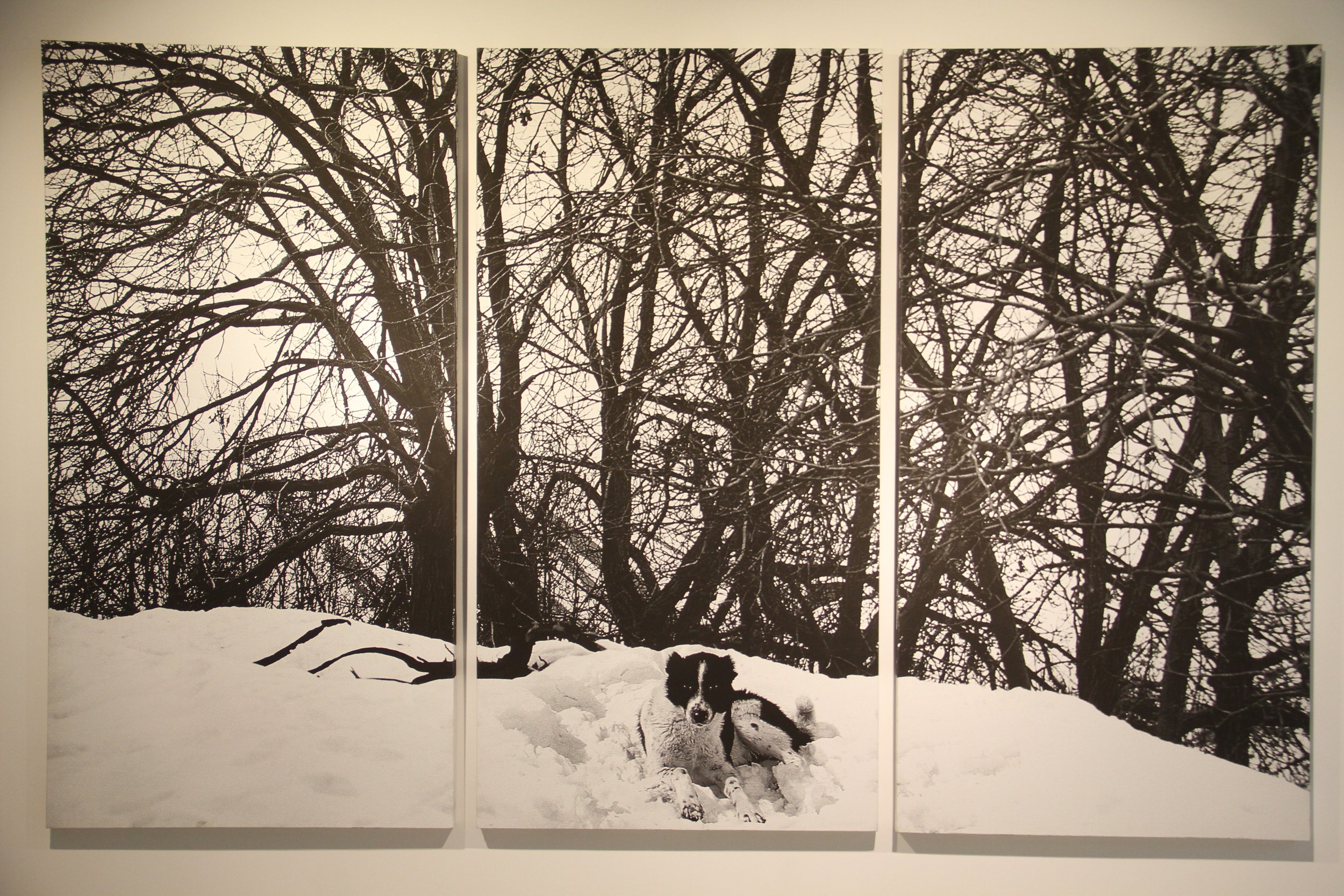
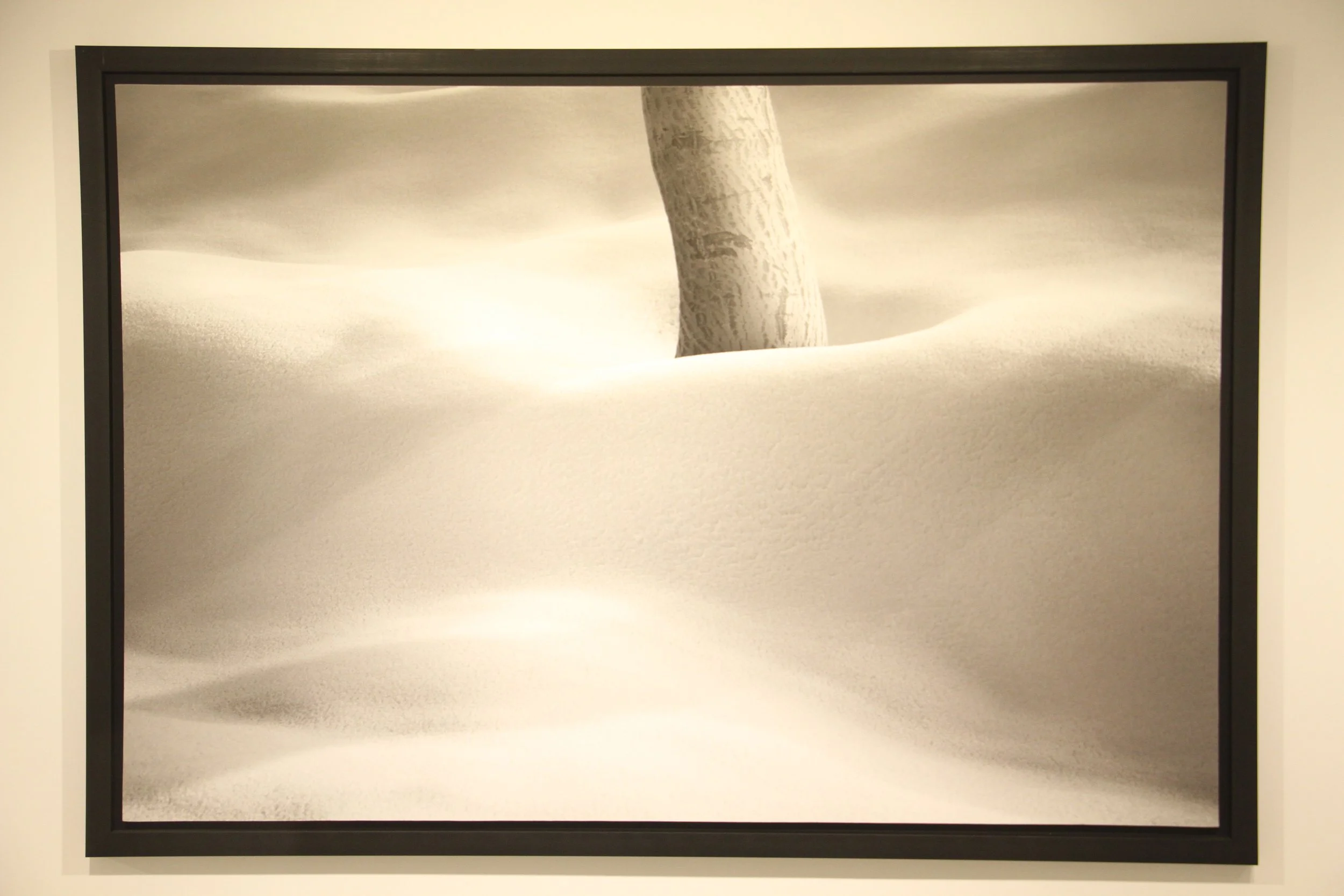
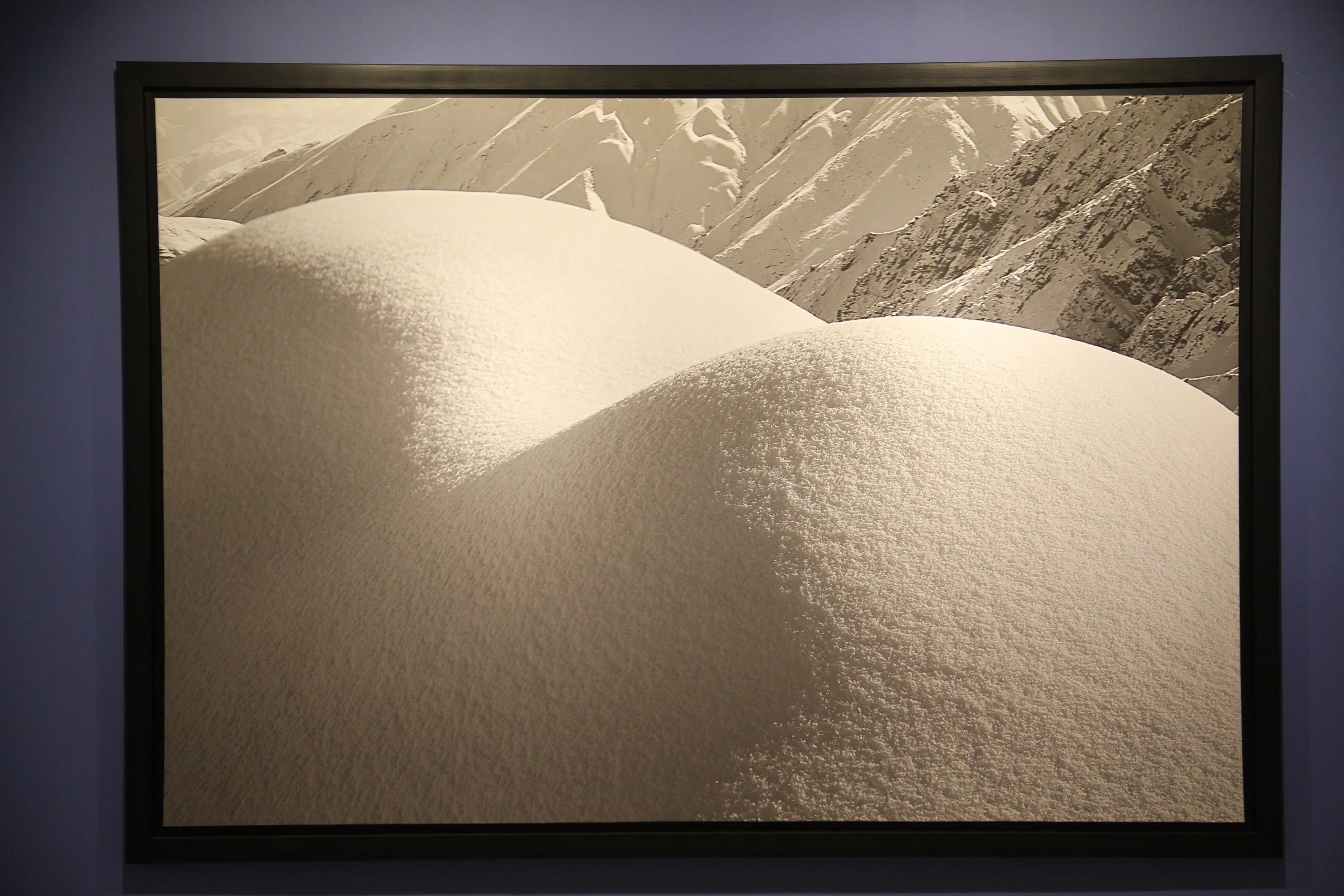
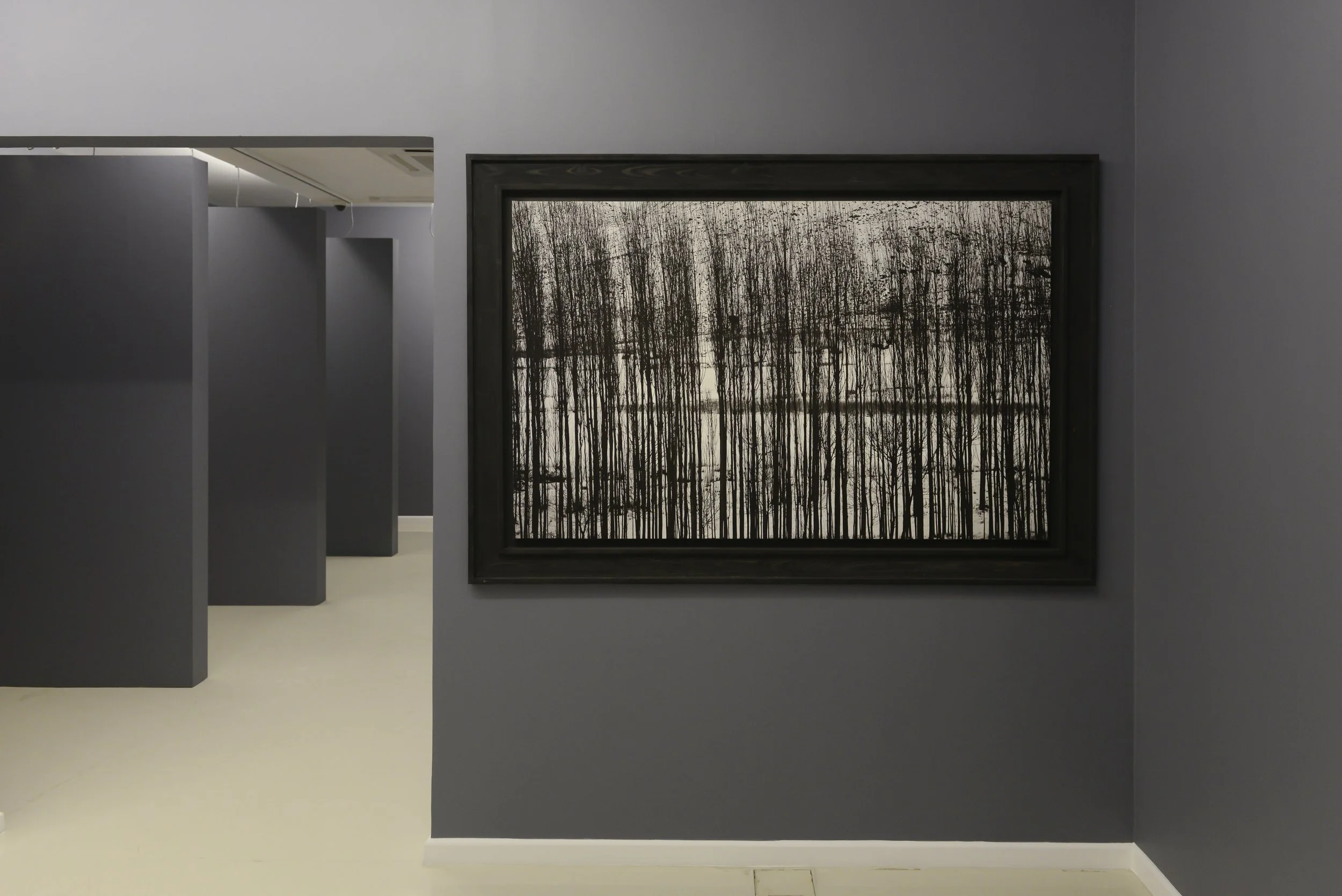
white snow
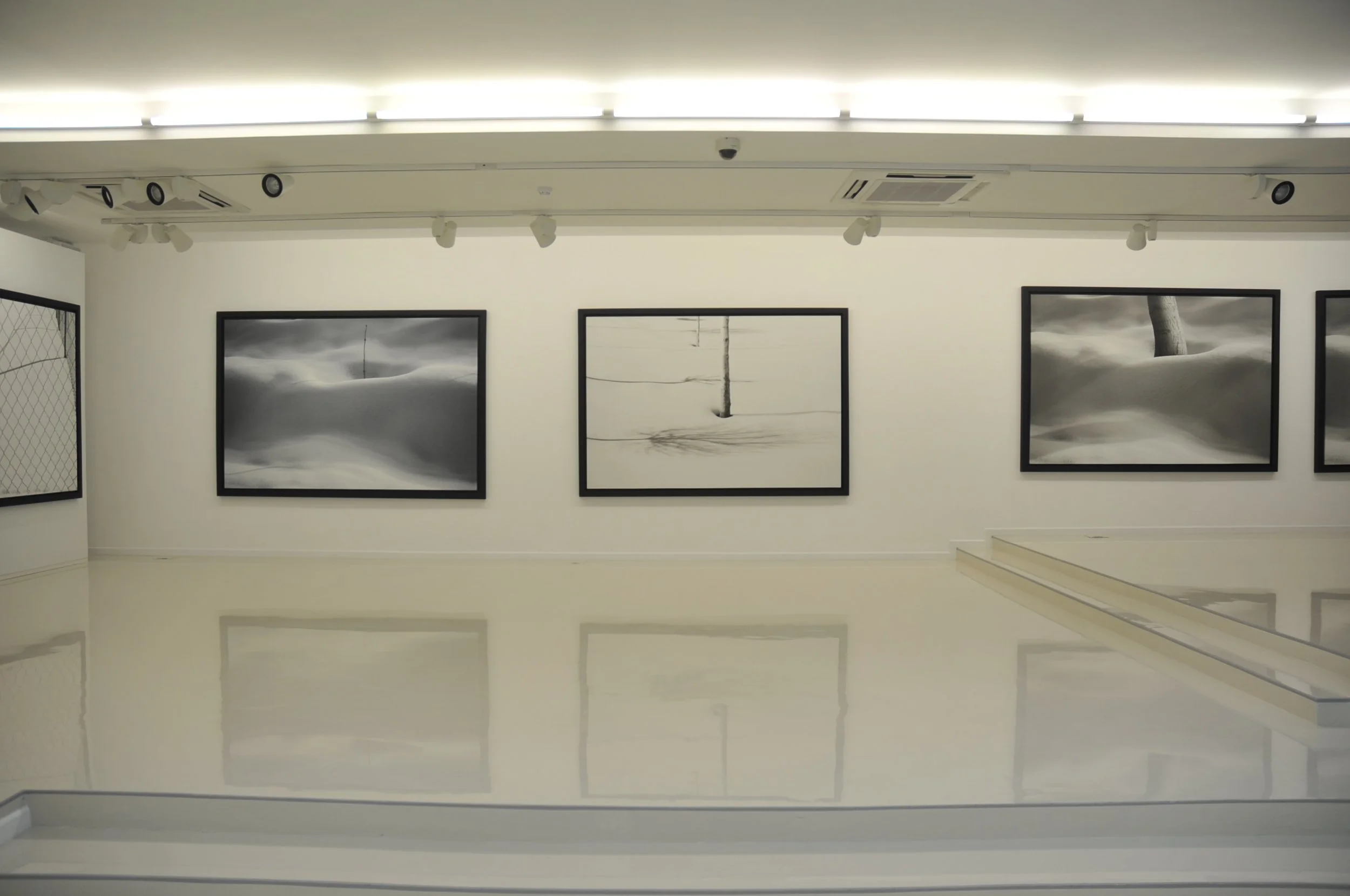
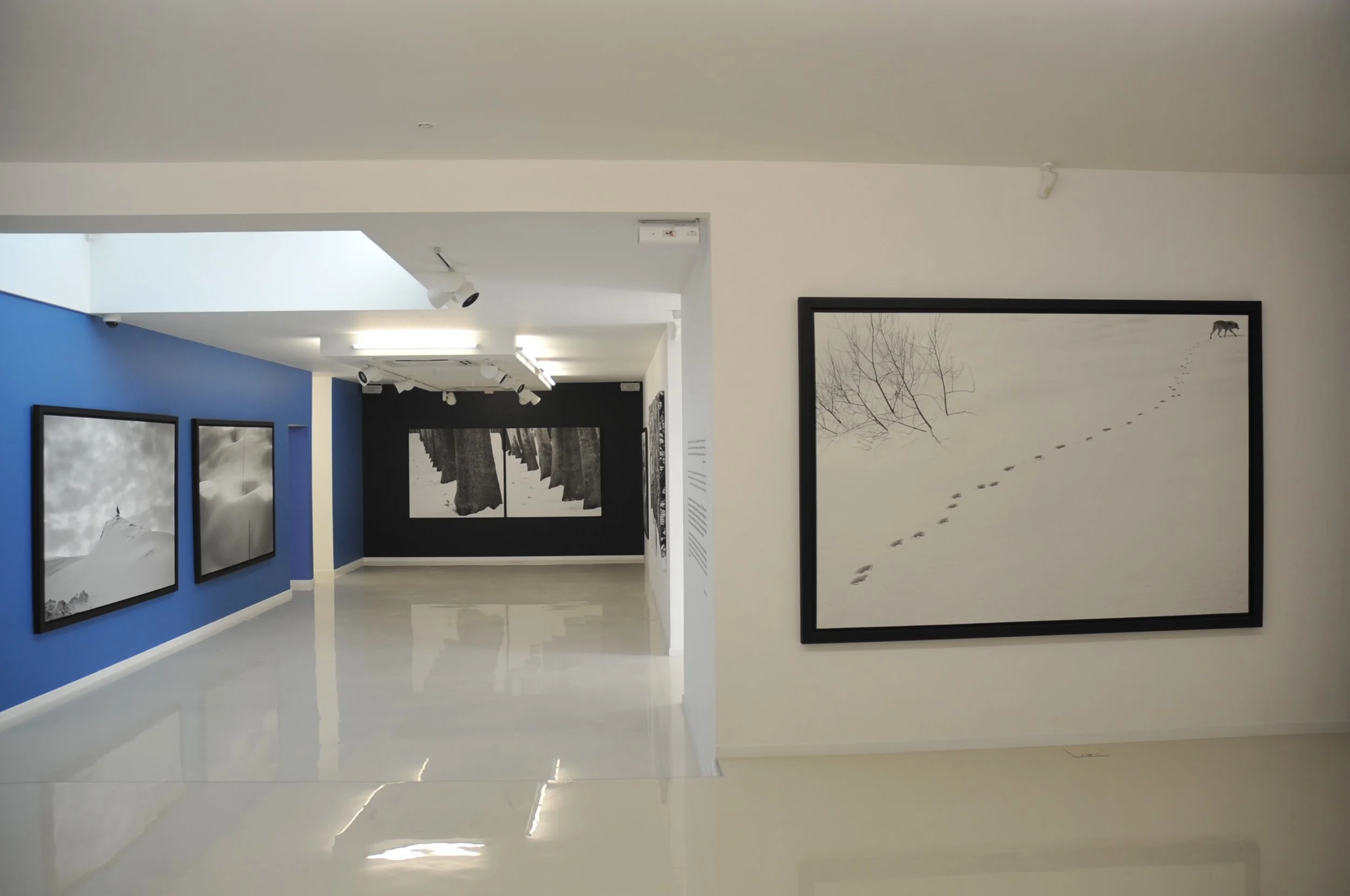
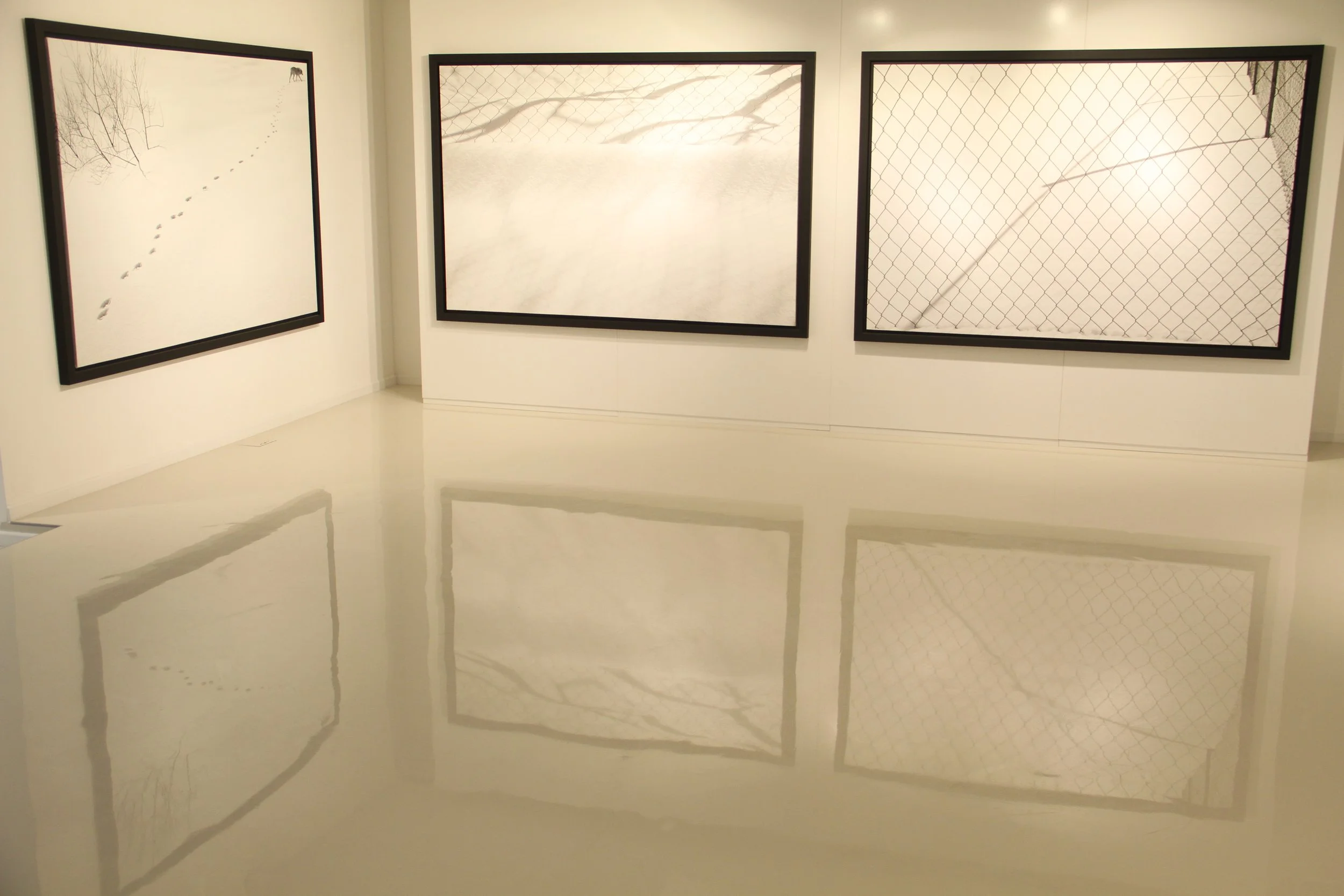
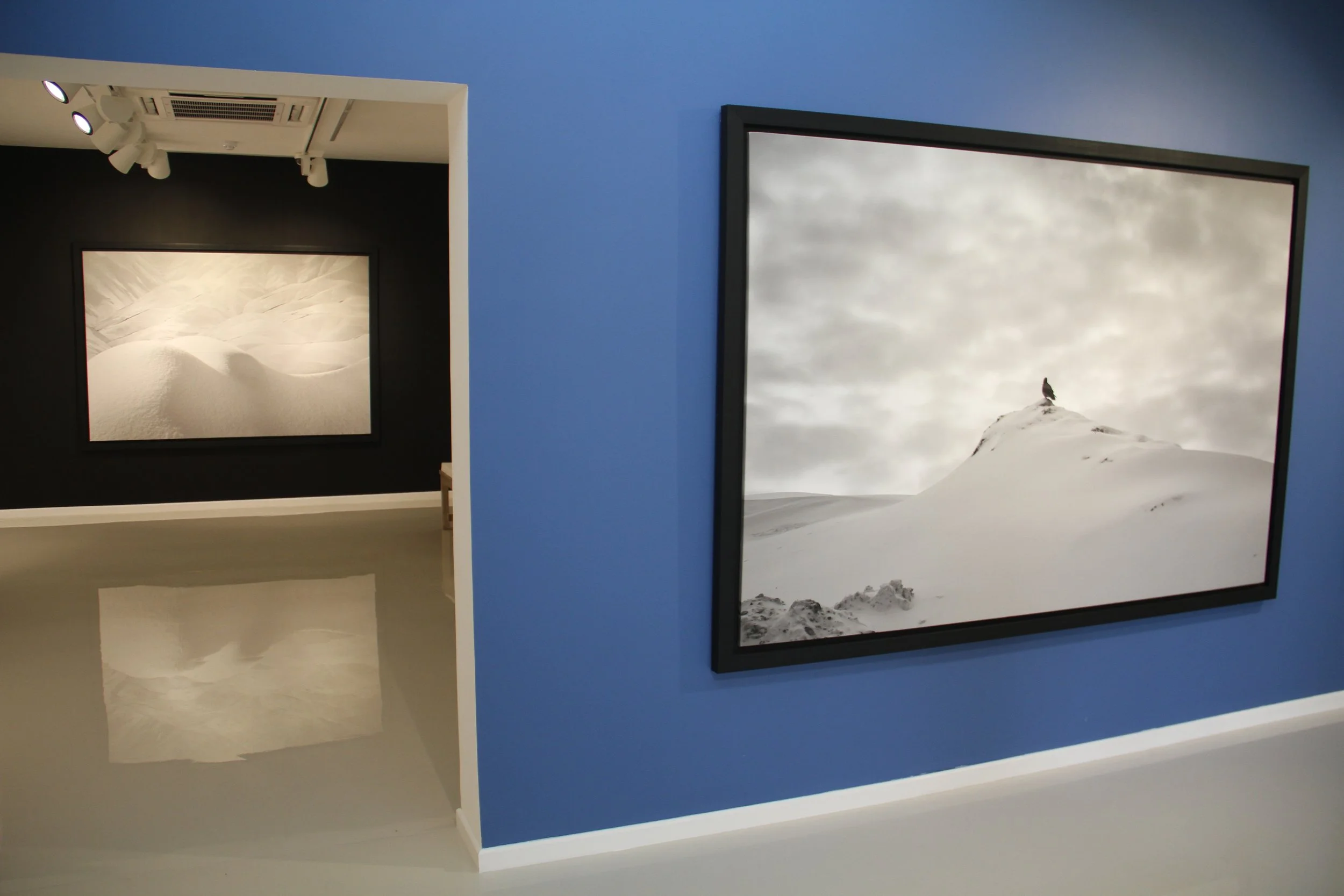
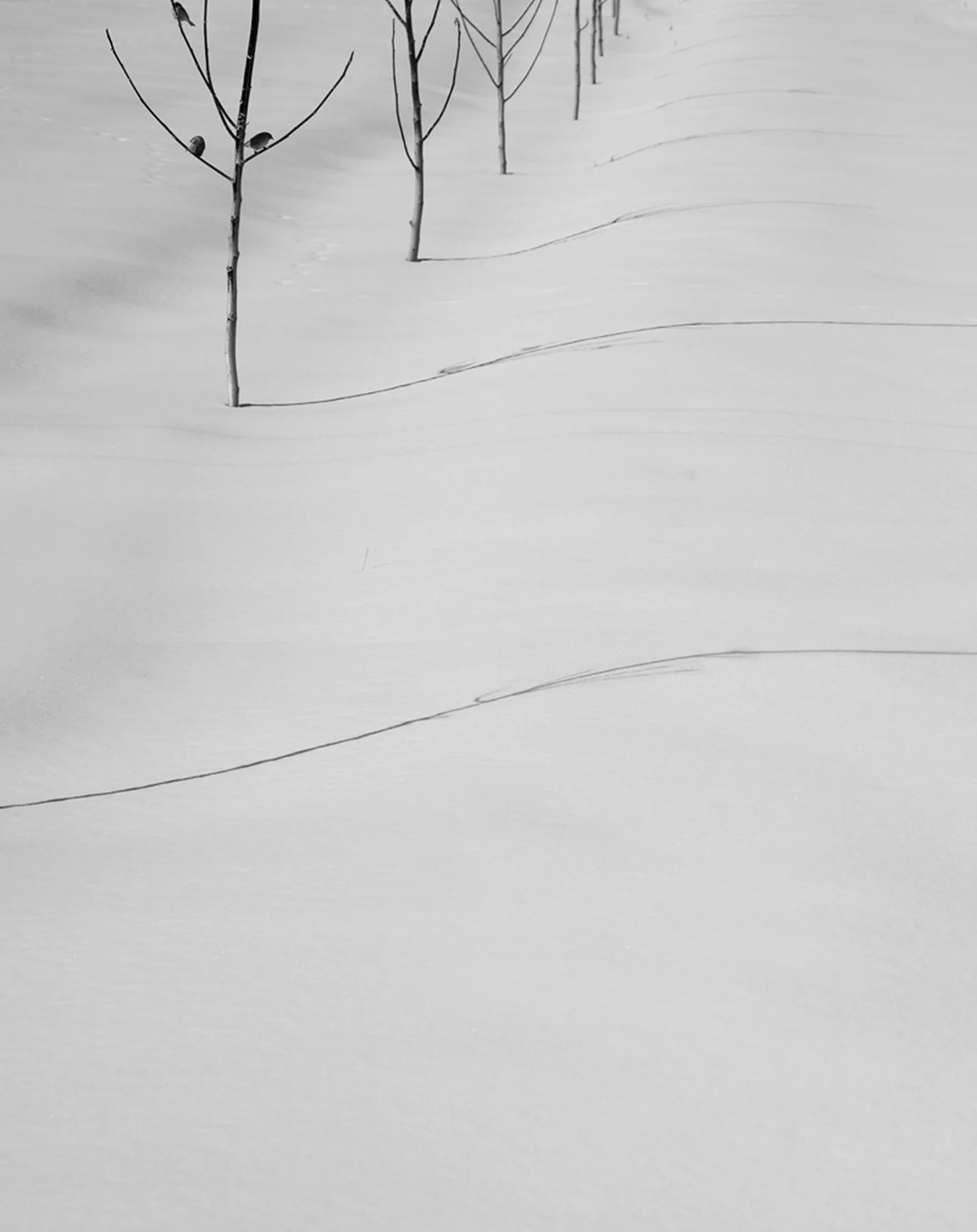
In the present works which include some of the most conceptual examples of the Snow White Series, Abbas Kiarostami, with a constant resistance against the attractions of the nature, chooses apparently simple images in order to allude to metaphysical irony and hybrid metaphors that evidently go far beyond the romantic essence of scenery arriving in a totally imaginary and abstract world. Therefore he enhances the viewers’ vision from a simple naturalistic level leading them to a realm of meanings and symbolic implications beyond natural elements such as snow and trees.
Their content is not meant to glorify the nature like a romantic scene on a post-card; but to indicate the conceptual depth of the universe and our intellectual understanding of it. Kiarostami’s narrative seems to address the contradictory aspects of phenomena and their metaphoric powers. Hence, his pictures go beyond the sheer visual impression of a landscape, as in a painting or photograph, and encounter the viewer with the various layers of meaning in the pure and refined compositions.