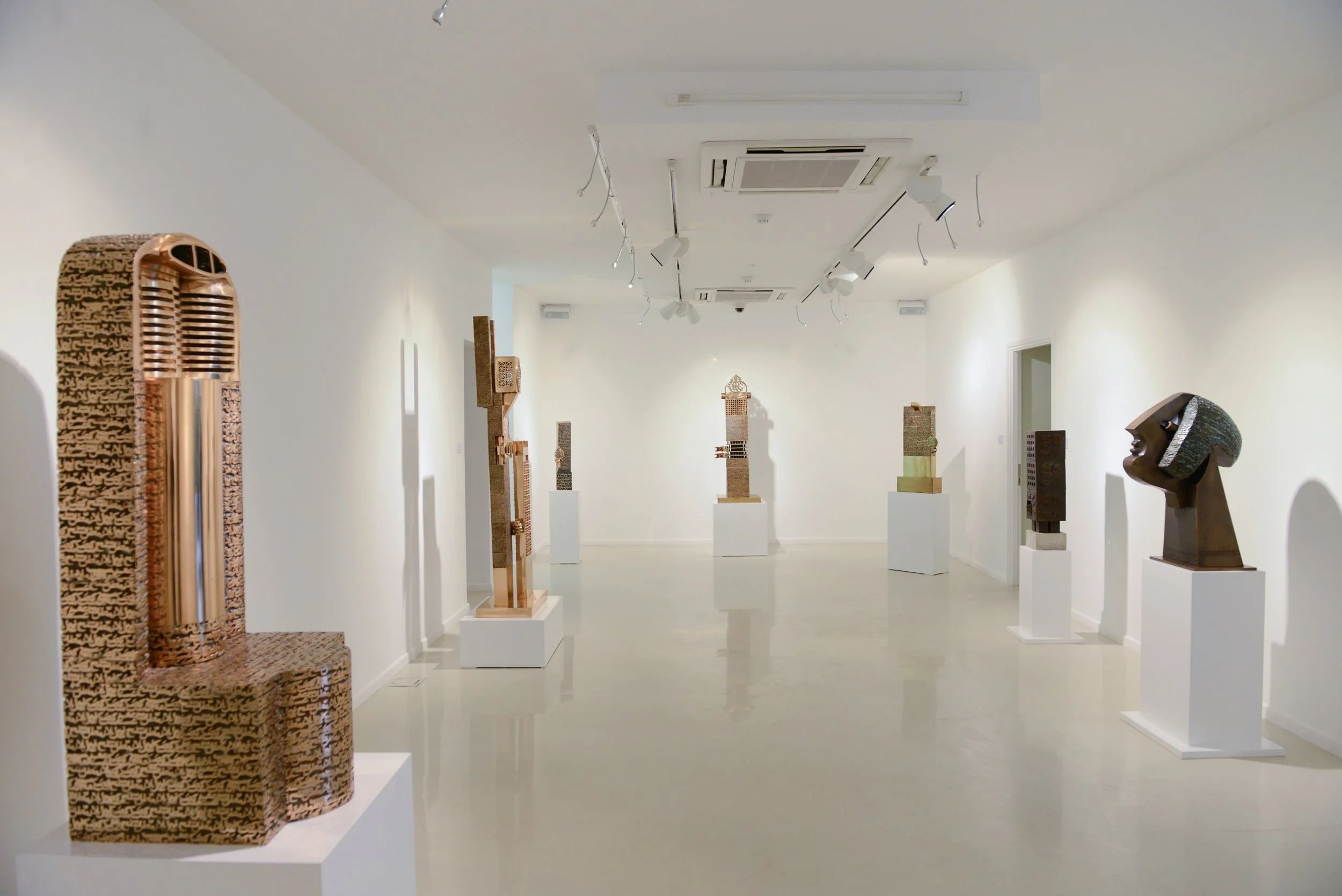
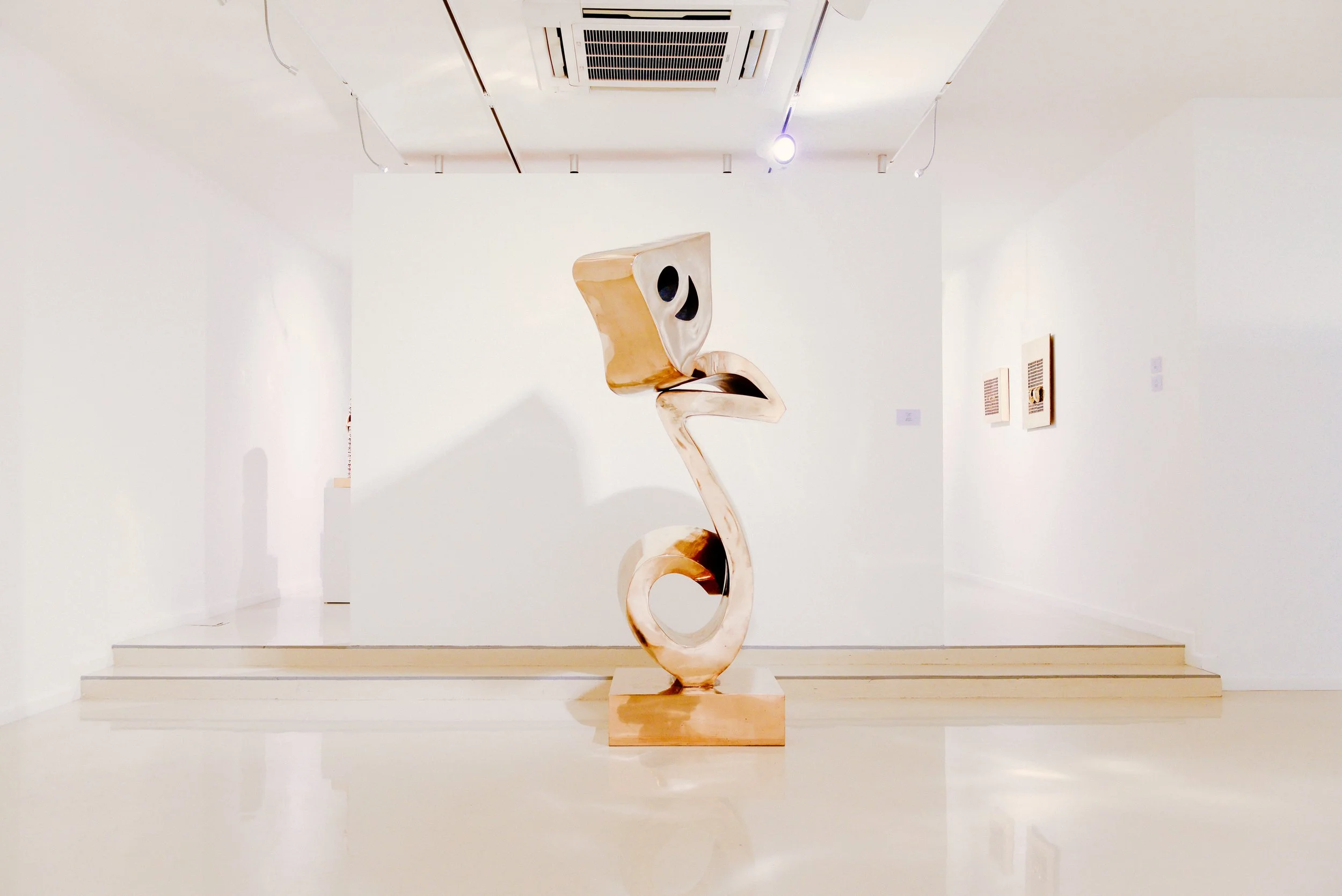
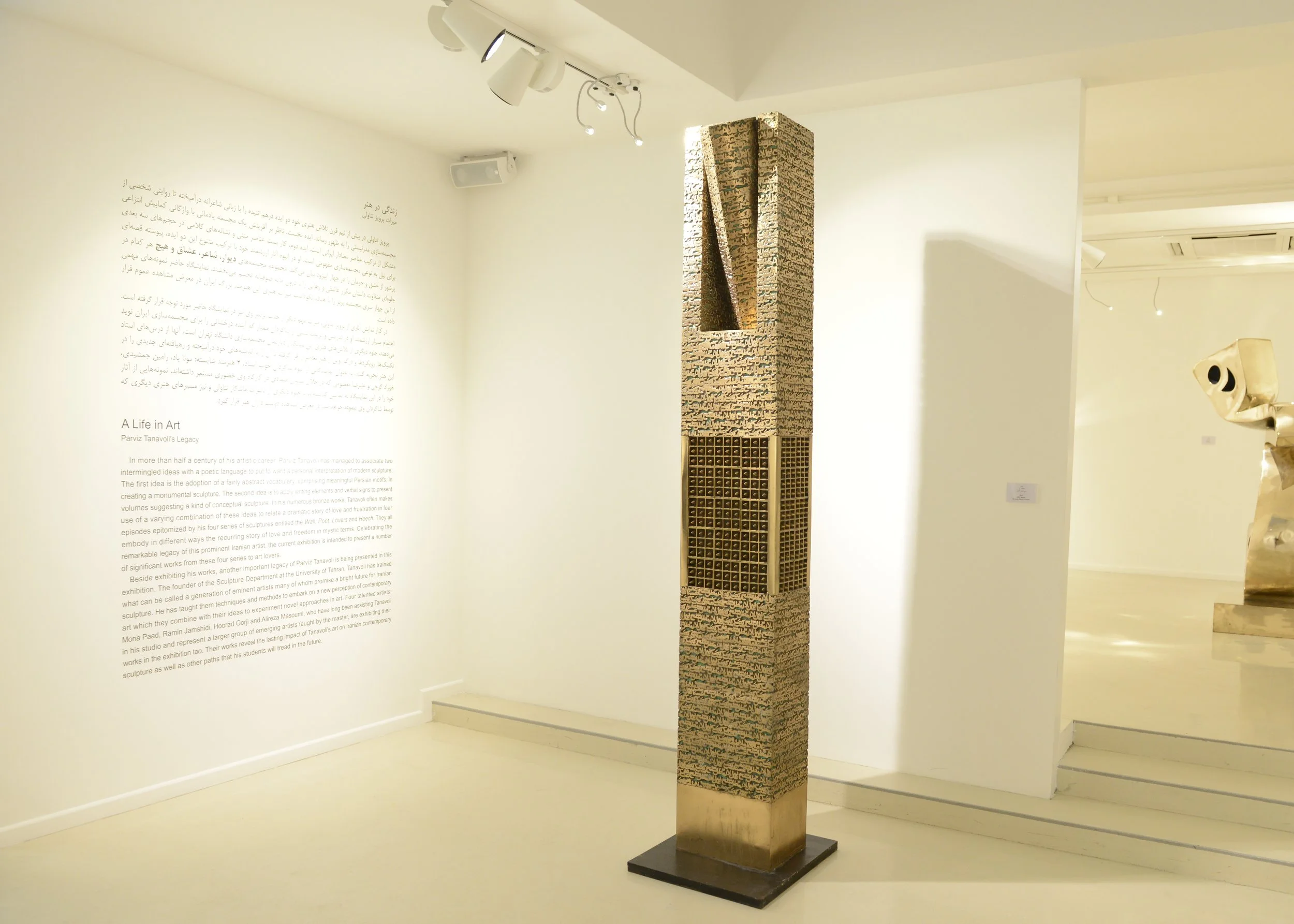
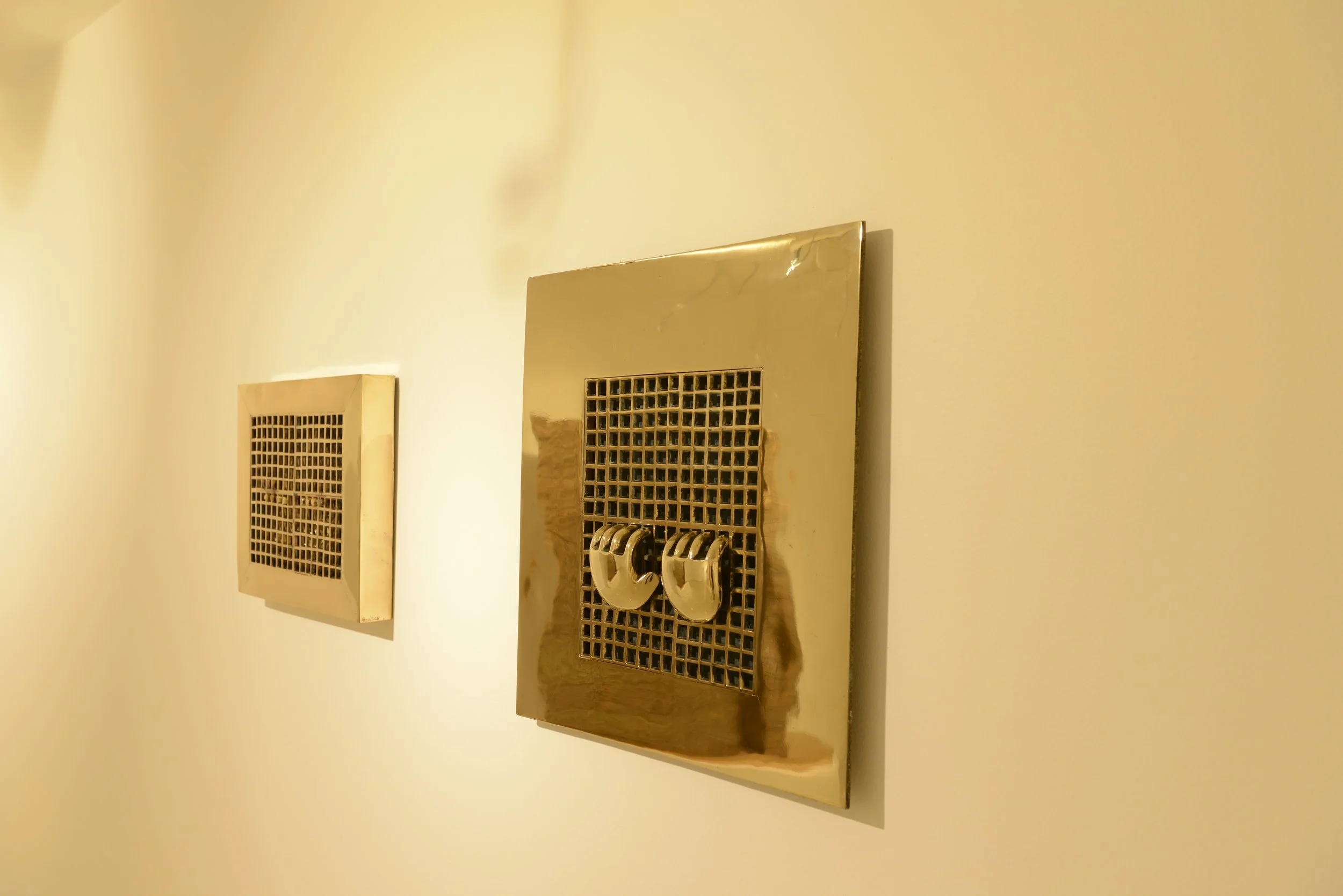
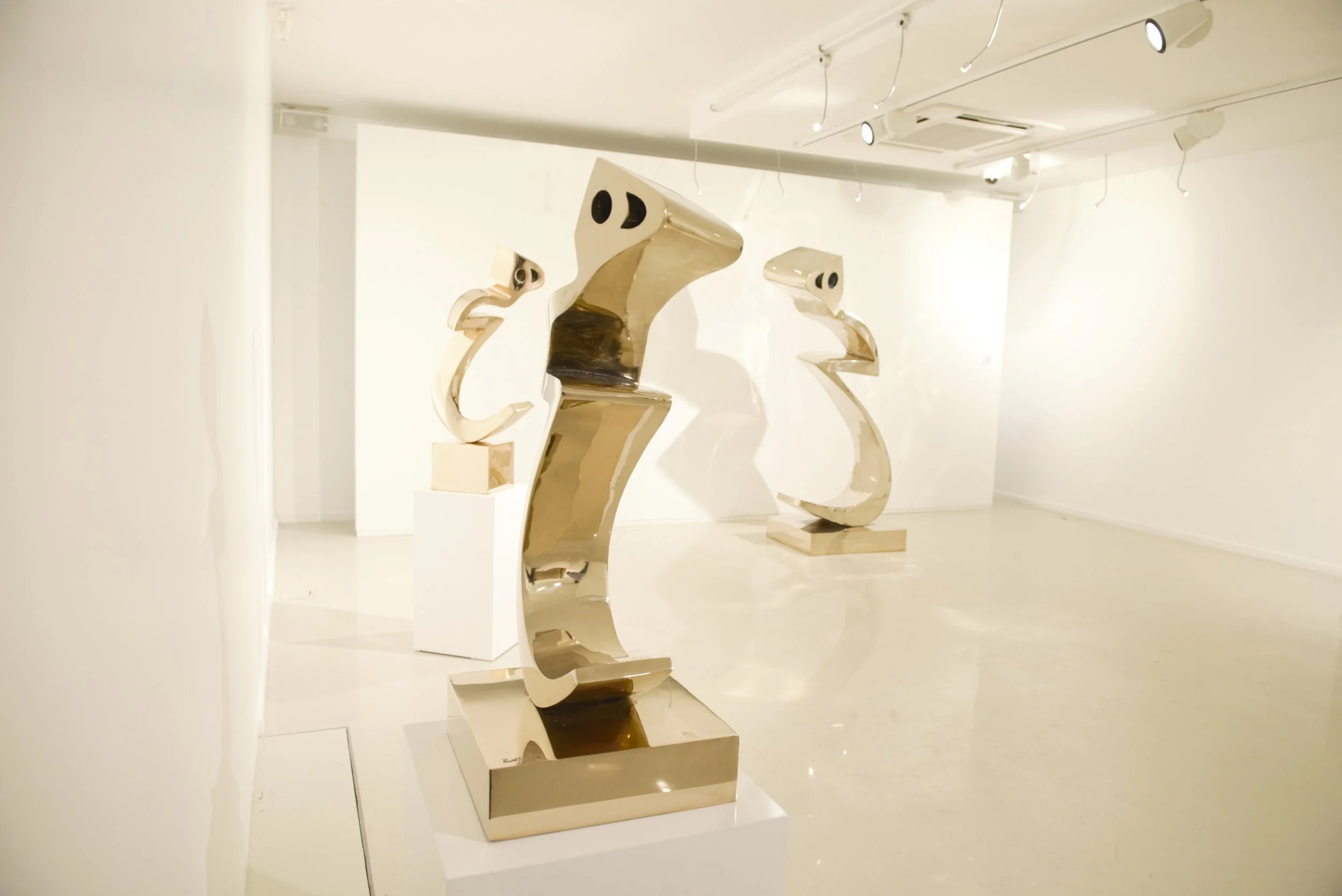
In more than half a century of his artistic career, Parviz Tanavoli has managed to associate two intermingled ideas with a poetic language to put forward a personal interpretation of modern sculpture. The first idea is the adoption of a fairly abstract vocabulary, comprising meaningful Persian motifs, in creating a monumental sculpture. The second idea is to apply writing elements and verbal signs to present volumes suggesting a kind of conceptual sculpture. In his numerous bronze works, Tanavoli often makes use of a varying combination of these ideas to relate a dramatic story of love and frustration in four episodes epitomized by his four series of sculptures entitled the Wall, Poet, Lovers and Heech. They all embody in different ways the recurring story of love and freedom in mystic terms. Celebrating the remarkable legacy of this prominent Iranian artist, the current exhibition is intended to present a number of significant works from these four series to art lovers.
These ideas are well crystallized in the Wall series, which includes formally the purest and stylistically the most modern works of Tanavoli. Recalling classical monuments, the Walls are basically free-standing monolithic sculptures that evidently reincarnate great ancient walls and relics of the Achaemenid or Sassanid dynasties. Inscribed by textual manuscripts and figurative reliefs, they are memorials to the ancient Persian civilization to which the artist pays tribute in his oeuvre.
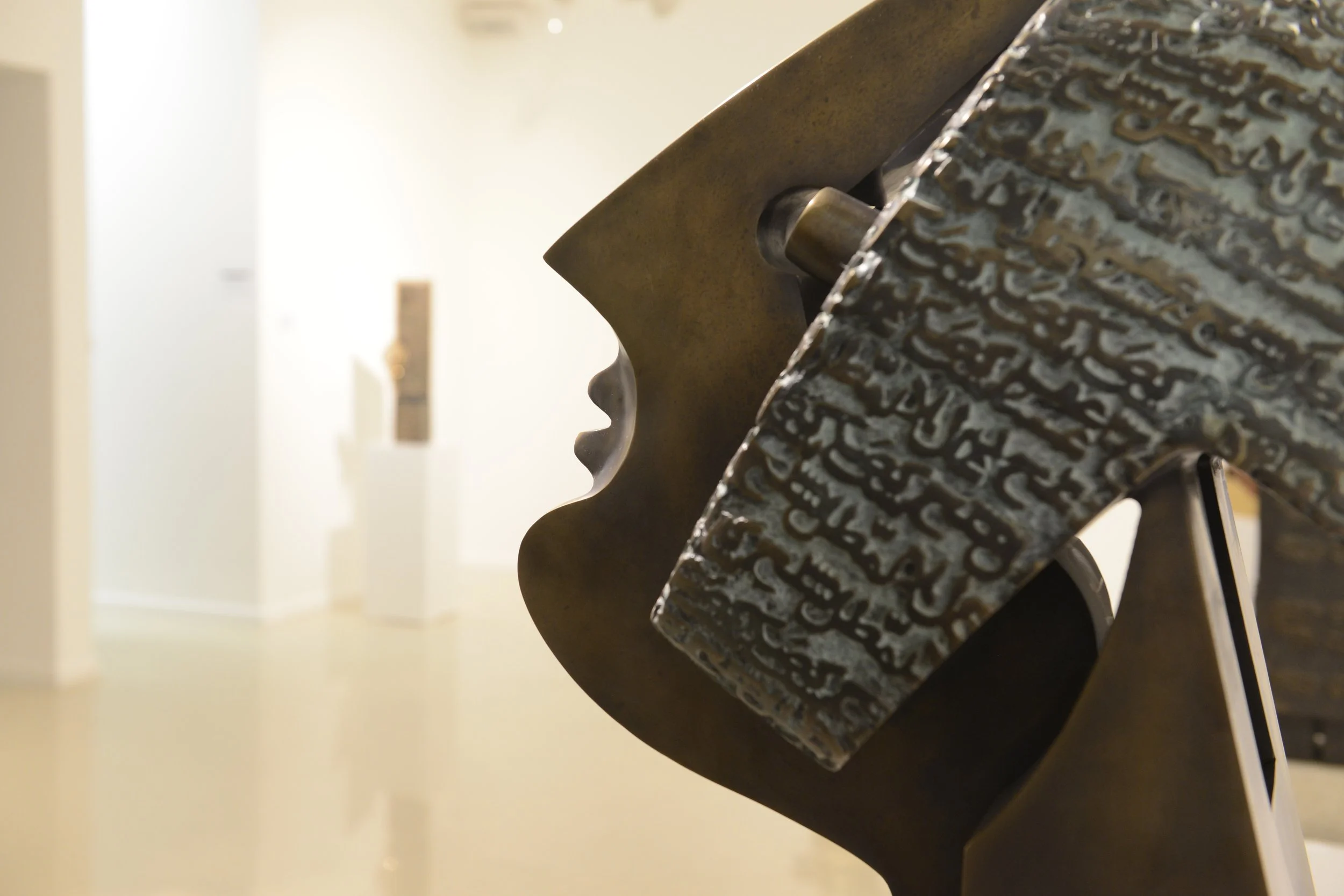
Unlike modernist sculptures, the works of the Wall series are not essentially about the volume, but actually point to the surface of the sculpture which, being decorated by dense inscriptions, evokes historic inscriptions beyond its apparent shape. In fact, the visual power of modern geometric sculptures here lies in the surface of the Wall seemingly to recall the remains of the typical walls of ancient Persian palaces such as Bisotun Wall. The inscriptions engraved on the Wall series are occasionally pictorial calligraphy reminiscent of Egyptian and Sumerian reliefs, but at times, Arabic writings or simply a uniform textual patterns, rarely in Farsi, but always obscure and illegible.